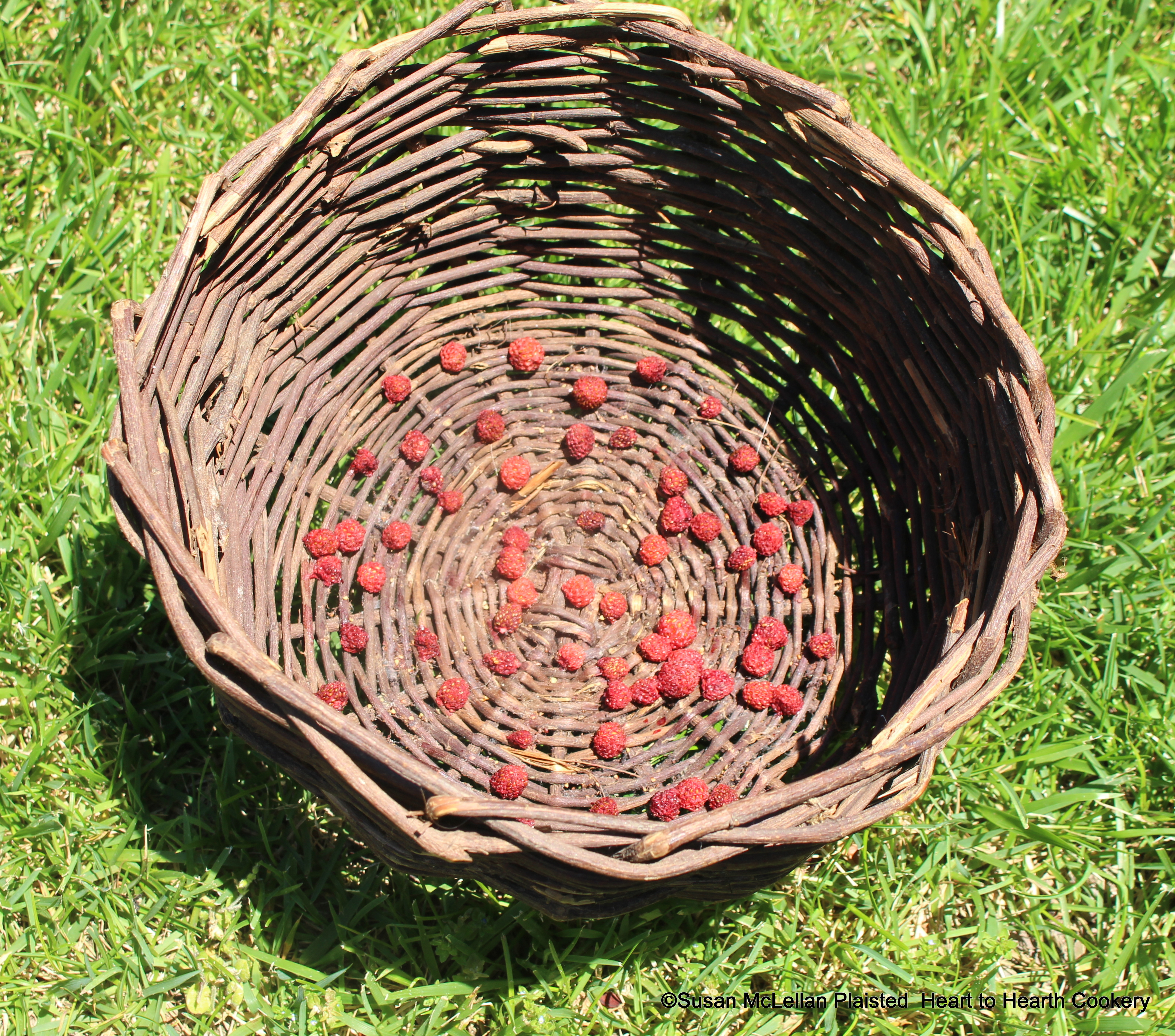
After the grapevine basket of native strawberries were placed where the full rays of the sun could dry and preserve them, the effects of the sun were seen.
Visit my website at: www.hearttohearthcookery.com
After the grapevine basket of native strawberries were placed where the full rays of the sun could dry and preserve them, the effects of the sun were seen.
Visit my website at: www.hearttohearthcookery.com
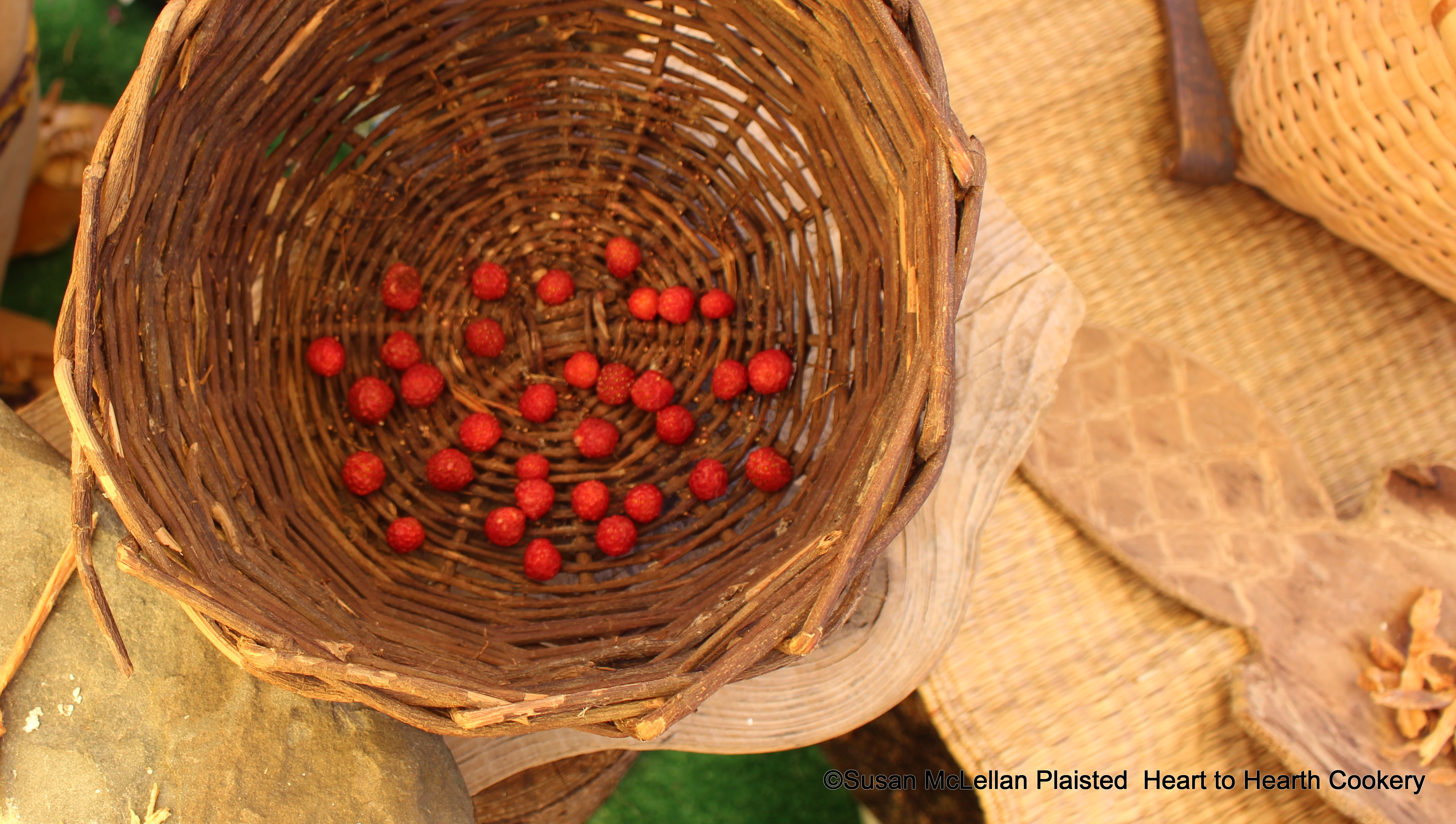
After the native strawberries have been hulled, the berries were placed in a grapevine basket ready to be dried (preserved) by the sun.
Visit my website at: www.hearttohearthcookery.com
Posted in culinary history, food, food history, Lenape, Native American, receipts, recipes, Strawberries | Tags: culinary history, food, food history, Food preservation, foodways, Lenape, Native American, strawberries
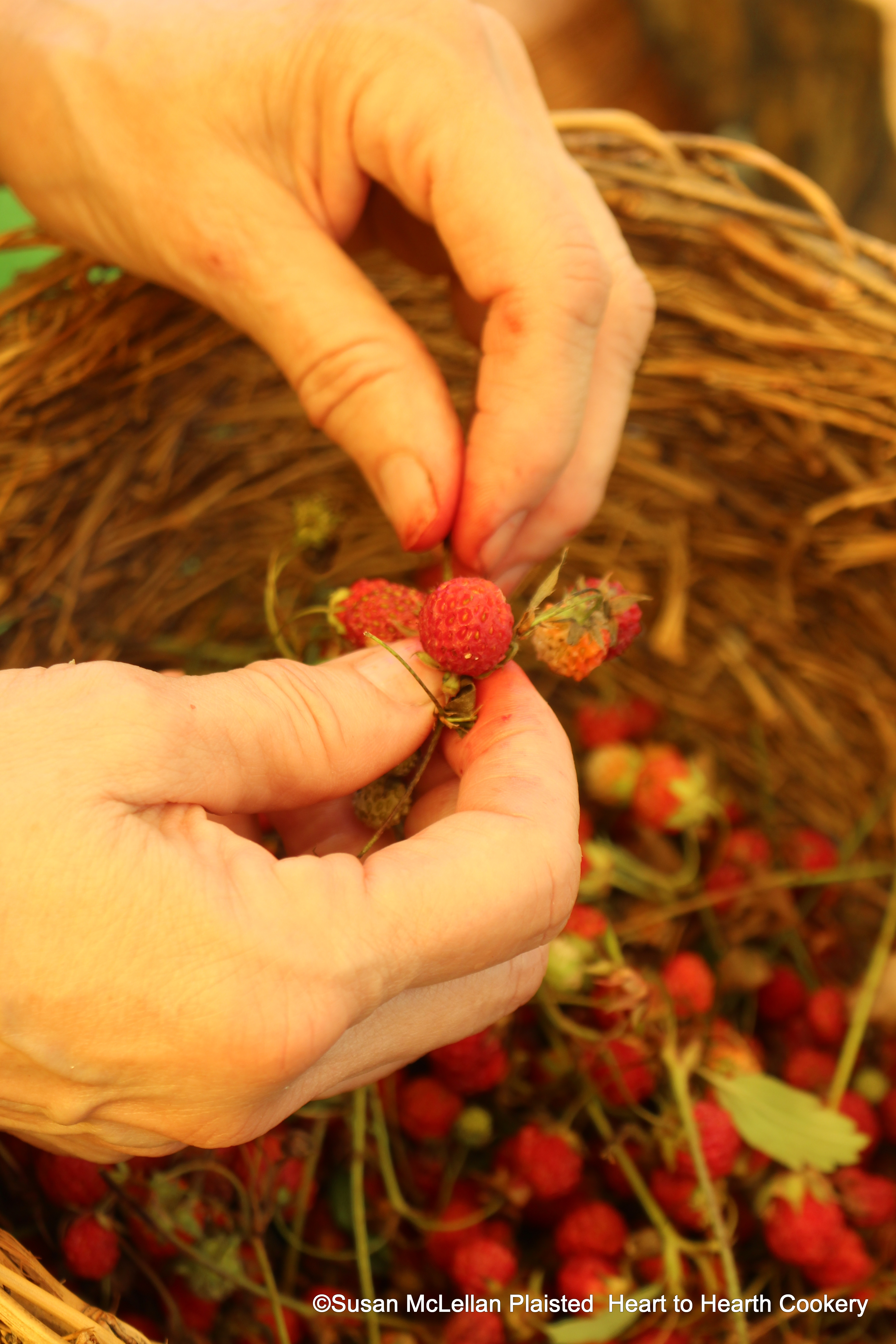
The next step after foraging for the native strawberries is to prepare them one by one for drying to preserve them. The Lenape women would both forage and do this work together but I was just one Lenape interpreter and the task is time consuming.
Visit my website at: www.hearttohearthcookery.com
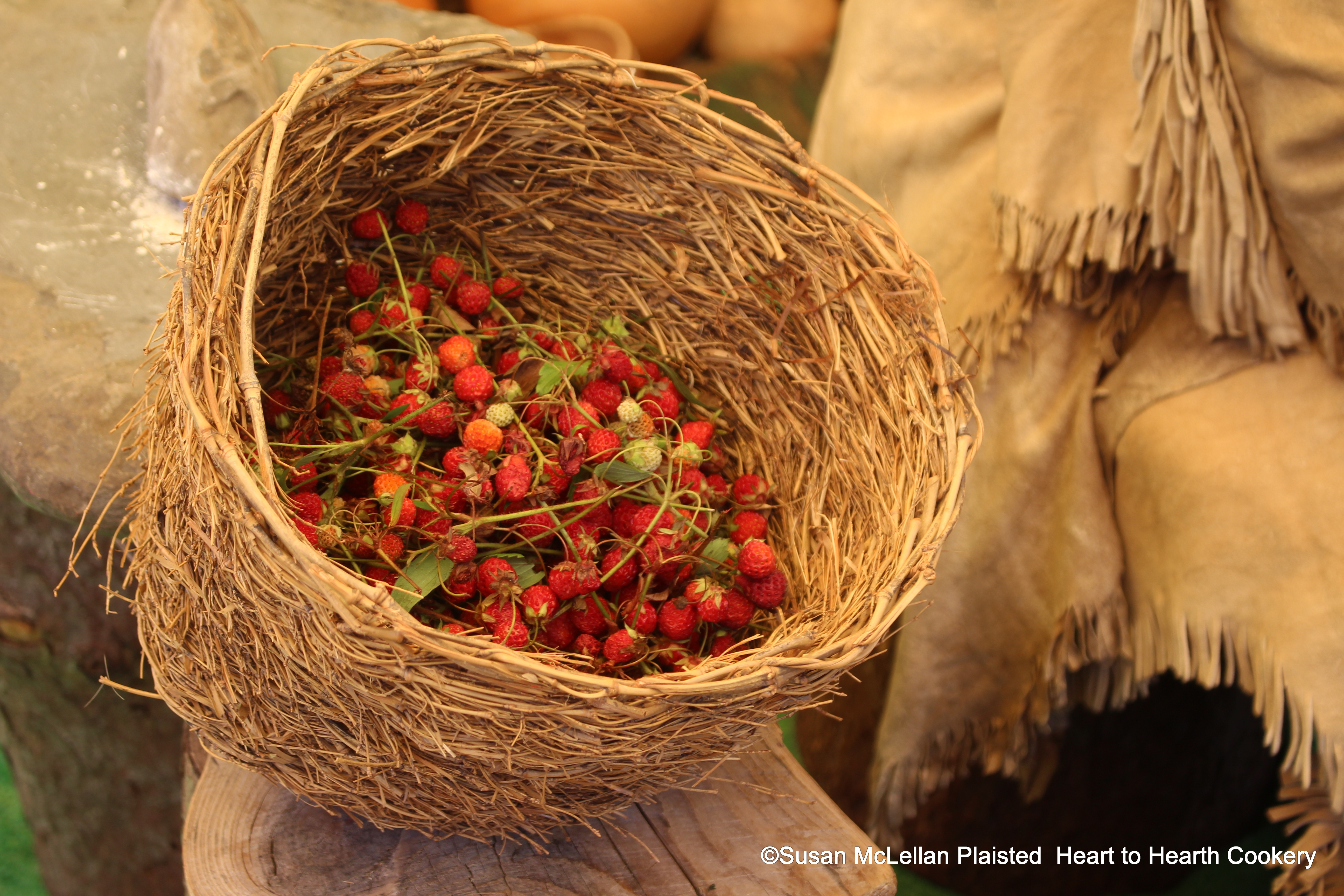
This basket contains foraged native strawberries (harvested in June) have a wonderful flavor much greater than their size. These will be preserved in the Lenape way.
Visit my website at: www.hearttohearthcookery.com
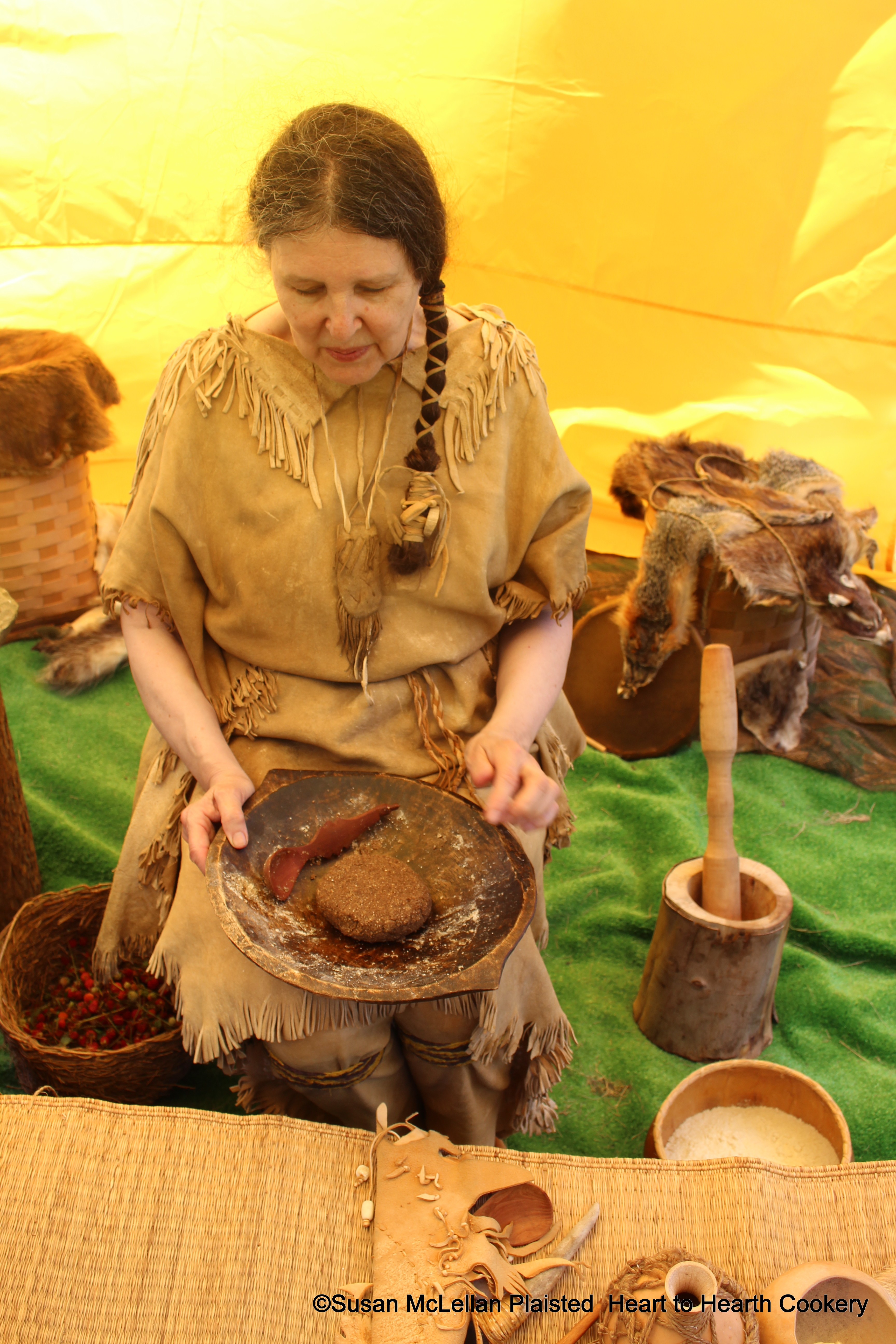
The sunchoke bread prepared from pounded, dried sunchokes and water is now ready to be cooked at the fire either in what is known as clean ash or on a hot rock.
Visit my website at: www.hearttohearthcookery.com
Posted in Bread, culinary history, food, food history, Lenape, Native American, receipts, recipes | Tags: culinary history, food, food history, foodways, Lenape, Native American
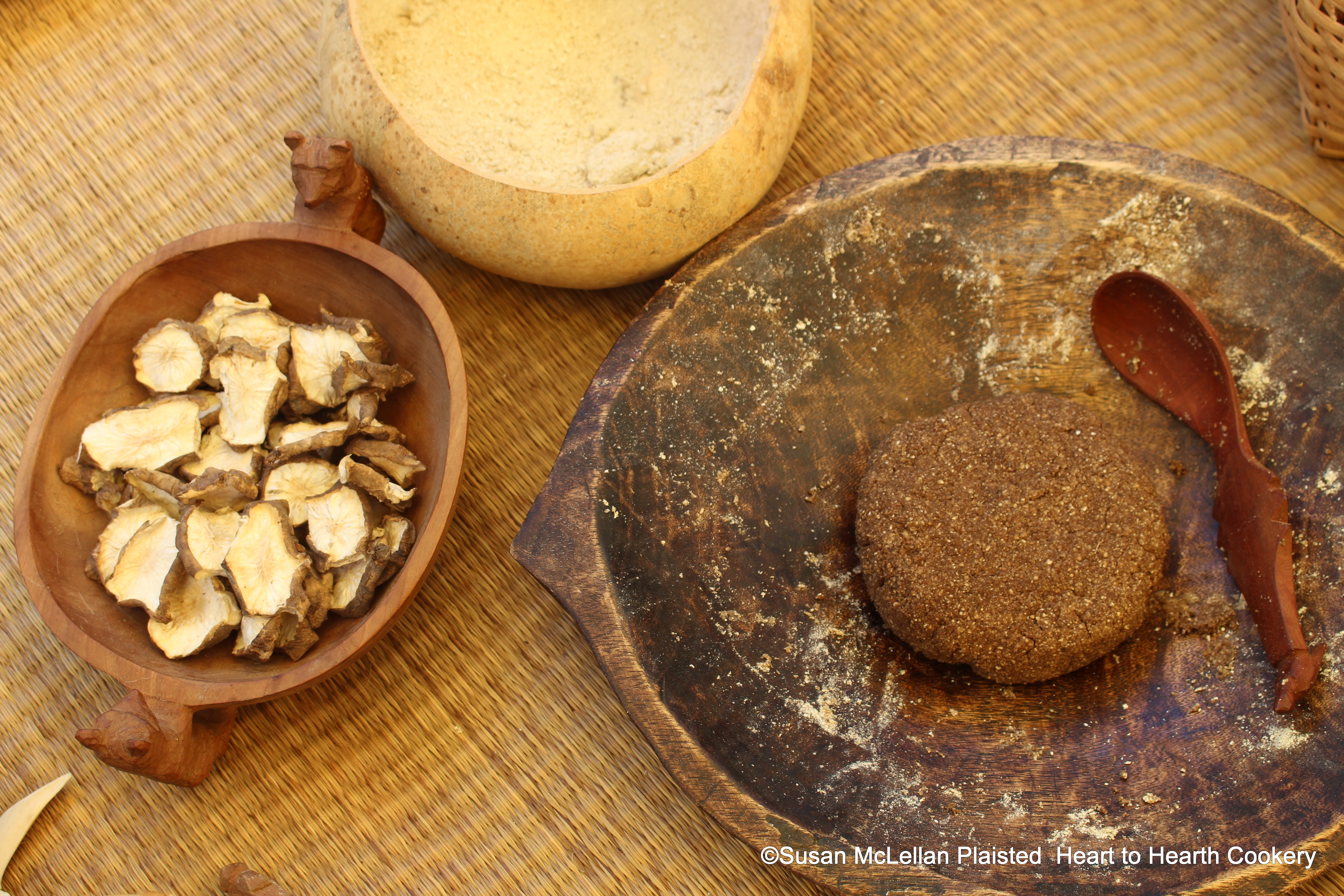
Sunchokes dried, sunchoke flour and sunchoke bread
After the sunchoke flour has been mixed with flour and kneaded very well for the receipt (recipe) Sunchoke Bread as described by European observers of the Lenape, the bread is formed. Pictured from left to right, sliced spring sunchokes dried, a gourd of sunchoke flour prepared by pounding the dried sunchokes, and the sunchoke bread ready for baking.
Visit my website at: www.hearttohearthcookery.com
Posted in Bread, culinary history, food, food history, Lenape, Native American, receipts, recipes | Tags: culinary history, food, food history, foodways, Lenape, Native American

When there is enough dried sunchokes flour pounded to prepare the Lenape receipt (recipe) the Europeans described as sunchoke bread, the sunchoke flour is placed in a wood bowl and water added.
Visit my website at: www.hearttohearthcookery.com
Posted in Bread, culinary history, food, food history, Lenape, Native American, receipts, recipes, sunchoke flour, Sunchokes | Tags: culinary history, food, food history, foodways, Lenape, Native American
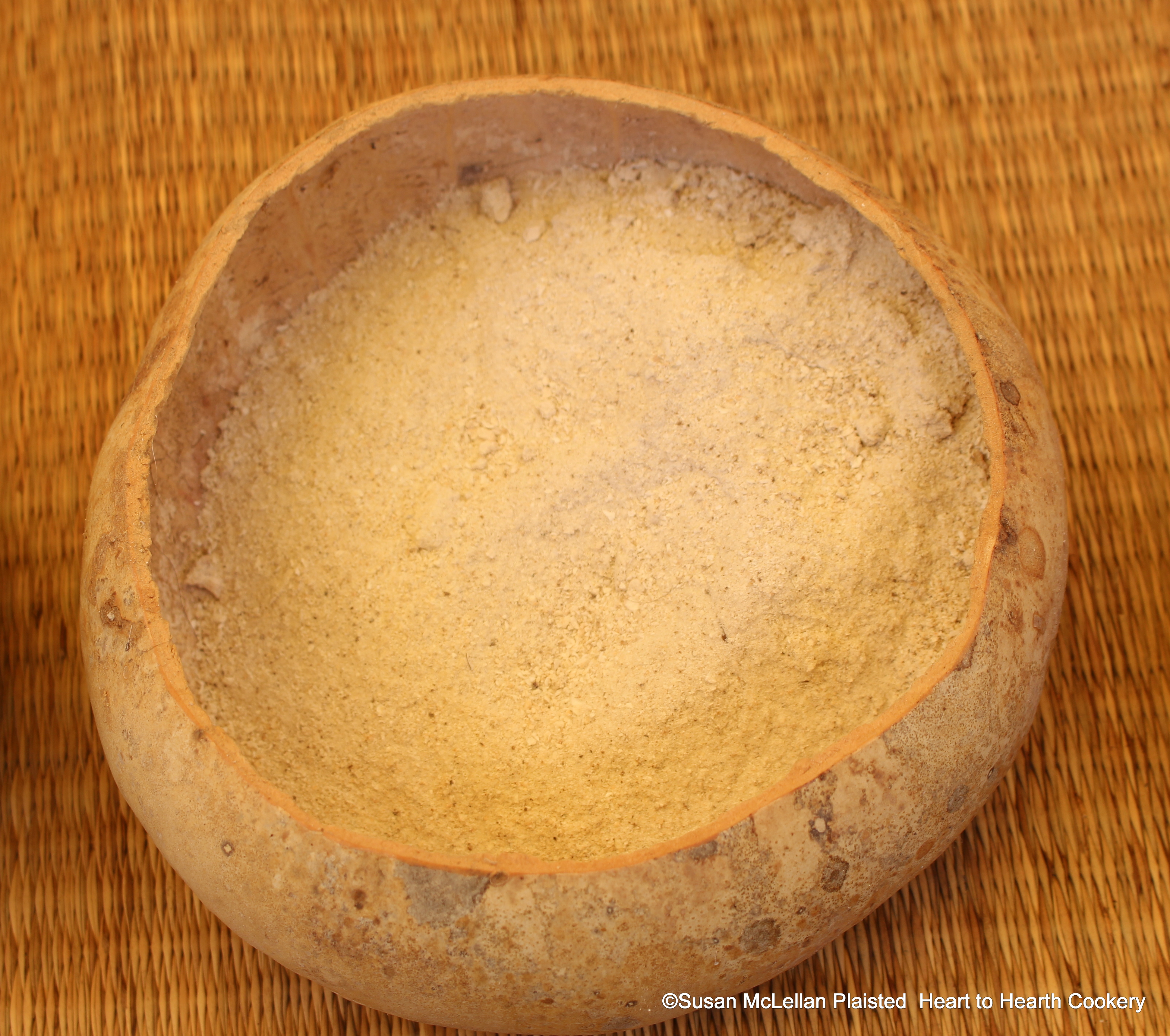
The gourd bowl is filled with all the sunchoke flour that was made by harvesting the early spring sunchoke tubers, drying them, and pounding them into flour for the receipt (recipe) described as sunchoke bread by the Europeans.
Visit my website at: www.hearttohearthcookery.com
Posted in Bread, culinary history, food, food history, Lenape, Native American, receipts, recipes | Tags: culinary history, food, food history, foodways, Lenape, Native American
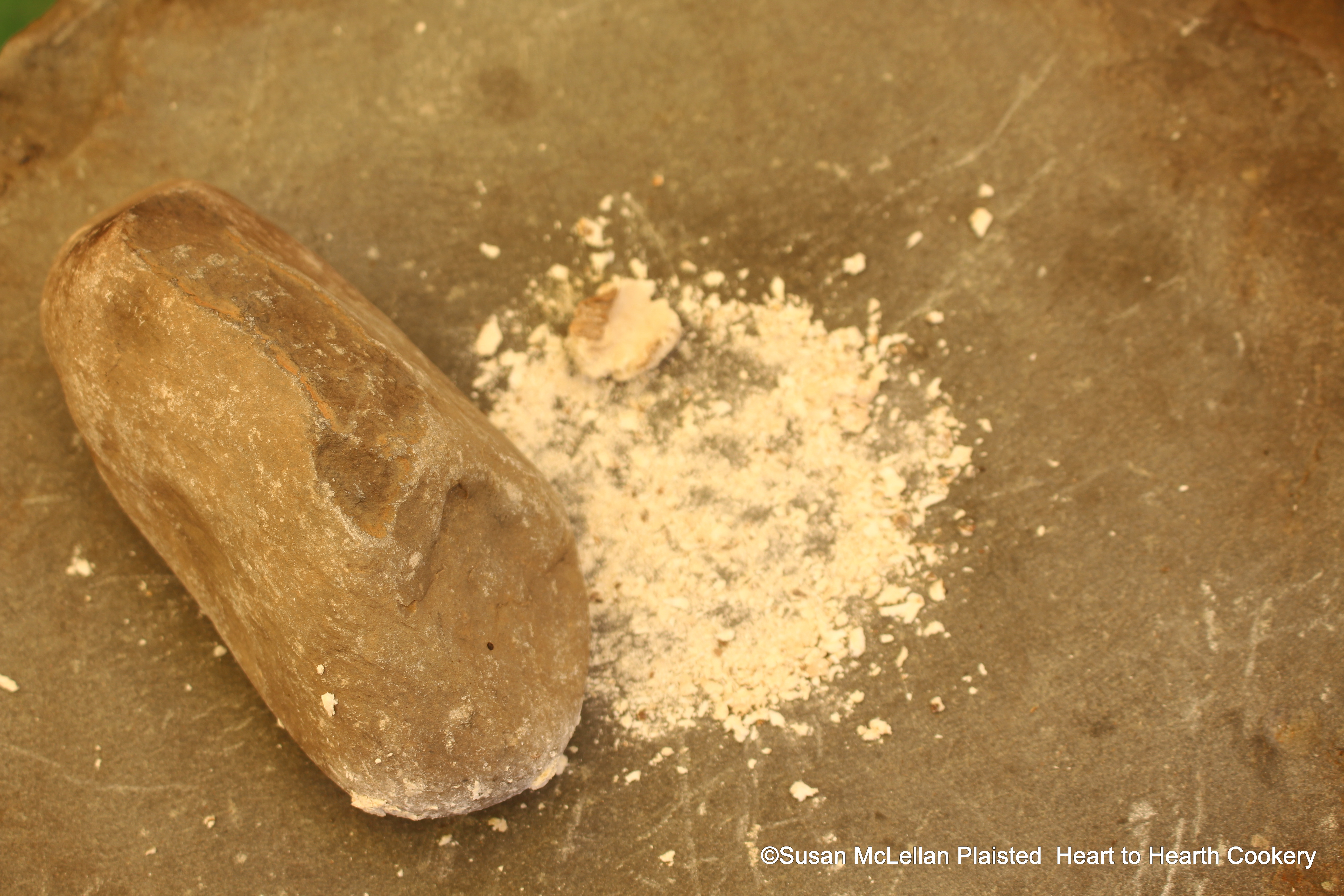
After the early spring sunchoke tubers have been dried in the sun, the dried sunchoke pieces were pounded into flour on a stone mortar with a stone pestle for the receipt (recipe) described by European settlers as sunchoke bread.
Visit my website at: www.hearttohearthcookery.com
Posted in Bread, culinary history, food, food history, Lenape, Native American, receipts, recipes | Tags: culinary history, food, food history, foodways, Lenape, Native American
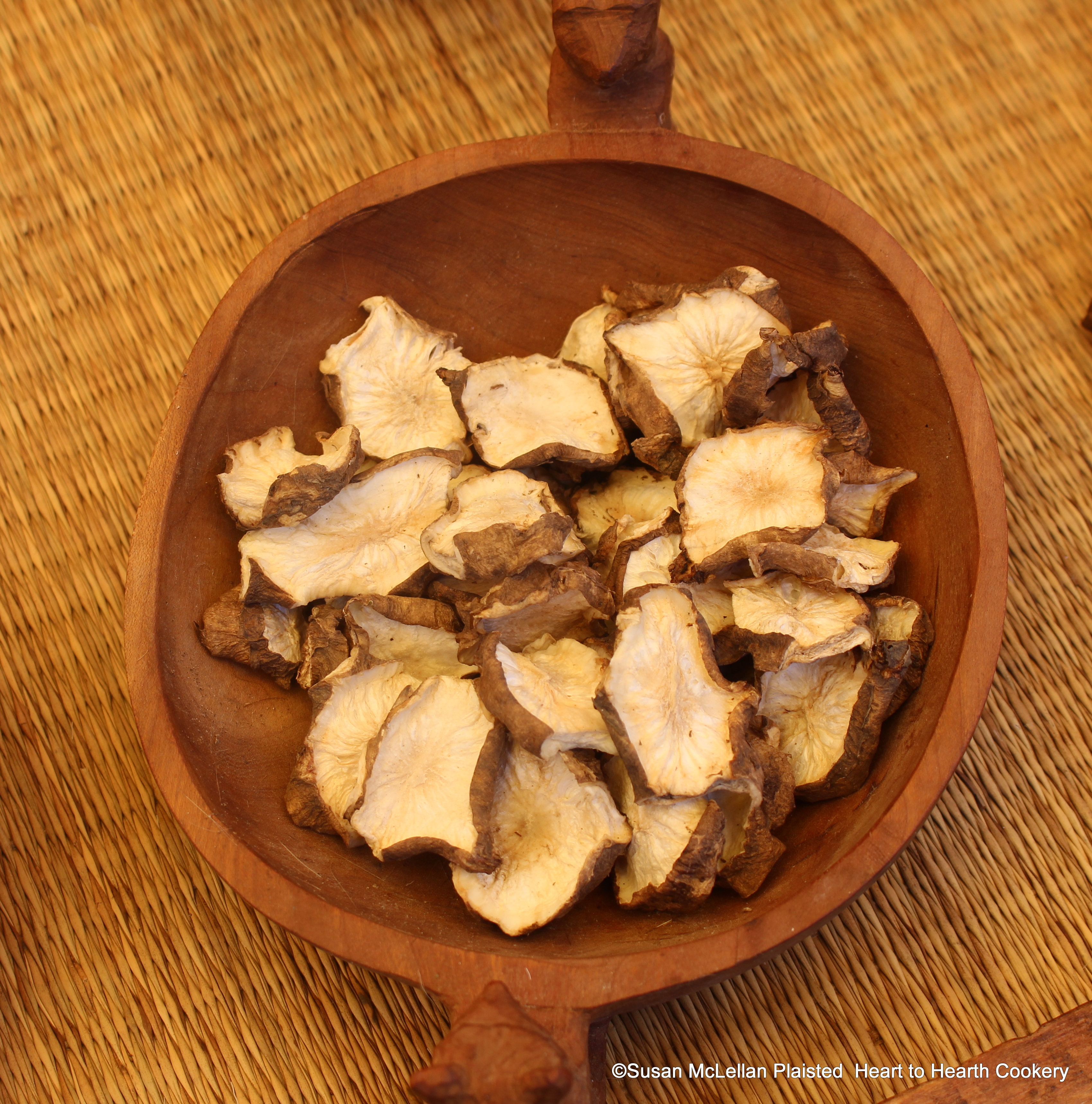
After the sunchoke tubers were dug out of the ground before the new plant emerges for the receipt (recipe) Sunchoke bread, each tuber was sliced in thick slices and dried in the sun.
Visit my website at: www.hearttohearthcookery.com
Posted in Bread, culinary history, food, food history, Jerusalem artichokes, Lenape, Native American, receipts, recipes, Sunchokes | Tags: culinary history, food, food history, foodways, Lenape, Native American

