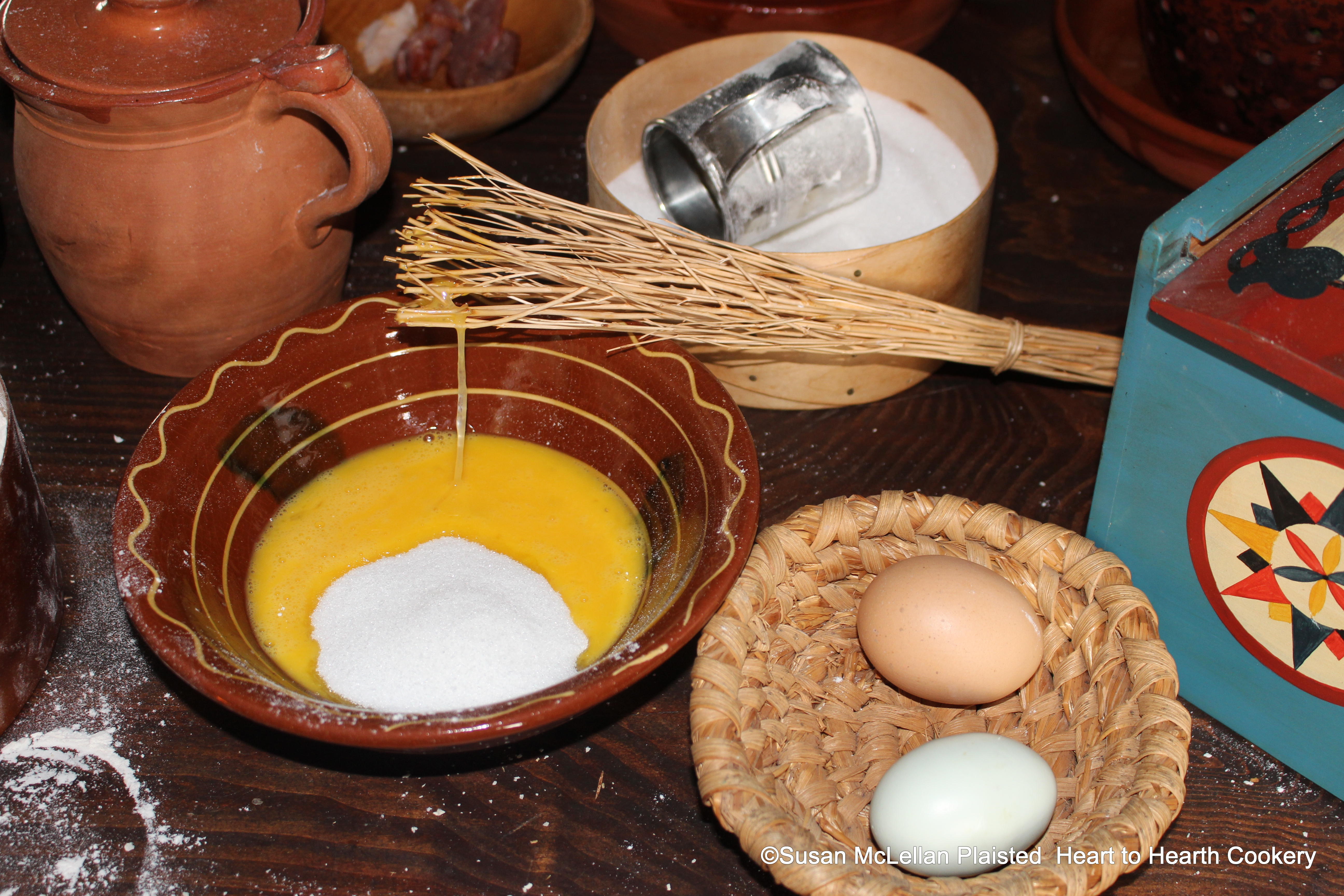
After the two eggs have been whisked for the receipt (recipe) Heesse Schpecksass (Hot Bacon Sauce), zucker (sugar) is added. This sauce will be served on fresh dandelion greens.
Visit my website at: www.hearttohearthcookery.com
After the two eggs have been whisked for the receipt (recipe) Heesse Schpecksass (Hot Bacon Sauce), zucker (sugar) is added. This sauce will be served on fresh dandelion greens.
Visit my website at: www.hearttohearthcookery.com
Posted in culinary history, dandelion, Dandelion salad, food, food history, receipts, recipes | Tags: culinary history, food, food history, foodways, Pennsylvania German
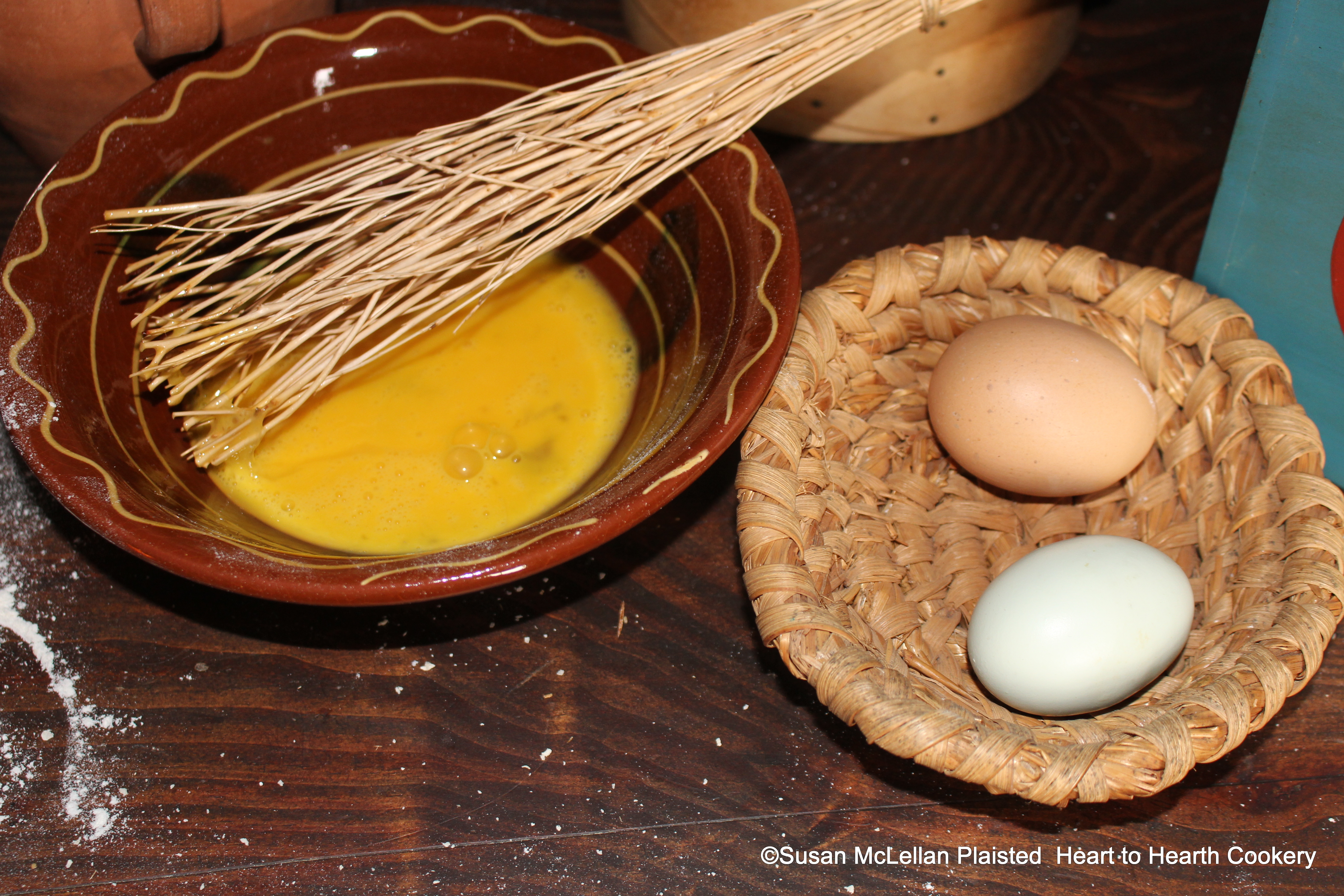
After the schpeck (bacon) has been friend crisp for the Pennsylvanian German receipt (recipe) Heesse Schpecksass (Hot Bacon Sauce), two oier (eggs) are whisked with a birch twig whisk.
Visit my website at: www.hearttohearthcookery.com
Posted in Birch twig whisks, culinary history, Dandelion salad, food, food history, receipts, recipes | Tags: culinary history, food, food history, foodways, Pennsylvania German

The schpeck (bacon) is being fried crisp for the receipt (recipe) Heese Schpecksass (Hot Bacon Sauce) to serve on the fresh dandelions. This is a traditional Pennsylvania German spring receipt.
Visit my website at: www.hearttohearthcookery.com
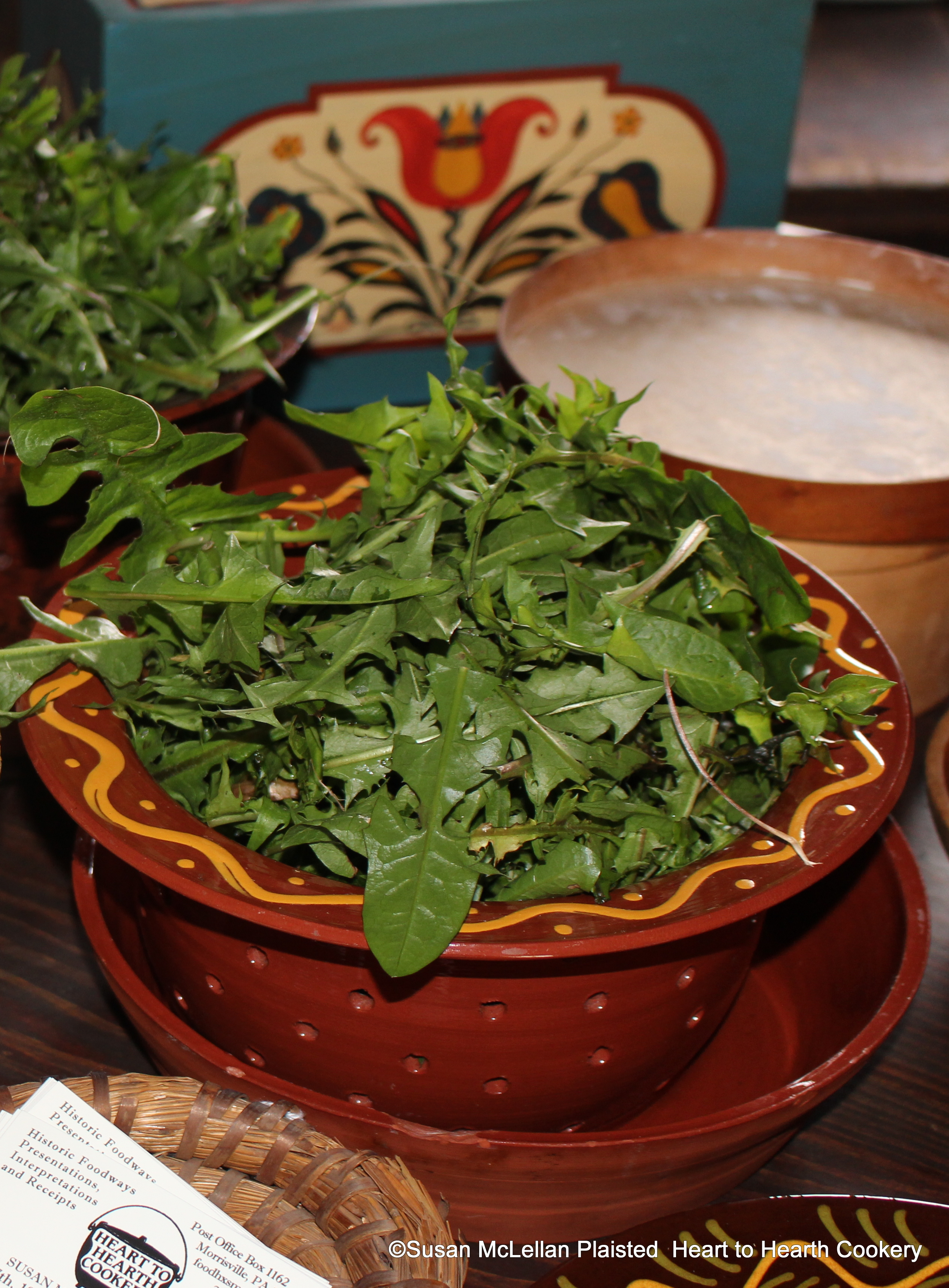
The dandelion greens used for the traditional Pennsylvania German receipt (recipe) for Dandelion Green Salad (Biddre Selaat) should be harvested very early in spring before even the buds appear as the leaves become bitter as the buds and flowers appear. The greens need to be harvested where chemicals are not used and those that appear in a garden bed are the best.
Visit my website at: www.hearttohearthcookery.com
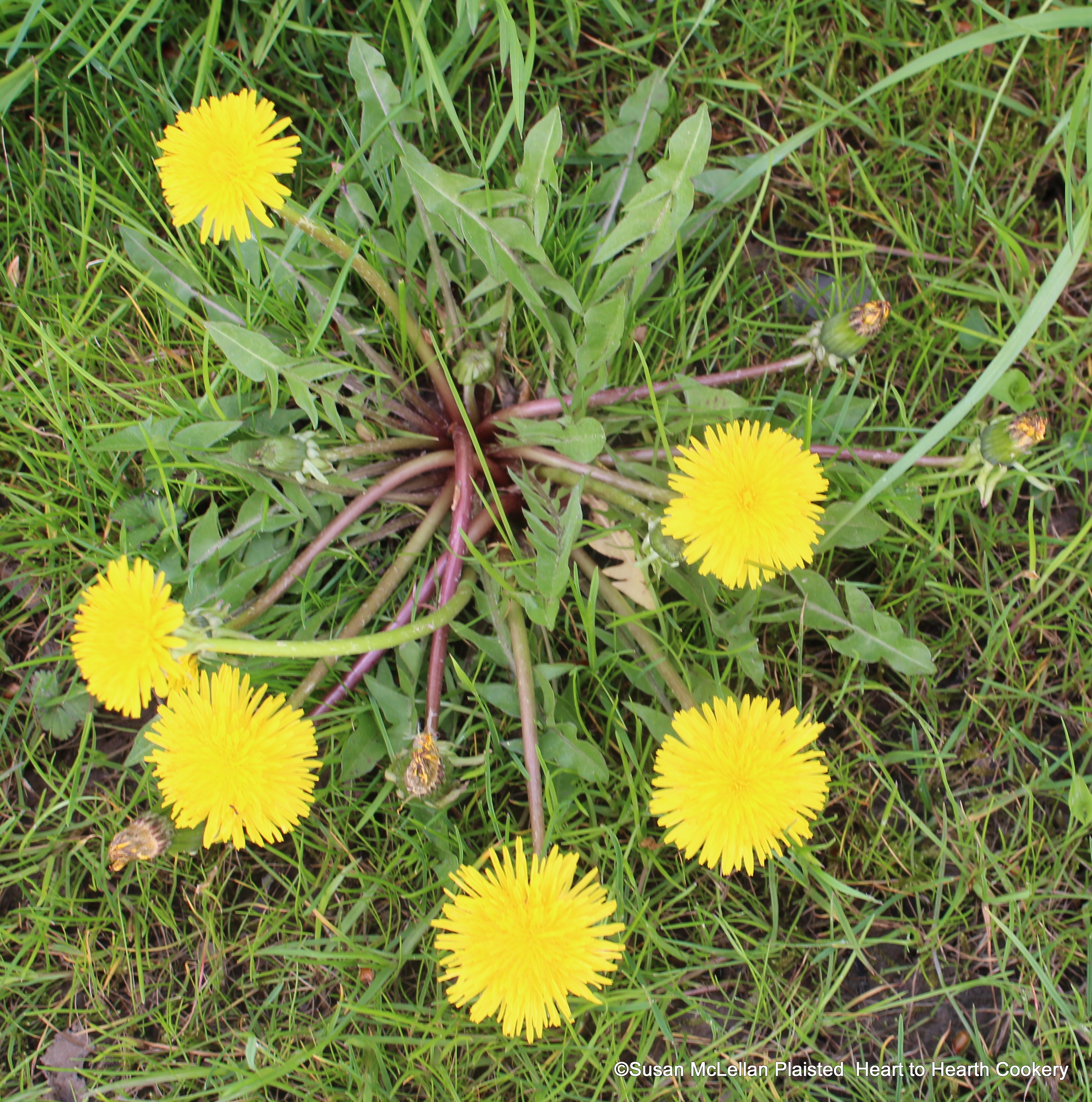
The dandelion (Taroxacum officinale) was brought to North America by European settlers in the mid-1600’s and was cultivated and used both as food and medicine. For the Pennsylvania Germans dandelion greens were a spring tradition. My next receipt (recipe) is dandelion salad (Löwenzahn Salat).
Visit my website at: www.hearttohearthcookery.com
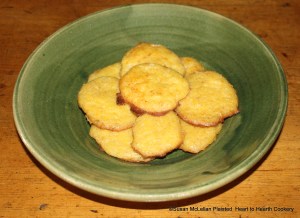
After the Cheshire cheese, butter and eggs have been mixed, made into cakes, laid in a dish over hot coals, and browned with a salamander for the receipt (recipe) To make Ramakins, they are served up hot.
Visit my website at: www.hearttohearthcookery.com
Posted in cheese, culinary history, food, food history, receipts, recipes | Tags: culinary history, food, food history, foodways

After the Cheshire cheese, butter and eggs mixed have been made into cakes and laid in a dish over coals for the receipt (recipe) To make Ramakins hold a salamander over them ’till they be brown. A salamander is an iron tool that is immersed in the embers at the base of a fire until it is glowing red. The change in color is the reason the tool is known as a salamander.
Visit my website at: www.hearttohearthcookery.com
Posted in Cakes, cheese, culinary history, food, food history, receipts, recipes, salamander | Tags: culinary history, food, food history, foodways
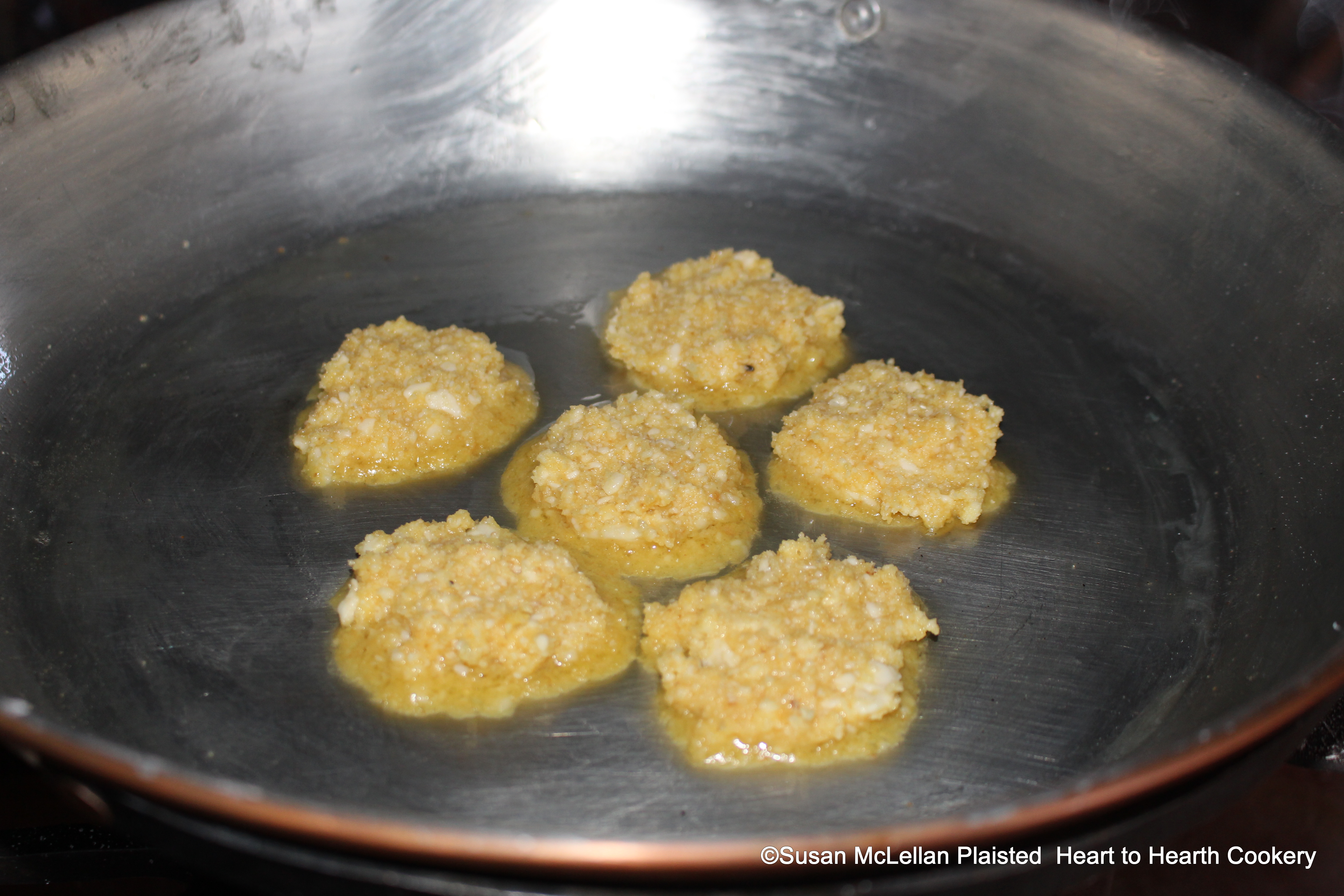
After the butter, Cheshire cheese and two eggs have been beaten fine in a mortar for the receipt (recipe) To make Ramakins make them up into cakes and cook them over coals in a brazier.
Visit my website at: www.hearttohearthcookery.com
Posted in brazier, Cakes, culinary history, food, food history, receipts, recipes | Tags: culinary history, food, food history, foodways
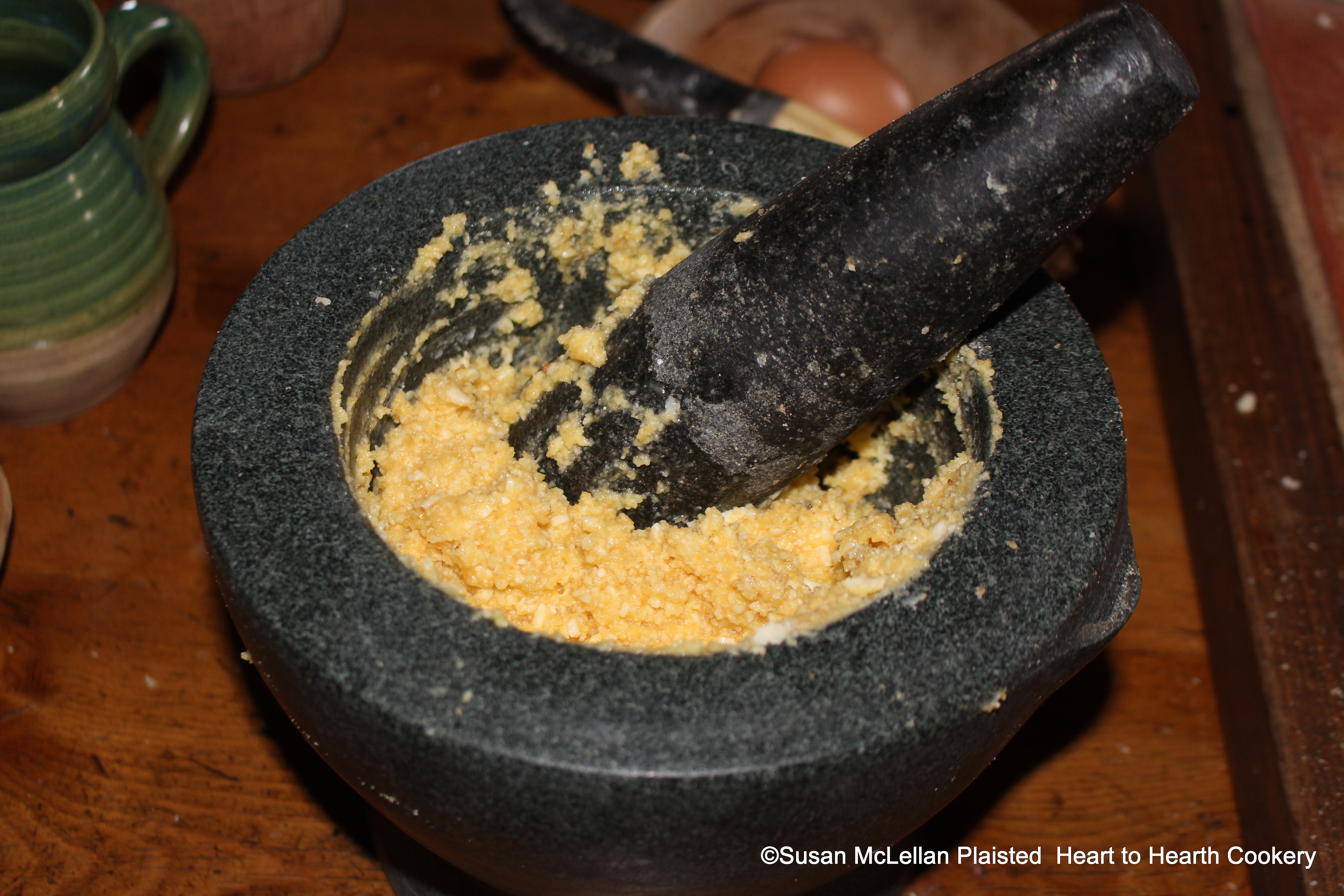
After the two eggs were added to the mortar for the receipt (recipe) To make Ramakins, the next step was to beat them fine with the mortar.
Visit my website at: www.hearttohearthcookery.com
Posted in cheese, culinary history, food, food history, Marble mortar and pestle, receipts, recipes | Tags: culinary history, food, food history, foodways

After two ounces of butter and a quarter of a pound of Cheshire cheese have been added to the mortar for the receipt (recipe) To make Ramakins, two eggs are added.
Visit my website at: www.hearttohearthcookery.com
Posted in cheese, culinary history, food, food history, Marble mortar and pestle, receipts, recipes | Tags: culinary history, food, food history, foodways
 Heart to Hearth Cookery