Posted by: hearttohearthcookery | September 12, 2010

Apple Butter

Stirring apple butter

Stirring apple butter

This past Saturday was the first Heart to Hearth Cookery apple butter demonstration.  To prepare for the day, bushels of apples were pared and gallons of cider were reduced by half.  The picture to the left shows the stirring of the apples and cider for HOURS!  Many of the festival goers (both adults and children) participated by using the stirrer designed for one, two or three pairs of hands.  As the apple butter was thickening and about an hour prior to removing the butter from the kettle, spices were added.  The taste was worth ALL the hours of preparation.  It was a fun day!  Apple butter demonstrations are now available by Heart to Hearth Cookery and will be added to the website at www.hearttohearthcookery.com
Posted by: hearttohearthcookery | September 9, 2010

Wild Turkey

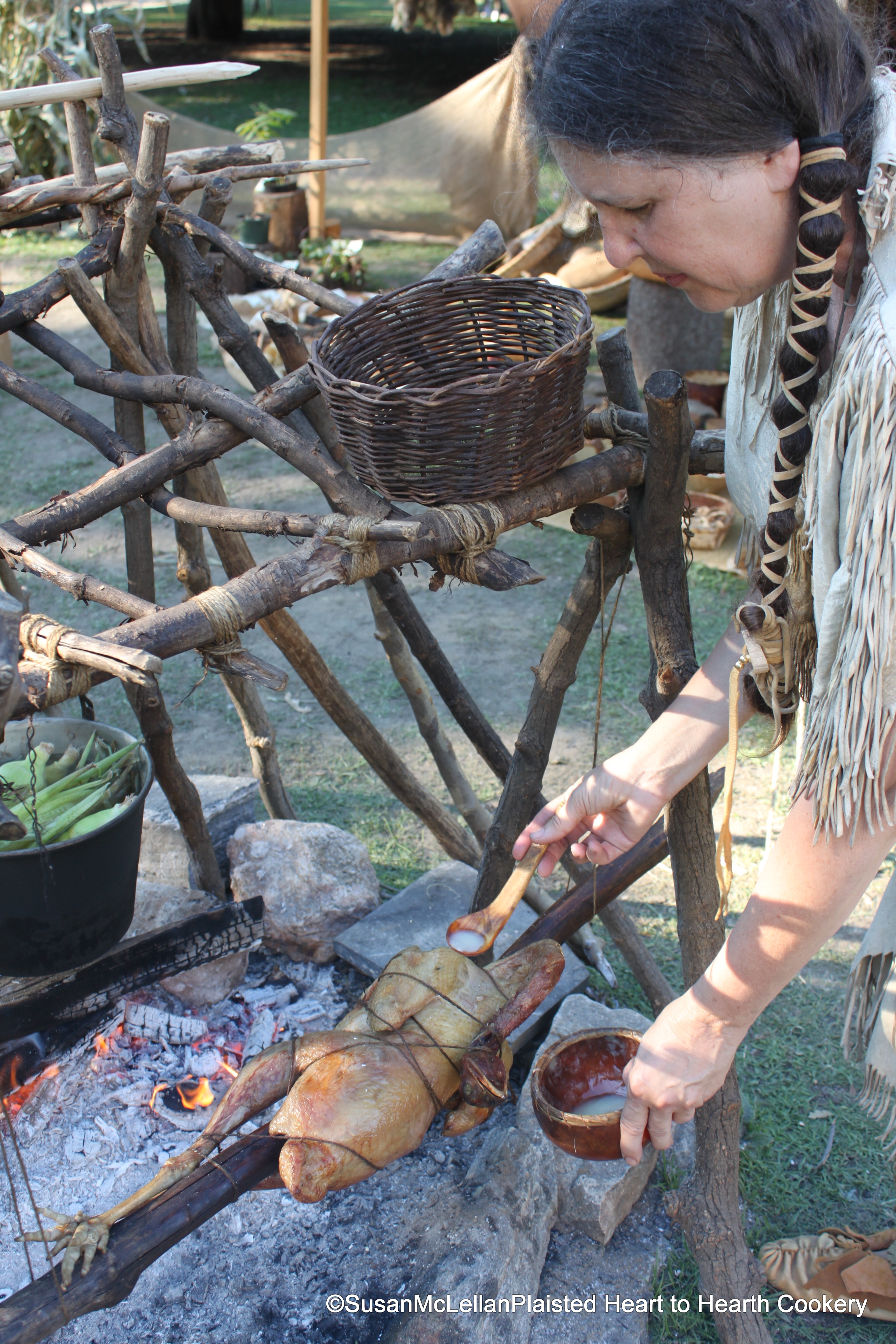
Basting the turkey with bear grease

In William Penn’s account of the Lenape, he wrote:   We sweat and toil to live; their pleasure feeds them, I mean, their Hunting, Fishing and Fowling…  The weekend of the Green Corn Festival at Phillipsburg Manor, I presented all three.  The first day I roasted eel, the second I roasted wild turkey.  In the picture to the left, I am using a gourd containing the fat of a bear and keeping the turkey moist for eating.

Please visit my website at www.hearttohearthcookery.com  The class page has a new hearth cooking class posted.
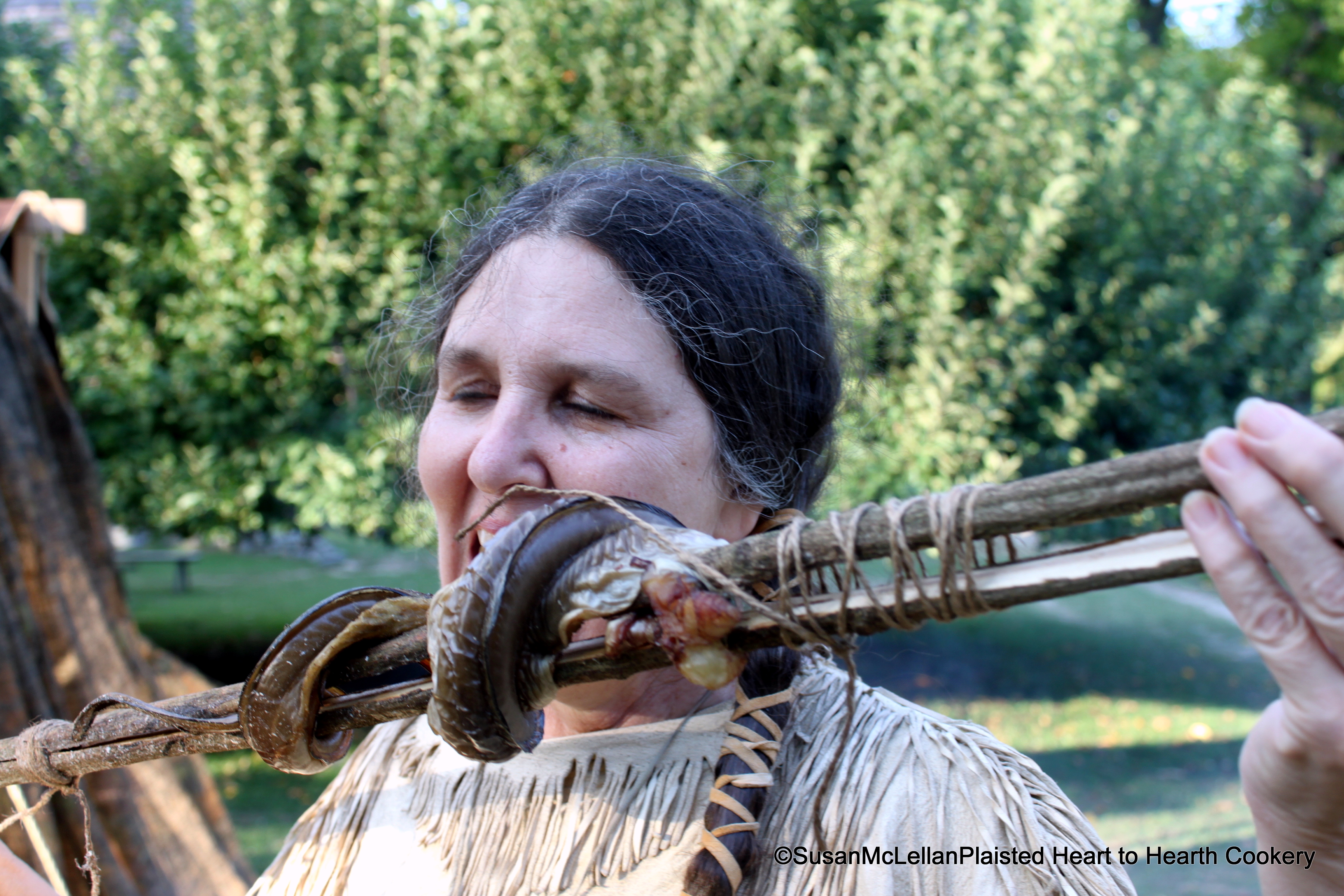
Wanishi!

Posted by: hearttohearthcookery | September 4, 2010

Roast Eel

Eel on roasting stick

Today at the first day of Phillipsburg Manor’s Green Corn Festival, I used the “Indian” method of roasting eel that John Bartram (first American botanist) describes in his Observations on his journey from Pennsylvania to Onondaga in 1743.  He wrote:  Their way of roasting eels is thus:  they cut a stick about three foot long and as thick as one’s thumb, they split it about a foot down, and when the eel is gutted, they coil it between the two sides of the stick and bind the top close, which keeps the eel flat, and then stick one end in the ground before the fire.  Look carefully in the picture for that stick with the eel coiled between the split stick.  All that was required was to turn the stick in the ground to roast the eel evenly.  And the result-it was very tasty!

Visit my website at www.hearttohearthcookery.com 
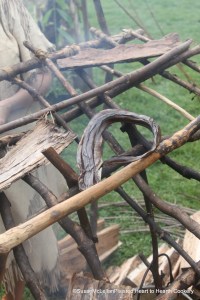
The eel is roasted

Posted by: hearttohearthcookery | August 27, 2010

Dried Eel

Eel drying on my drying rack

Eel drying on my drying rack

Yes, it is my second eel.  Now that I have braved one English receipt, I am now drying one on my Native American drying rack.  In A Journey from Pennsylvania to Onondaga in 1743 , John Bartram reported his Observations. On the 17th day, we crossed the neck to the east branch of Susquehanah…At 11 we dressed our dinner and found an Indian by the river side, resting himself.  All his provision was a dried eel; this he made us a present of, and we gave him a share of our dinner.”   My next step is to try dried eel.

Visit my website at www.hearttohearthcookery.com


Posted by: hearttohearthcookery | August 24, 2010

Acorn Flour

Making acorn flour

It seems that I am still a novice to blogging even though this post on acorn flour is my 100th post to Bites of Food History!  This weekend I had red acorns to process into acorn flour.  The red acorns require more processing as the tannin content is higher than in the white acorns.  I am pictured with my bowl of acorns as I am using my rock mortar and pestle to crack open the nuts and remove the meats.  The nut meats than need to be leached of the tannins.  I used the heat of the fire with the nuts  in my small trade kettle and changed the water repeatedly over two days until the water was clear.  As I write this, my acorn meats are drying so they can be pounded into flour.  The pictures of processing the acorns into flour will be added to my Pennsylvania Humanities Council Lenape Foodways program.  See www.pahumanities.org for information on Commonwealth Speakers.  They are free for your group or organization if it qualifies.  And visit my website at www.hearttohearthcookery.com

Posted by: hearttohearthcookery | August 20, 2010

Too Stew Eels

Too Stew Eals

For those of you who know me, my standing holding an eel is a courageous feat!  I have had a phobia about eels since childhood.  I am fascinated by the mysteries of the eel and find them a most interesting  fish-from a distance!  In this picture, I am focusing on the eel bones as they seem not to be found in the faunal remains studied by zooarchaeologists.  With this eel, I prepared Guliema Penn’s receipt-Too Stew Eals as at the sunn in fish Street London.  The eel was cleaned and skinned (not an easy job) and cut into peces.  The pieces were placed in a kettle with as much wine as will cover them and a quarter of a pint of vinegar was added.  Onions, parsley and sorrel were chopped together and added to the kettle with some anchovies and a Rase of ginger.  When done, the appearance was as if tiny salmon steaks were floating in the wine-vinegar and the bones were so soft to be easily consumed.

Visit my website at www.hearttohearthcookery.com
 

Posted by: hearttohearthcookery | August 16, 2010

Too Stew Larks

Too Stew Larks

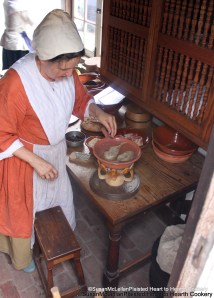
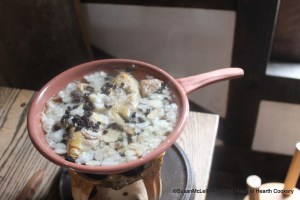
 Just look closely in the “Chafing dish” and you will see the birds.  I am taking Corants and putting them “to the broath”  Yes, I can spell but I am quoting Gulielma Penn from her receipt book transcribed by Edward Blackfan for William Penn Jr. in 1702.  William Jr arrived in Pennsylvania in December 1703 with his Mother’s receipts.  The only other ingredients that will be added are marrow and “Croms of manchets” (bread of the whitest wheat flour).   The final product below will be served on “tostes” (think toast or sippets).  Visit my website at www.hearttohearthcookery.com.

Birds with Croms, marrow and Corants

Posted by: hearttohearthcookery | August 12, 2010

Anana or Pine Apple Cream Ices

Preparing Pine Apple Cream Ice

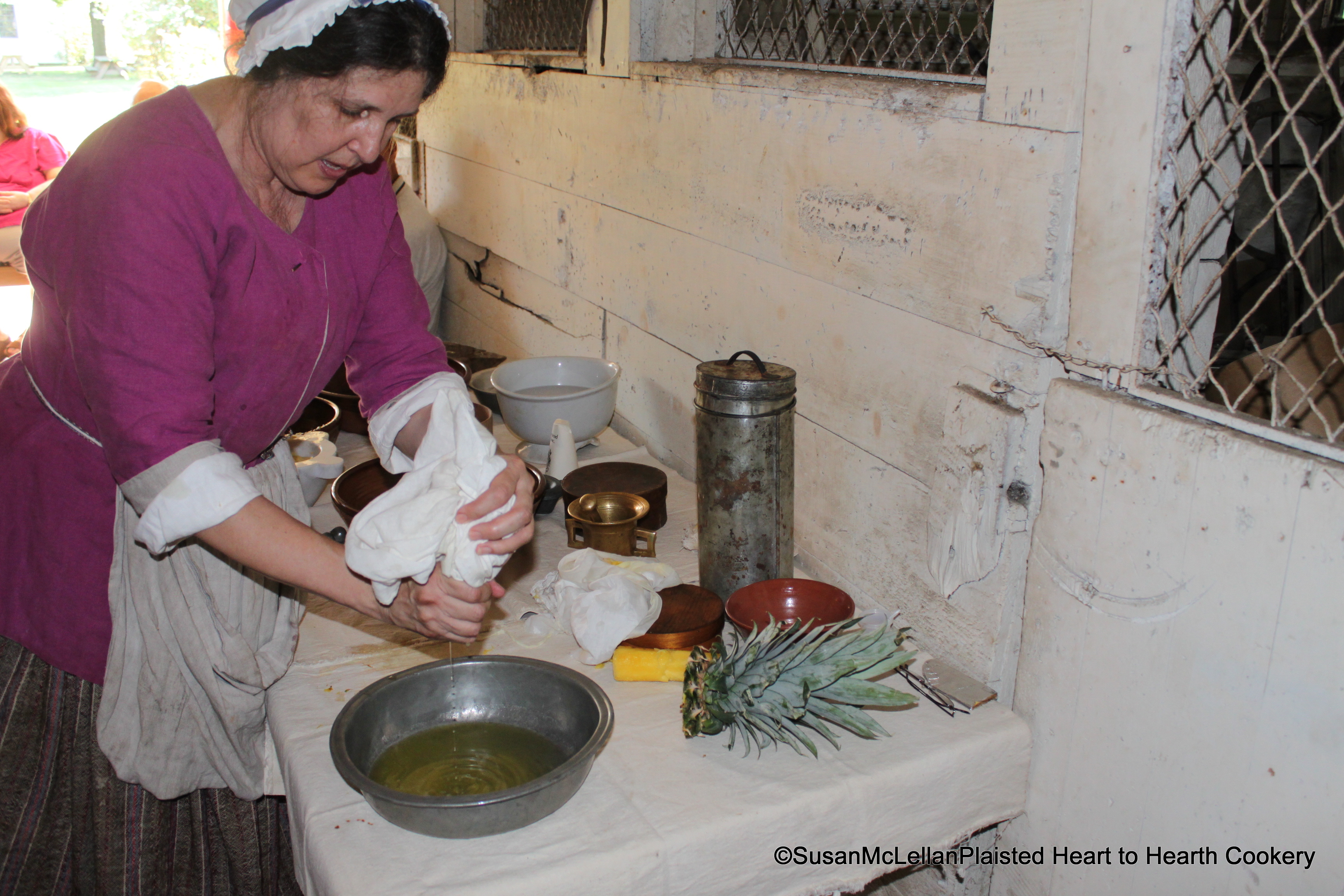
August 7, 2010 I was the guest of the Simsbury Historical Society for a day of ice cream.  Two different ice creams were prepared, Raspberry and Pine Apple,  with the assistance of the visitors.  I am pictured left squeezing the goodness of the pineapple after it has been processed in a marble mortar and pestle.  That juice was added to the fresh cream with sugar and prepared into a cream ice with my pewter sabotiere.  Visit my website at www.hearttohearthcookery.com.

Posted by: hearttohearthcookery | August 5, 2010

Back to my “Roots”- Beets

To fry Beets 1723

It has been awhile since I posted another receipt from my “Roots” workshop in June.  It is time to get back to my “Roots” and post the third 18th century receipt-To fry Beets.  This receipt comes from John Nott’s Cook’s Dictionary and is a wonderful receipt for demonstrations and superb in flavor.  The beets are first baked in an oven and peeled, then sliced “long ways and about half an Inch thick”.  A batter is prepared with White-wine, flour, cream, more yolks than whites of eggs; and seasoned with salt, pepper and cloves.  The sliced beets “lie in the Batter a littel while” and then covered with a mixture of bread crumbs, shredded parsley and flour.  The beets are then fried as you see pictured above and then hide them if you want any left as they will be eaten as soon as you make them:)!  They are delicious!    Visit my website at www.hearttohearthcookery.com
Posted by: hearttohearthcookery | August 1, 2010

Salt-“every attempt should be made to save it”

Salt-"every attempt should be made to save it

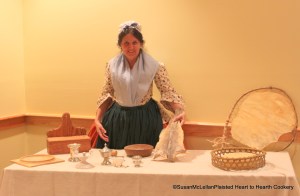
Last evening I had the honor to speak at the Brandywine Creek State Park Nature Center on one of my favorite topics SALT!  The State Park is gearing up for their American Revolution re-enactment September 25 and 26th, 2010.  To provide interest and background for the re-enactment, I spoke on the importance and need for salt in the 18th century , its use in military strategy, and the American saltworks in the middle colonies that were started and defended strongly.  In George Washington’s words- every attempt should be made to save it” (salt)  If one worked at the saltworks, it was worth a deferrment from the militia!  I hope my presentation was “worth its weight in salt”!       Visit my website- www.hearttohearthcookery.com
« Newer Posts - Older Posts »

Categories