My annual Chocolate Workshop for 2012 has just been added to my class page on my website. The picture at left shows participants of a prior chocolate workshop using metates to make 100% pure chocolate. The number of participants is limited so that all can have the experience of roasting cacao beans, using the metates, and preparing chocolate beverages. Registration is now open and please visit my website for registration information- www.hearttohearthcookery.com This makes an excellent Valentine Day’s gift and gift certificates to the workshop are available.
Chocolate Workshop-2012
Solar Salt

- Making salt
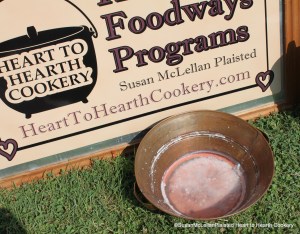
The very hot temperatures on Sunday, July 10th assisted me in making my 18th century salt demonstration more real. To reduce the amount of fuel that the colonial saltworks needed to use during the important salt making for our needs during the American Revolution, sea water was first concentrated with the use of solar evaporation. You can see the salt line when the sea water was in my copper pan and the salt crystals that started to form which I could actually skim off with my skimmer.
Posted in 18th century foodways, culinary history, food, Salt | Tags: culinary history, food, food history, foodways, salt
Confectioners Extraordinaire!

- Teaching a Confectionery Workshop
Today in 105 degree heat, ten stalwart students, (including Kimberly Walters who kindly sent me this picture) learned how to make caraway comfits (layers of sugar around caraway seeds), how to use a wafer iron, how to make sugar plate, and the process of making 18th century cream ice (ice cream). Historic London Town and Garden in Edgewater, Maryland sponsored the class. Huzzah!! We utilized three braziers and two comfit pans. In the picture, one of the students is turning the pewter sabotiere in the coopered bucket for our refreshing Green Tea Cream Ice.
Celebrate National Ice Cream Month with White Coffee Cream Ice
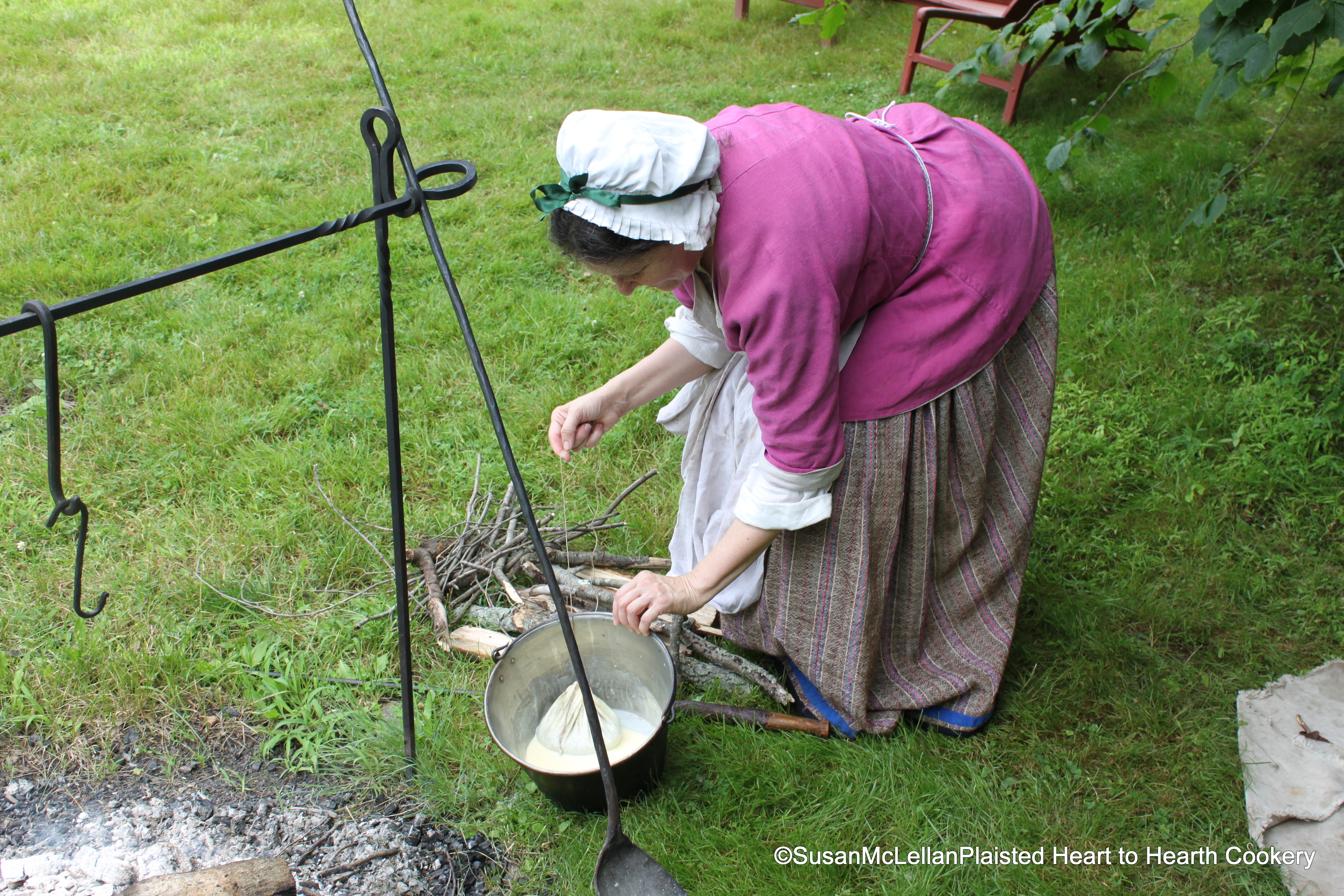
I have been curious about the receipt for White Coffee Cream Ice since I first read it. How could it be white? One roasts green coffee beans, breaks the very dark brown roasted beans into “grains”, and infuses the coffee flavor with the broken beans in a linen bag. In the picture, I am lifting the bag from the cream, egg yolk and sugar mixture and you can see the color is still “white”. This is my favorite flavor – until I make my next 18th century ice cream!
Posted in 18th century foodways, confectionery, culinary history, food, ice cream, receipts, recipes | Tags: confectionery, culinary history, food, food history, foodways, ice cream
And inside the Package???

- The Court and Country Cook
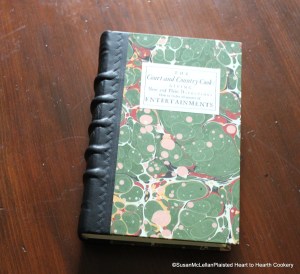
Yes, I did finally open the package and what was inside was even more magnificent! This is one of Paul McClintock’s hand bound masterpieces-The Court and Country Cook: Giving NEW and Plain Directions How to Order all manner of ENTERTAINMENTS. This receipt book was “faithfully translated out of Fransois Massialot’s French to English in 1702. A 480 page work more especially necessary for Stewards, Clerks of the Kitchen, Confectioners, Butlers and other Officers, and also of great use for Private Families.” The book is described in this manner on Paul’s website www.fromcommonhands.com.
Please visit my website at www.hearttohearthcookery.com
Posted in books, culinary history, food, food history | Tags: culinary history, food, food history, food history books, foodways
Huzzah! What packaging!

- Packaging Extraordinaire!
When I place an order for Heart to Hearth Cookery, I typically open the package right at the post office with eager expectations. I had a package slip in my PO Box on Friday July 1st and when I saw the return address was Washington, I knew what was inside. I stopped short of ripping open the box as the address label was in such a fine hand, it had to be saved. I then unwrapped several layers of bubblewrap and then…. I was so impressed with the packaging that I have yet to open it and it is now July 3rd! The folded paper is sealed with sealing wax stamped with the letter “M”. And I hope you can see by my picture the texture of the paper in which the book is wrapped. This book is from The Bindery at the sign of the Crown and Book and has been hand bound by Paul A McClintock whose website is www.fromcommonhands.com. I can assure you that Paul’s hands are anything but common! Perhaps today I will have the adventure of opening this magnificent package.
Posted in books, culinary history, food history | Tags: culinary history, food history, food history book
Wafers!!

- The Wafers
The plate of finished wafers is directly in front of the hand-stamped wafer iron. The design has hearts in the center with running deer and other motifs around the edges. The desire was for the wafers to be “white” as they will be the base for a marchpane. The receipt states to bake it white or brown at your pleasure. And my pleasure was white. I now have the wafers stored in a box for later use.
Posted in 17th century foodways, confectionery, culinary history, food, food history, receipts, wafers | Tags: confectionery, culinary history, food, food history, foodways, wafers
When is a Wafer done?

- Removing the Wafer from the Iron
The wafer iron is opened when one smells a done wafer, listens to the sound of a cooking wafer and watches the steam. I use all three senses. When done my nephew, Alan, opened the iron and I removed the wafer. The wafer is very soft and fragile as it comes off the iron. Frequently, I roll the wafer off the iron with the handle of a wooden spoon. On this occasion, my goal is flat wafers and I found the removal required very great care.
Posted in 17th century foodways, confectionery, culinary history, food, food history, wafers | Tags: confectionery, culinary history, food, foodways, wafers
Wafer making-Step Two

- Wafer Batter on the Iron
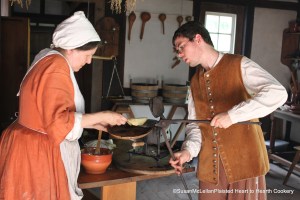
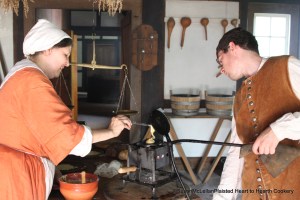
My first post on wafer making is Using a Wafer Iron. After heating the iron, butter was thoroughly applied and then comes the batter. The receipt I am using is found in The English Housewife written by Gervase Markham-To make wafers. My nephew, Alan McLellan, is holding the heated iron as I carefully place the batter so that the wafer will be the size of the iron and not oozing out the sides. Visit my website at www.hearttohearthcookery.com
Posted in 17th century foodways, confectionery, culinary history, food history, receipts, recipes, wafers | Tags: confectionery, culinary history, food, food history, foodways, wafers