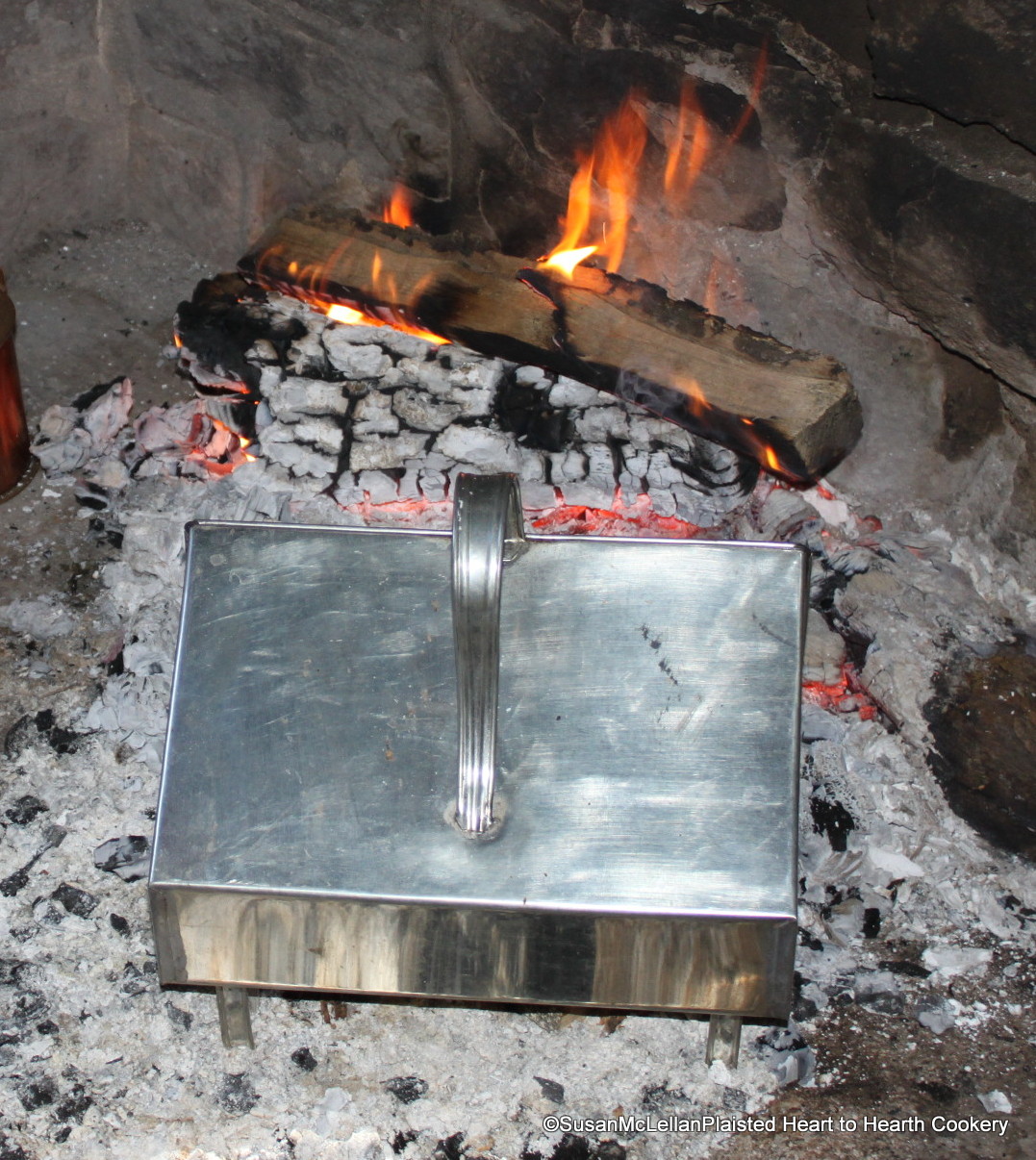
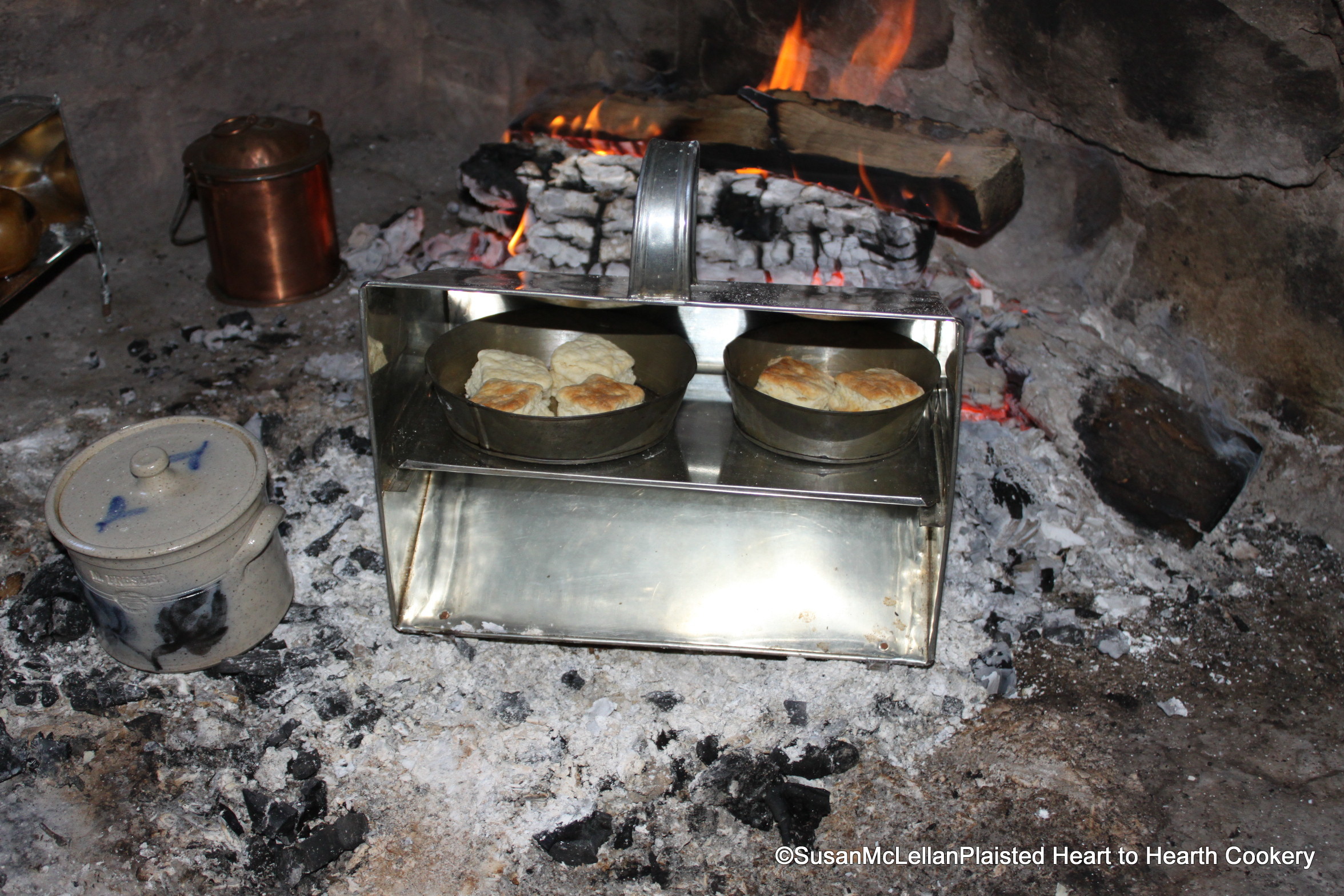
With the reflective heat from the tin baker, the tins need turning for even baking. The tin on the left was just turned and shows the two pale biscuits in the back and browned ones in the front.
Visit my website at: www.hearttohearthcookery.com
With the reflective heat from the tin baker, the tins need turning for even baking. The tin on the left was just turned and shows the two pale biscuits in the back and browned ones in the front.
Visit my website at: www.hearttohearthcookery.com
Posted in 19th century foodways, Abraham Lincoln, Biscuits, culinary history, food, food history, receipts, recipes, Tin baker | Tags: culinary history, food, food history, foodways
For the Lincoln biscuits, the square shape of the six-sided tin multi-cutter was chosen. The un-baked biscuits are visible in the tin baking pan to the left of the picture.
Visit my website at: www.hearttohearthcookery.com
Posted in 19th century foodways, Abraham Lincoln, Biscuits, culinary history, food, food history, receipts, recipes | Tags: culinary history, food, food history, foodways
The Lincoln biscuits were place on tins and baked in a tin baker. To obtain the most heat from the fire, the embers are exposed and the hand is used to determine the adequacy and evenness of the heat across the front of the baker.
Visit my website at: www.hearttohearthcookery.com
Posted in 19th century foodways, Abraham Lincoln, Biscuits, culinary history, food, food history, receipts, recipes, Tin baker | Tags: culinary history, food, food history, foodways
This past President’s Day, I did a program re-creating Abraham Lincon’s “lunch”. John Hay, one of Lincoln’s two personal secretaries, noted that Lincoln’s lunch consisted of a biscuit, a glass of milk in winter, some fruit or grapes in summer. The receipt I chose to prepare belonged to Mary Harlan Lincoln (1846-1937) who married Abraham’s son Robert Todd Lincoln. The biscuits are being cut with a tin biscuit cutter.
Visit my website at: www.hearttohearthcookery.com
Posted in 19th century foodways, Abraham Lincoln, Biscuits, culinary history, food, food history, receipts, recipes | Tags: culinary history, food, food history, foodways
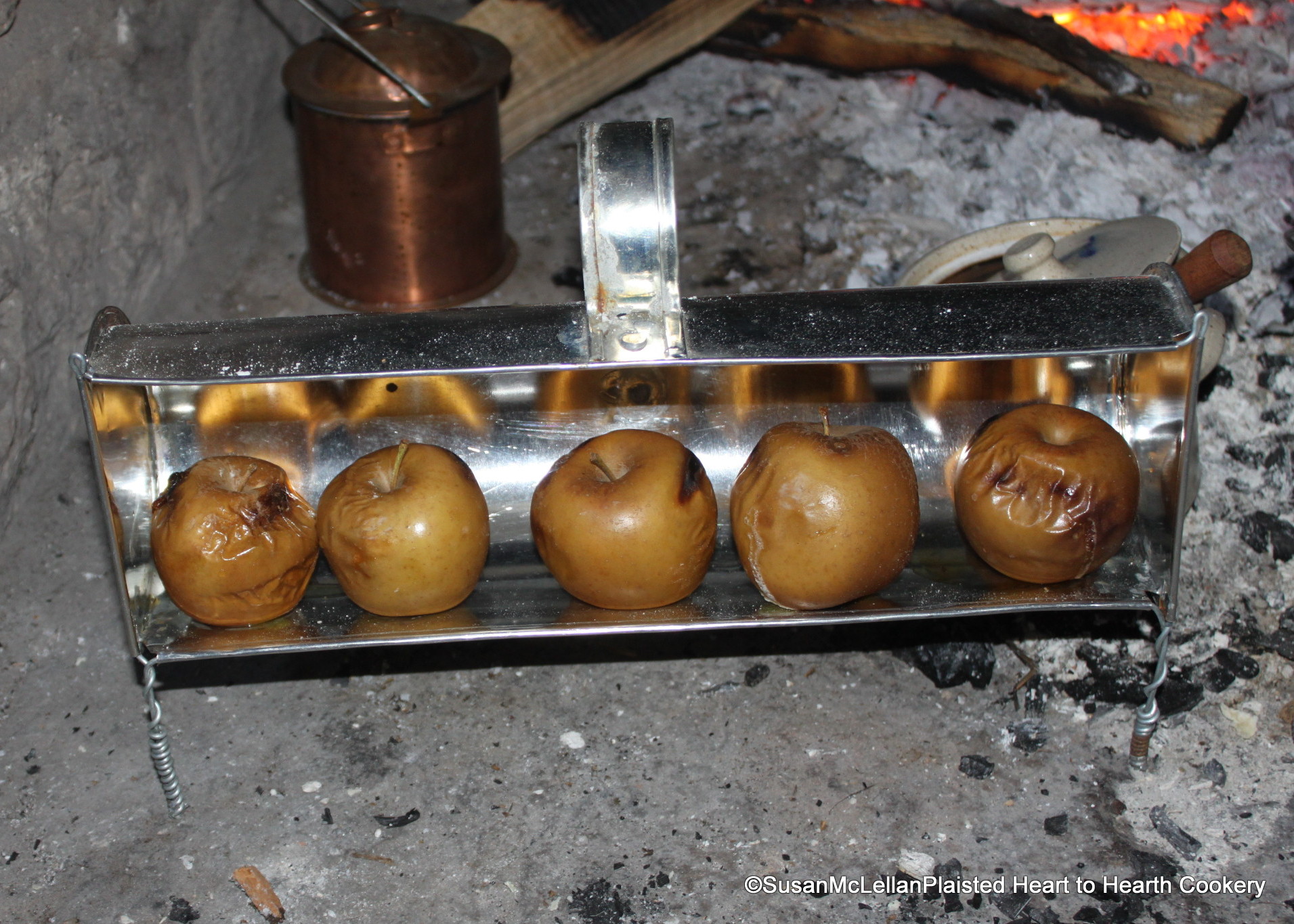
The aroma and appearance of the apples tells you when they are done. Notice the apples on either end have a more shriveled appearance as they have received the most heat. To make the apples more uniform, the end apples could have been moved from the ends to a center position during the roasting process.
Visit my website at: www.hearttohearthcookery.com
Posted in apples, culinary history, food, food history, receipts, recipes, tin apple roastere | Tags: culinary history, food, food history, foodways, Roasting
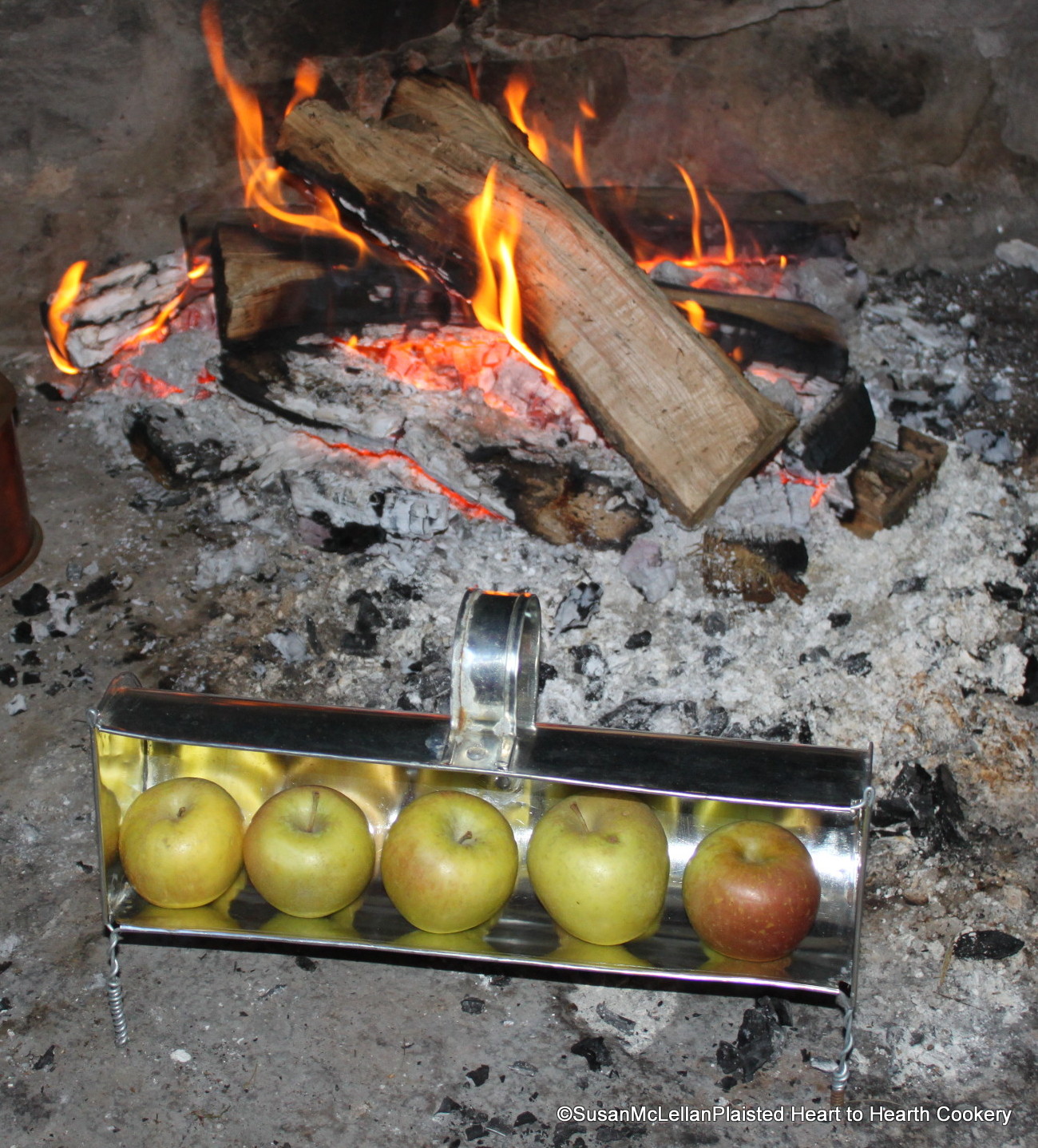
The apples roast with the tin roaster reflecting the heat from the fire. With the use of a hand to measure the heat, the distance of the roaster to the fire is determined. The reflective side cooks first so the apples do need to be rotated for even roasting.
Visit my website at: www.hearttohearthcookery.com
Posted in apples, culinary history, food, food history, food history equipment, receipts, recipes, tin apple roastere | Tags: culinary history, food, food history, foodways, Roasting
Roasting apples in a tin apple roaster is a simple way to produce a flavorful apple. There is no peeling or coring. The whole apple is placed in a reflective tin and there were tin forms that were made just for this purpose.
Visit my website at: www.hearttohearthcookery.com
Posted in apples, culinary history, food, food history, food history equipment, receipts, recipes, tin apple roastere | Tags: culinary history, food, food history, foodways
Apples stored in a root cellar or in a cool, dark place where it does not freeze, will keep until February. The main causes of apple spoilage are time, bruises and contact with an apple that has some rot. In my reproduction 19th century tin bowl, the apple to the far left needs to be used quickly.
Visit my website at: www.hearttohearthcookery.com
Posted in apples, culinary history, food, food history, Food preservation, tin bowl | Tags: culinary history, food, food history, Food preservation, foodways
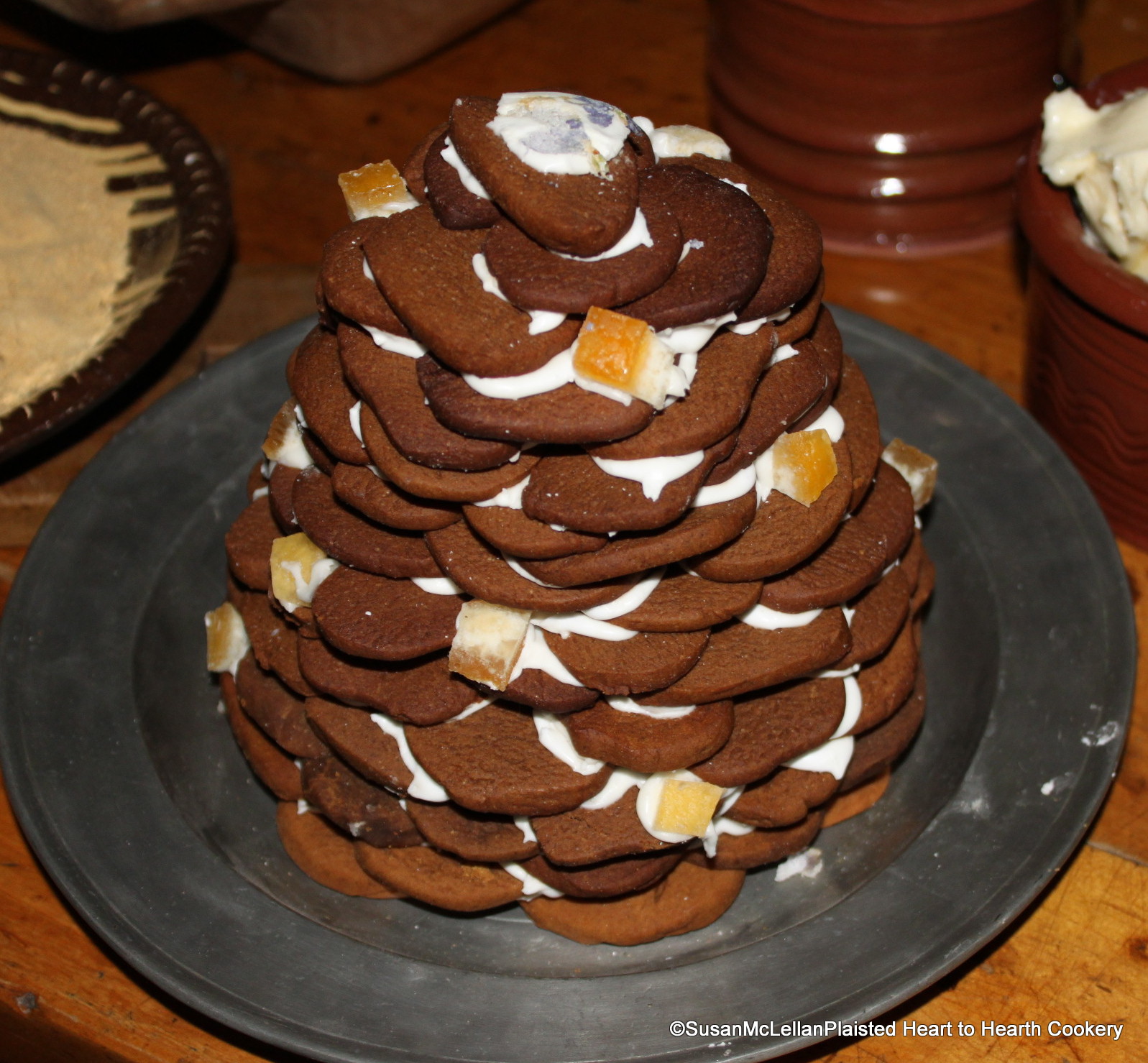
The very old term sweetmeat has nothing to do with meat and EVERYTHING to do with sweet. The Ginger-Bread Cakes are held together with an icing made of whisked egg whites, double refined sugar powdered fine and rose flower water. The cone is decorated with candied orange peel and candied violets.
Visit my website at: www.hearttohearthcookery.com
Posted in confectionery, culinary history, food, food history, Gingerbread, Preserving with sugar, receipts, recipes | Tags: confectionery, culinary history, food, food history, foodways, Gingerbread, sweet meats
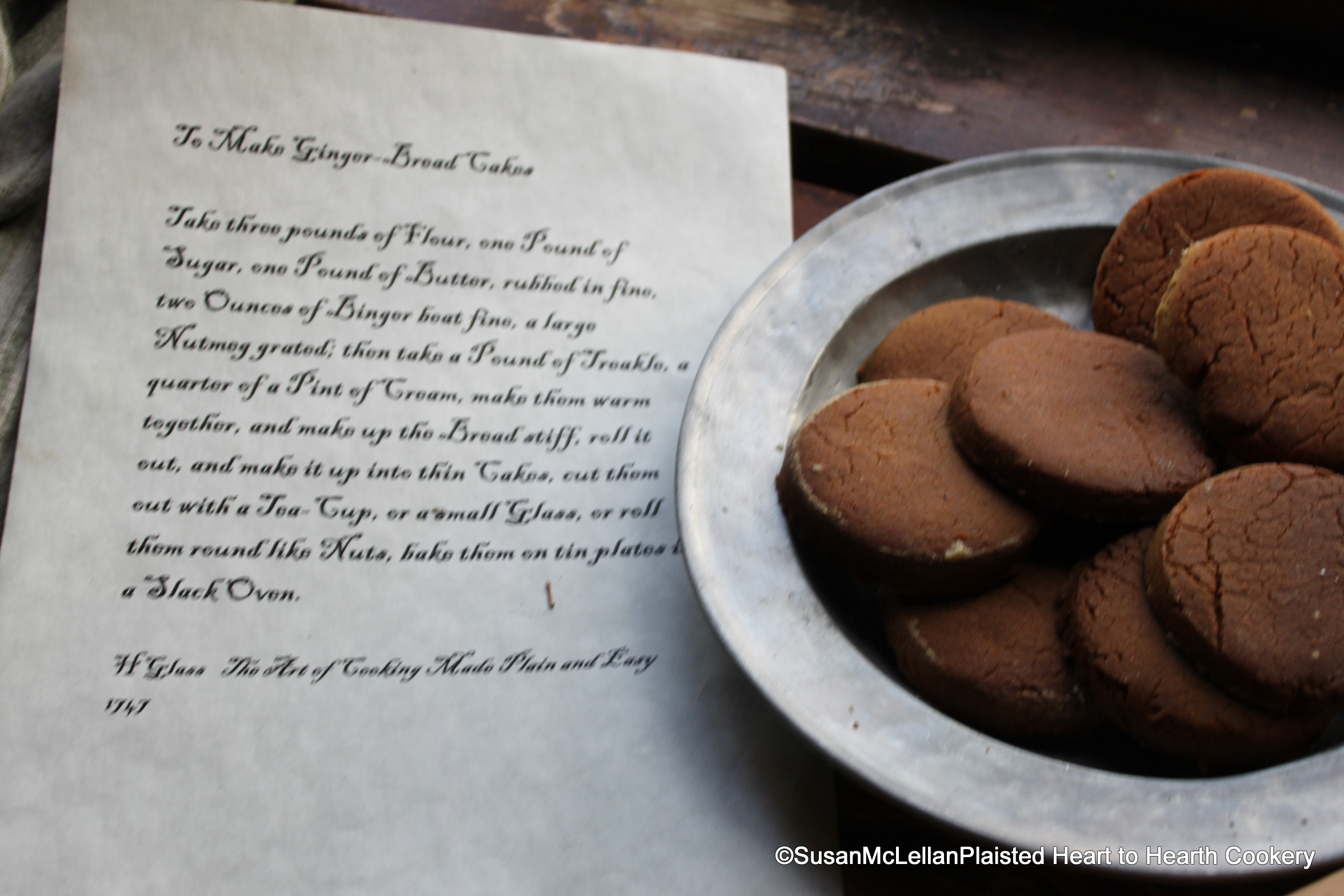
Reently I prepared Hannah Glasse’s 18th century receipt for To make Ginger-Bread Cakes. They were so well-liked that I am posting the receipt (recipe): Take three Pounds of Flour, one Pound of Sugar, one Pound of Butter, rubbed in very fine, two Ounces of Ginger beat fine, a large Nutmeg grated; then take a Pound of Treakle, a quarter of a Pint of Cream, make them warm together, and make up the Bread stiff, roll it out, and make it up into thin Cakes, cut them out with a Tea-Cup, or a small Glass, or roll them round like Nuts, bake them on Tin Plates in a slack Oven. Treakle is molasses.
Visit my website at: www.hearttohearthcookery.com
Posted in culinary history, food, food history, Gingerbread, receipts, recipes | Tags: culinary history, food, food history, foodways, Gingerbread