
Icing Set on the Rich Seed Cake
The icing (see previous post) is set by placing the tin baking sheet of Rich Seed Cakes back in the oven for a very short time.
Visit my website at: www.hearttohearthcookery.com
Icing Set on the Rich Seed Cake
The icing (see previous post) is set by placing the tin baking sheet of Rich Seed Cakes back in the oven for a very short time.
Visit my website at: www.hearttohearthcookery.com
Posted in Bake oven, Cakes, confectionery, culinary history, receipts, recipes, tin baking hoops, tin baking sheet | Tags: Bake oven, confectionery, culinary history, food, food history, foodways
Icing the Rich Seed Cake
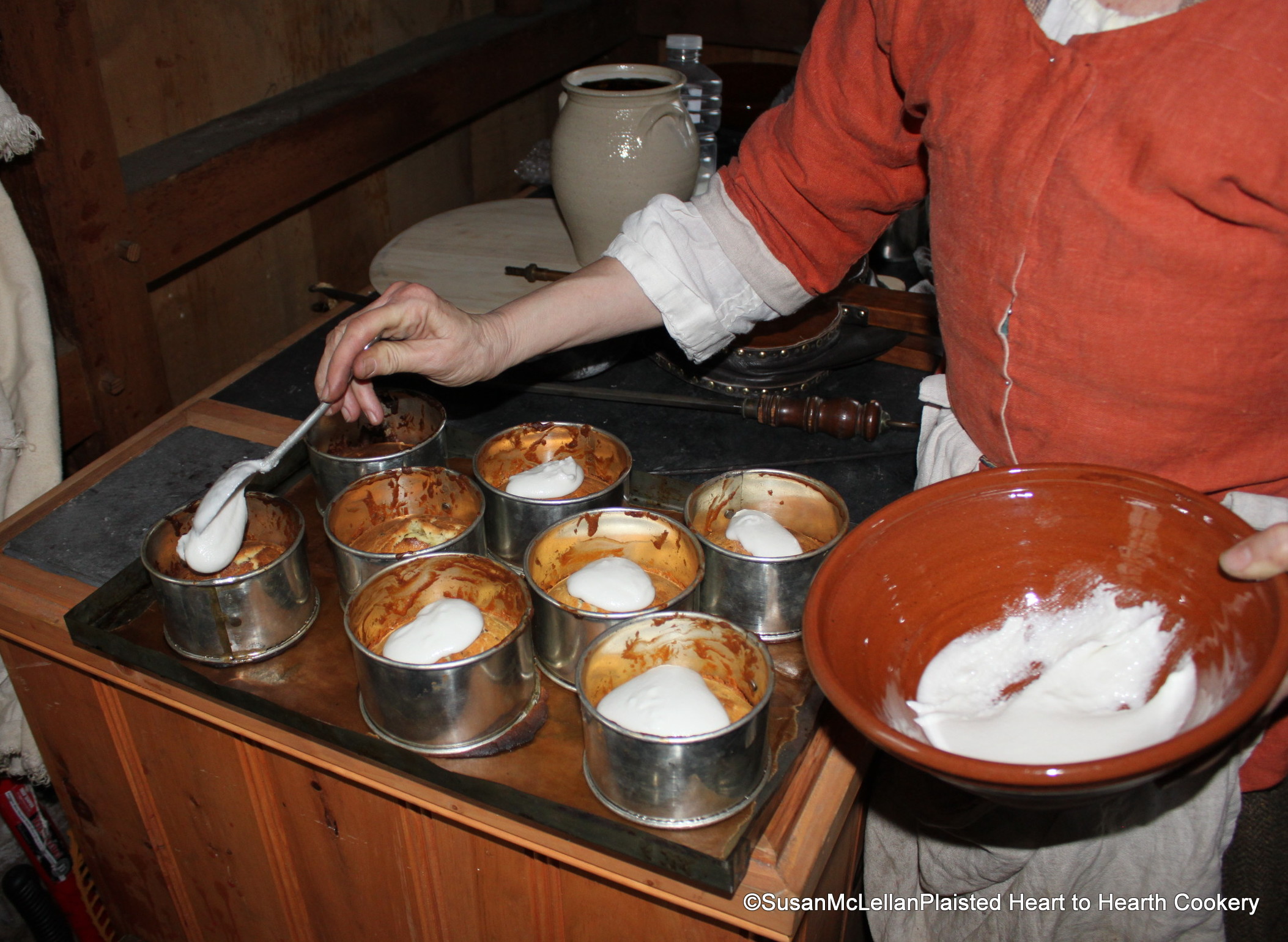
An icing was made by beating the egg whites not used in the Rich Seed Cake receipt (see previous post) until stiff. Sugar, that has been made like powder in a marble mortar and pestle, is then added until it is the right consistency. A spoonful of orange-flower water is added for flavor. Directly after removing the seed cakes from the oven, the icing is placed on the cakes.
Visit my website at: www.hearttohearthcookery.com
Posted in Bake oven, Cakes, confectionery, culinary history, food, food history, receipts, recipes, tin baking hoops | Tags: Bake oven, confectionery, culinary history, food, food history, foodways

Rich Seed Cakes
One fourth of the receipt (recipe) for A Rich Seed Cake was prepared and baked in miniature tin cake hoops. To prepare this receipt, one pound of Flour, twelve ounces of sugar, one pound of butter, nine eggs (without four whites), one spoonful of orange-flower water and one and a half ounces of carraway seeds were mixed together. The key to the lightness of the cake is the amount of beating-beating it up all the Time for two Hours together.
Visit my website at: www.hearttohearthcookery.com
Posted in Bake oven, Cakes, culinary history, food, food history, food history equipment, receipts, recipes, tin baking hoops | Tags: Bake oven, culinary history, food, food history, foodways
A Rich Seed Cake Baking in Hoops
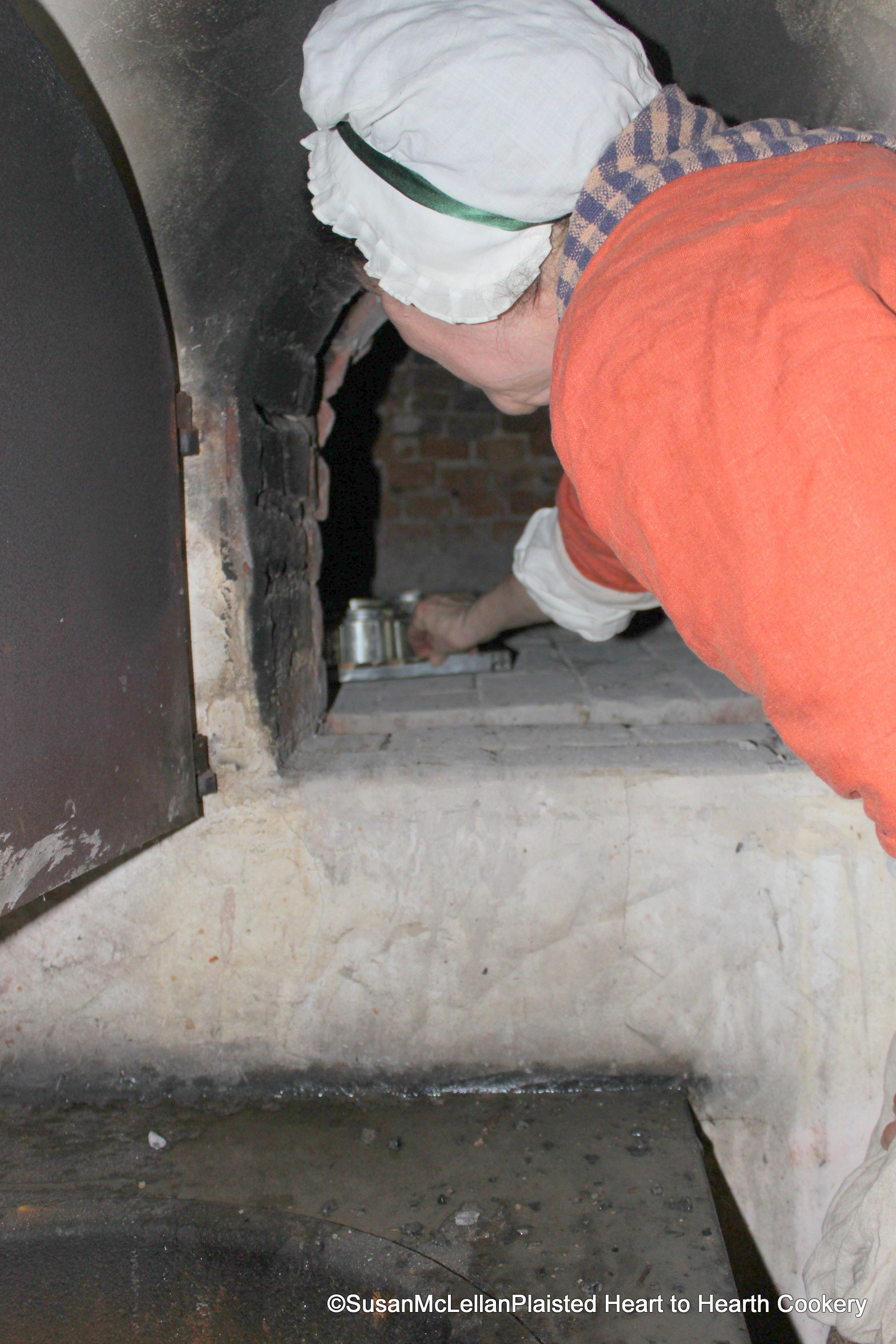
The receipt (recipe) for A Rich Seed Cake is just being placed in the oven. For my hearth cooking classes, instead of using one or two large tin cake hoops, I use multiple smaller hoops. The hoops are buttered and placed on brown paper on a tin baking sheet prior to filling with the batter.
Visit my website at: www.hearttohearthcookery.com

Gooseberry Cream
When it is cold, serve it to the Table. Pictured is the receipt (recipe) for To make Gooseberry Cream as it was presented on the dinner table. The cream was served as an accompaniment to A Rich Seed Cake.
Visit my website at:
Posted in creams, culinary history, food, food history, gooseberries, receipts, recipes | Tags: confectionery, culinary history, food, food history, foodways

Spinach Juice and Orange-flower Water
When the gooseberry cream is almost cold, put into it two spoonfuls of juice of spinach and a spoonful of orange-flower water. The fresh spinach juice is in the redware bowl in the right hand corner and the container of orange-flower water in the upper left.
Visit my website at: www.hearttohearthcookery.com
Posted in creams, culinary history, food, food history, gooseberries, receipts, recipes | Tags: culinary history, food, food history, foodways
Gooseberry Cream-Stirred over a Gentle Fire
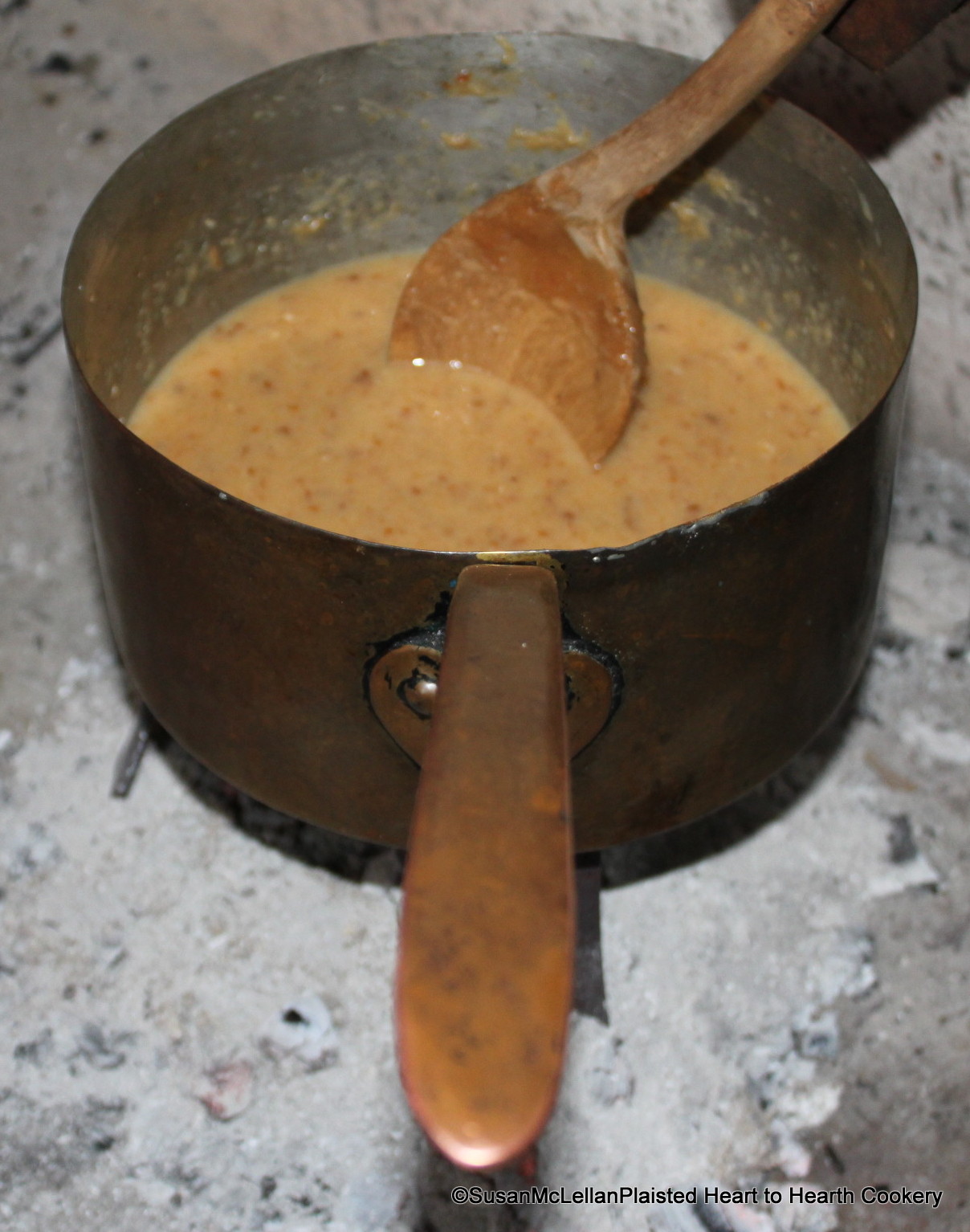
After the gooseberries (for the Gooseberry Cream) were mashed and sieved, the quantity of gooseberries were measured. To a Quart of the Pulp, you must have six Eggs well beaten. Heat the Pulp, when it is hot; put in an Ounce of fresh Butter, sweeten it to your Taste, and put in your Eggs, and stir them over a gentle Fire till they grow thick.
Visit my website at: www.hearttohearthcookery.com
Posted in copper saucepan, creams, culinary history, food, food history, food history equipment, gooseberries, receipts, recipes | Tags: culinary history, food, food history, foodways
Mashing and Straining Gooseberries
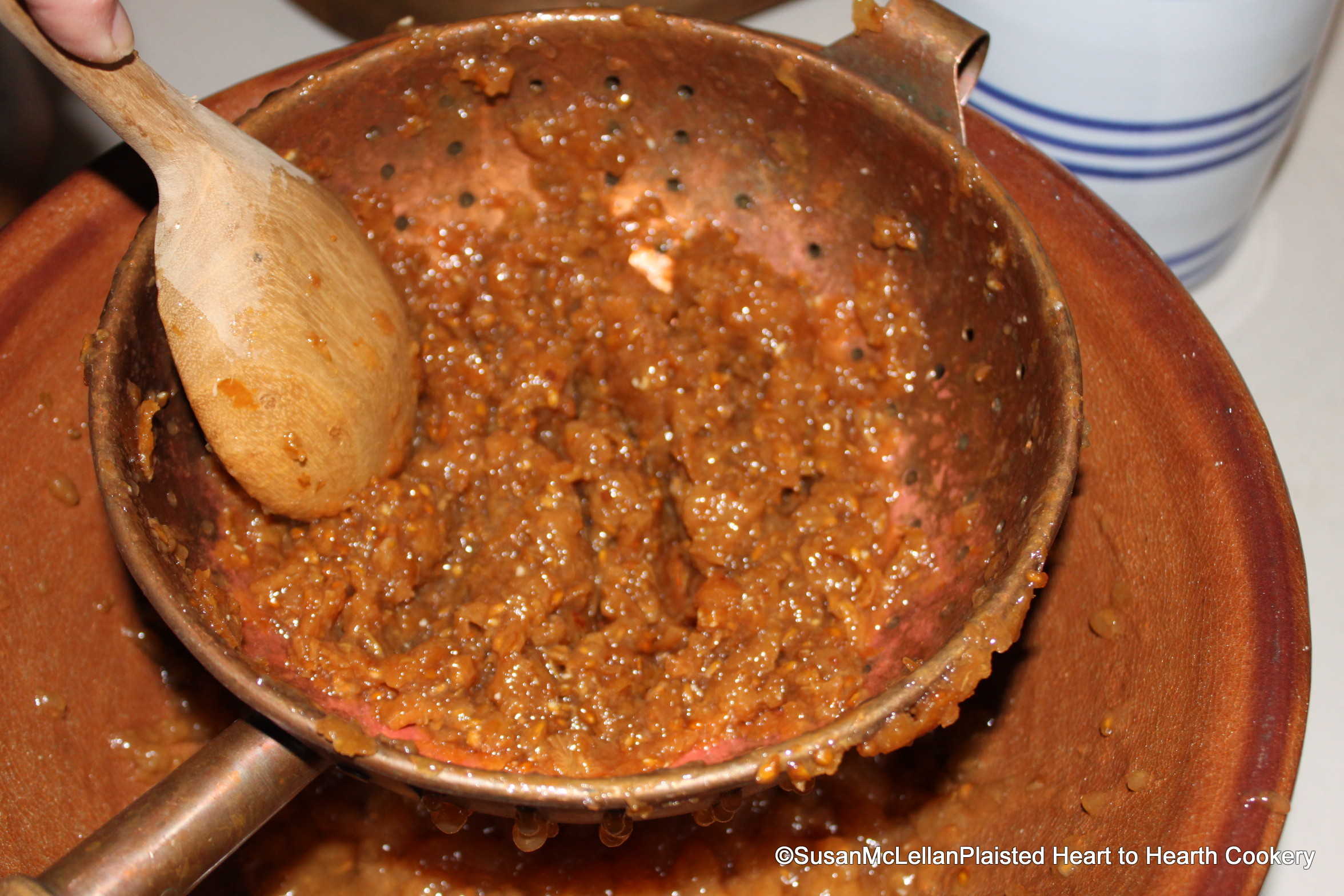
The first words of the receipt (recipe) To make Gooseberry Cream are Mash gooseberries, then run them through a Seive with a Spoon. Preparing this receipt was one of eight receipts that hearth students would be preparing. I brought ALL the equipment needed EXCEPT for a sieve. Typically, I have a sieve as stock in my food history van-but not this day. Over the many years that I have been hearth cooking, I have adapted frequently to use equipment that was available and this day was no different. The gooseberries were mashed with a spoon through a metal colander and fortunately the fruit did not react with the metal and change color. A horse-hair or non-metal sieve would have been first preference.
Visit my website at: www.hearttohearthcookery.com
Posted in culinary history, gooseberries, Hearth cooking classes, receipts, recipes | Tags: culinary history, food, food history, Food preservation, foodways
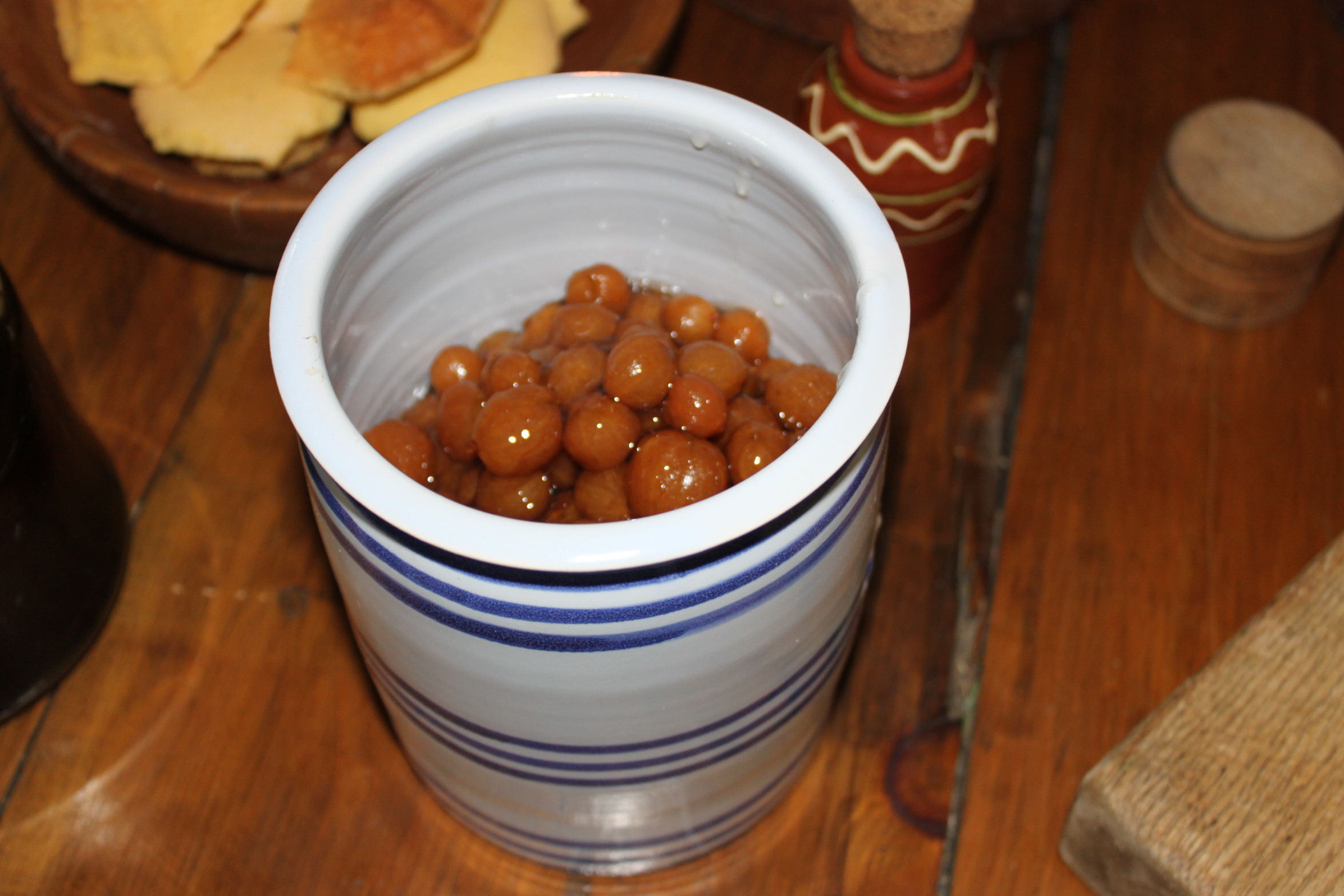
Preserved Gooseberries
The gooseberries pictured were preserved in June with the receipt (recipe)-To preserve Gooseberries whole without stoning. The gooseberry contains multiple seeds (stones). These gooseberries were a light green in color when harvested with a taste that was slightly sour. Cultivated gooseberries (a member of the genus Ribes) were introduced to America in the 17th century. In the beginning of the 20th century, the Ribes species were implicated in the spread of the white pine blister rust which led to the creation of a Civilian Conservation Corp (CCC) to eradicate this wonderful fruit.
Visit my website at: www.hearttohearthcookery.com
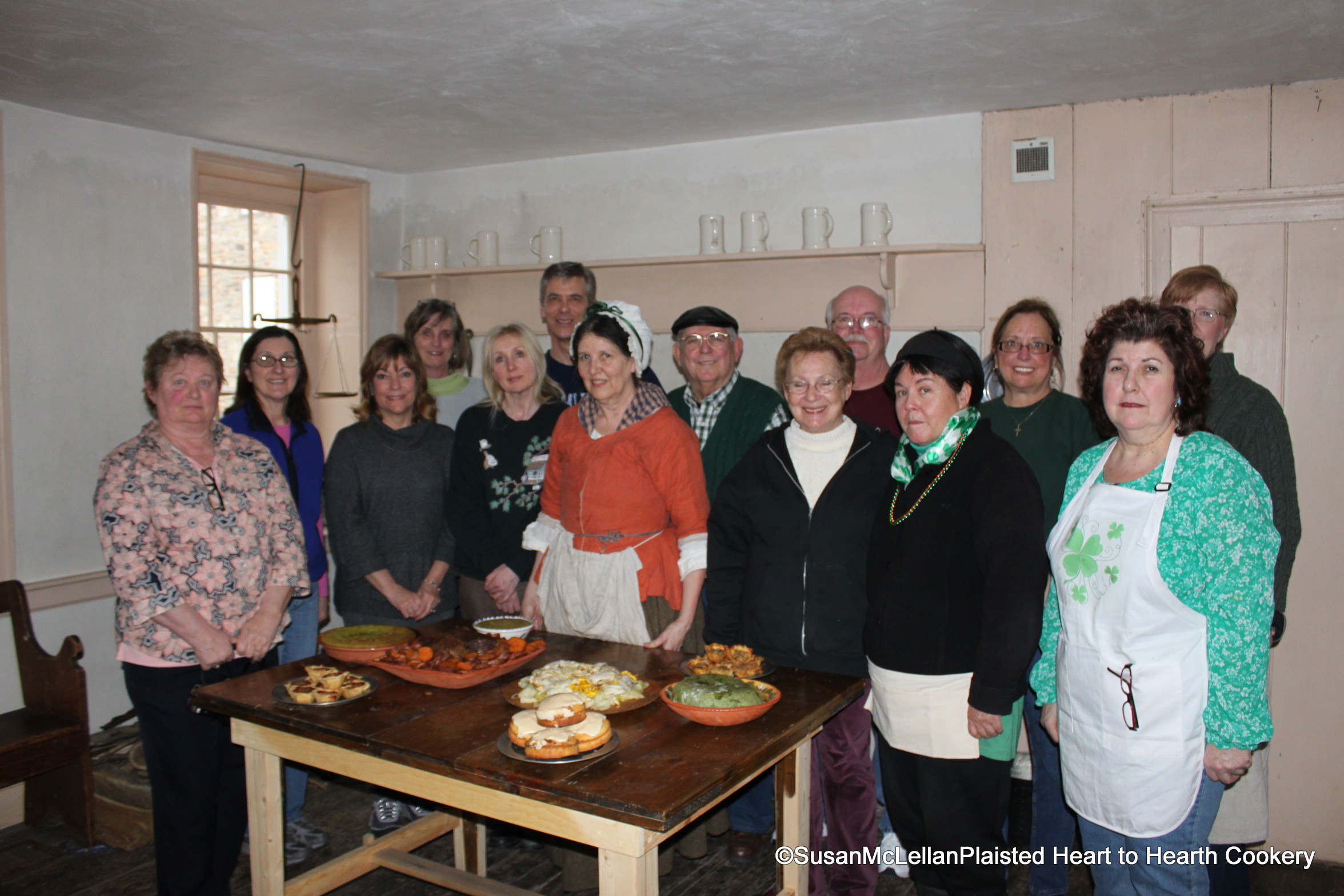
Bolton Mansion Class March 2013
March 16, 2013 this fabulous class prepared the 18th century dinner that you see on the table at Bolton Mansion: To Boil a Rump of Beef in the French Fashion, Pettyt Pates, Eggs with Lettice, A Spinaage Pudding, To make a Tansey-Another Way, To Broil Spanish Potatoes, A Rich Seed Cake and To make Gooseberry Cream.
Visit my website at: www.hearttohearthcookery.com
 Heart to Hearth Cookery