
The peels of three Seville oranges for the receipt (recipe) To make Orange Cheese Cakes were boiled ’till they are tender changing the water to take off the bitterness.
Visit my website at: www.hearttohearthcookery.com
The peels of three Seville oranges for the receipt (recipe) To make Orange Cheese Cakes were boiled ’till they are tender changing the water to take off the bitterness.
Visit my website at: www.hearttohearthcookery.com
Posted in culinary history, food, food history, receipts, recipes, Seville oranges | Tags: culinary history, food, food history, foodways
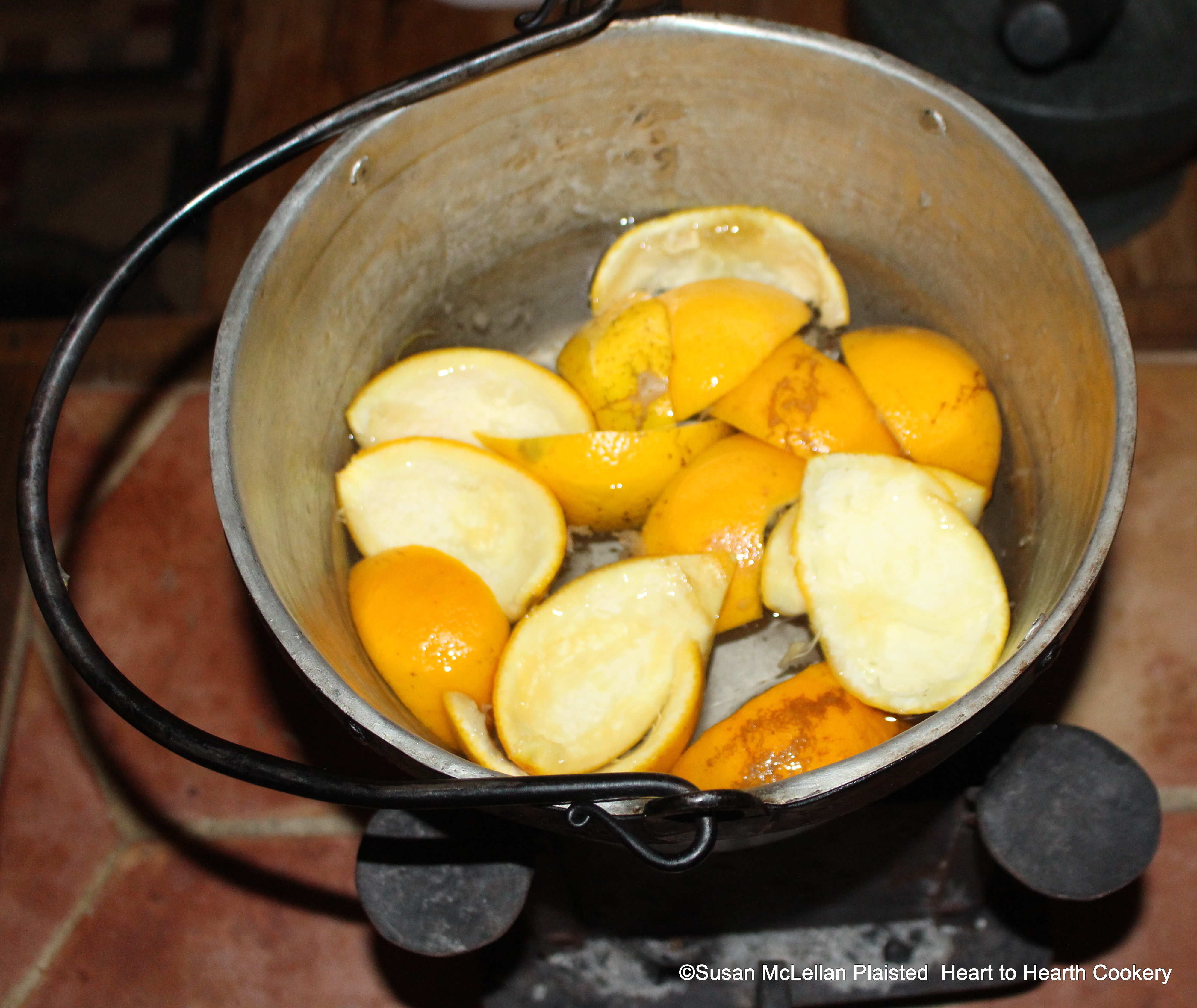
After the peels of three Seville oranges have been prepared for the receipt (recipe) To make Orange Cheese Cakes boil the peels ’till tender.
Visit my website at: www.hearttohearthcookery.com
Posted in culinary history, food, food history, receipts, recipes, Seville oranges | Tags: culinary history, food, food history, foodways
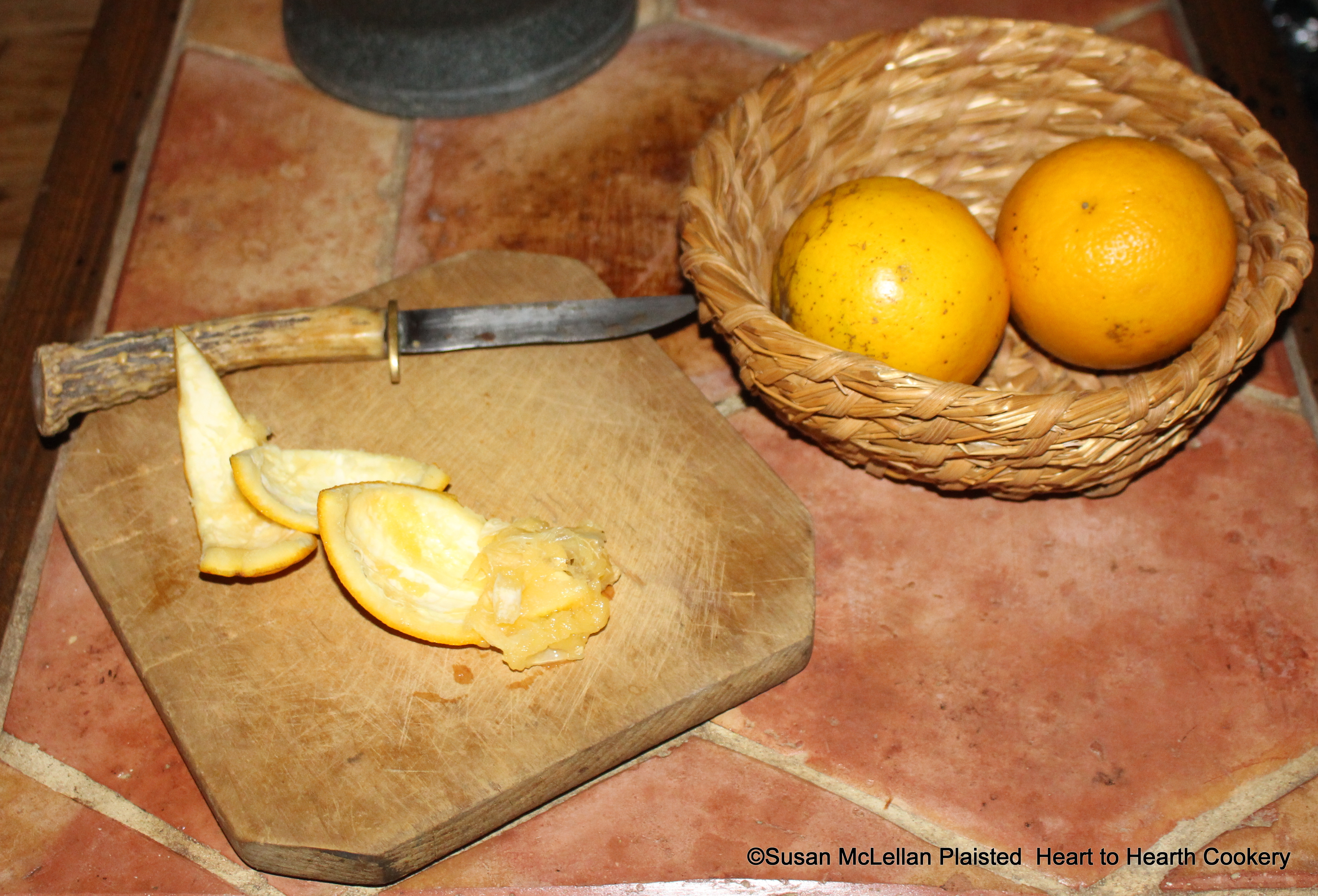
For the receipt (recipe) To make Orange Cheese Cakes the peel only of three Seville oranges is used in the receipt.
Visit my website at: www.hearttohearthcookery.com
Posted in culinary history, food, food history, receipts, recipes, Seville oranges | Tags: culinary history, food, food history, foodways
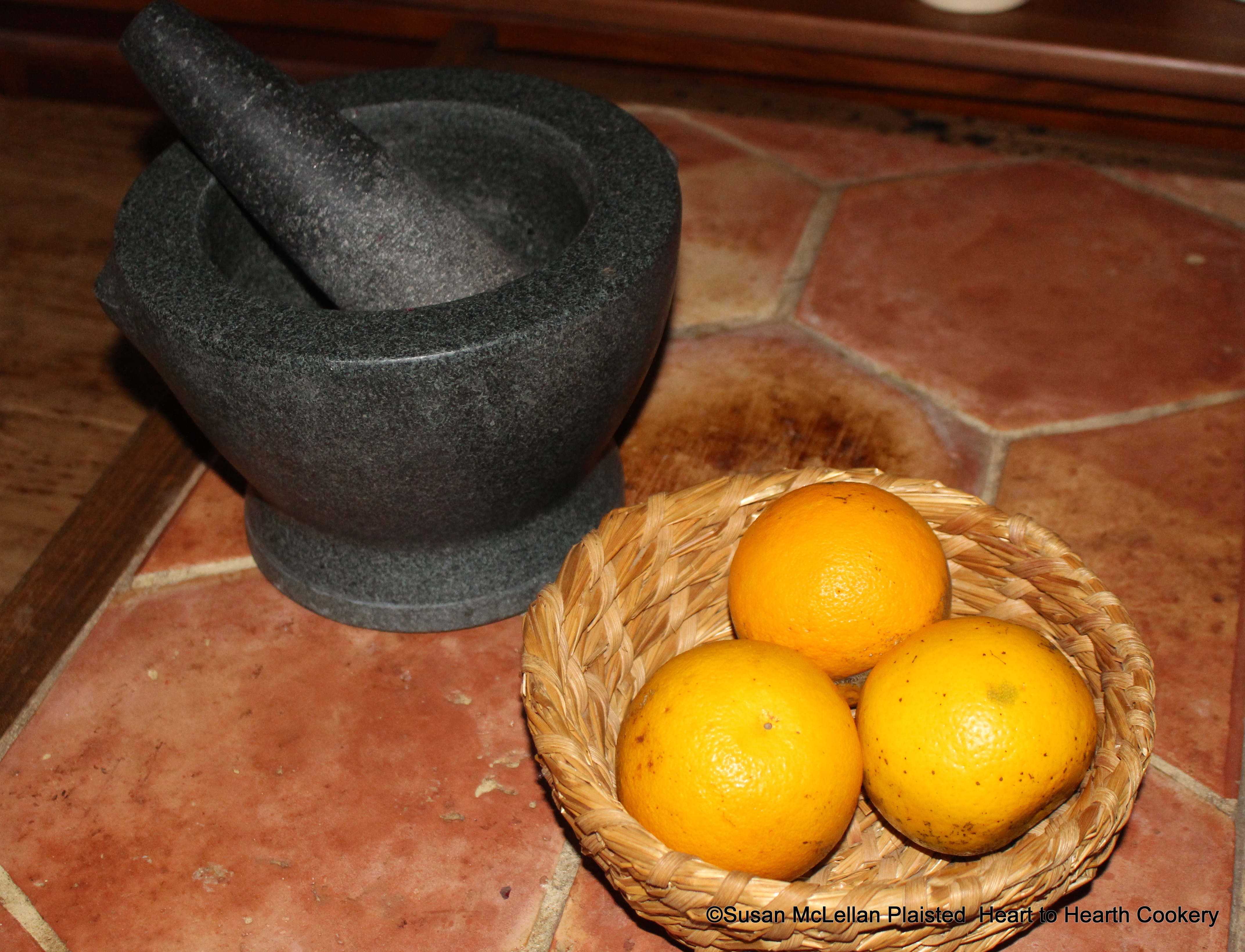
For the receipt (recipe) To make Orange Cheese Cake you will need three sevile oranges and a large mortar and pestle.
Visit my website at: www.hearttohearthcookery.com
Posted in culinary history, food, food history, Mortar and pestle, receipts, recipes, Seville oranges | Tags: culinary history, food, food history, foodways
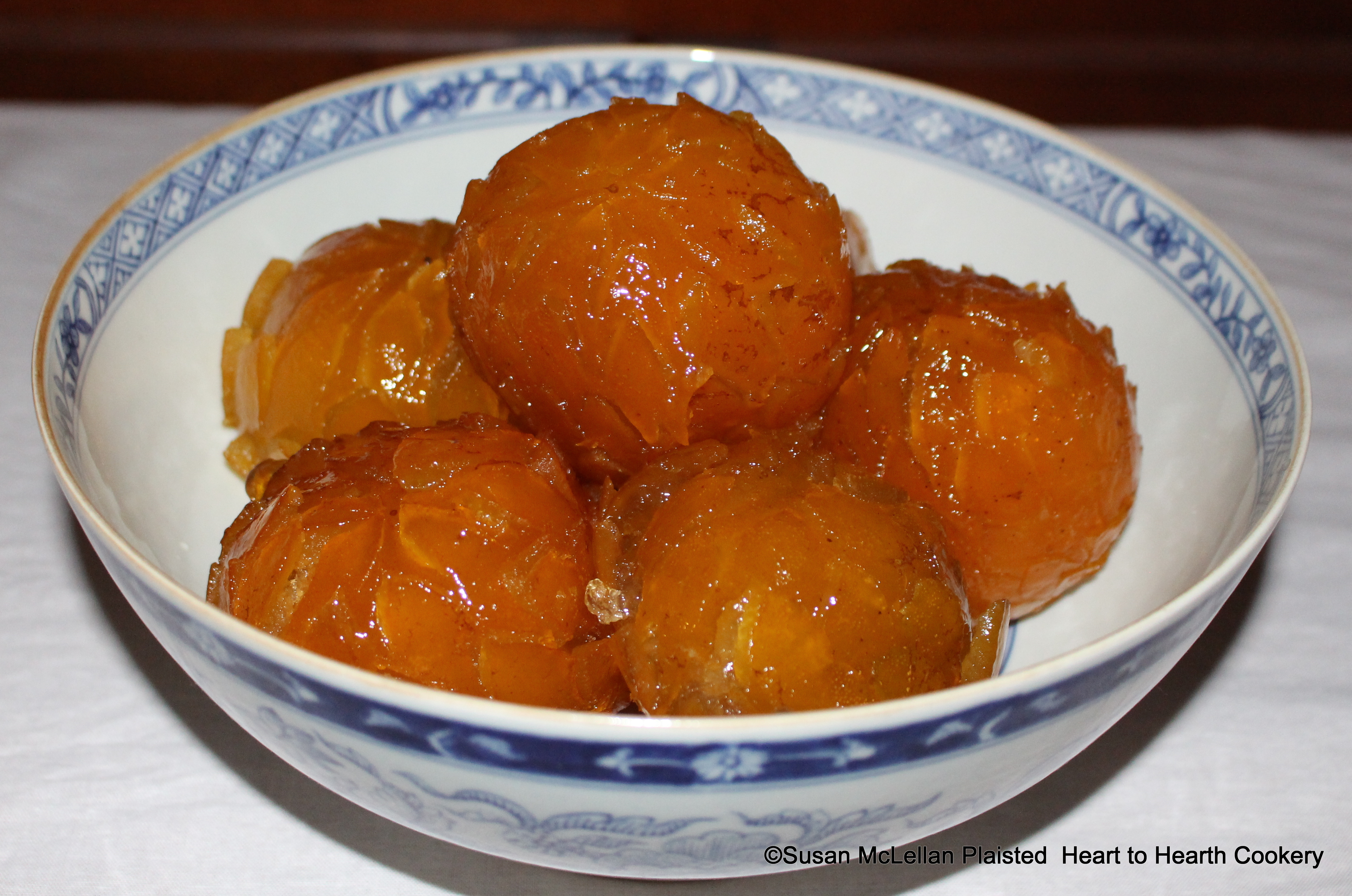
The receipt (recipe) “To preserve Oranges Whole” presented to table in my reproduction Chinese porcelain Grand Bowl.
Visit my website at: www.hearttohearthcookery.com
Posted in Chinese Porcelain, culinary history, food, food history, Grand Bowl, Oranges, receipts, recipes | Tags: culinary history, food, food history, Food preservation, foodways

After the Seville oranges cut to look like artichoke leaves have been boiled in syrup until they look clear for the receipt (recipe) To preserve Oranges Whole put them into pots and pour the syrup upon them. When they are cold put papers dipped in the best brandy over them. The cut white paper ready for the brandy is under the scissors.
Visit my website at: www.hearttohearthcookery.com
Posted in culinary history, food, food history, Food preservation, Gally pot, Oranges, Preserving with sugar, receipts, recipes | Tags: culinary history, food, food history, Food preservation, foodways
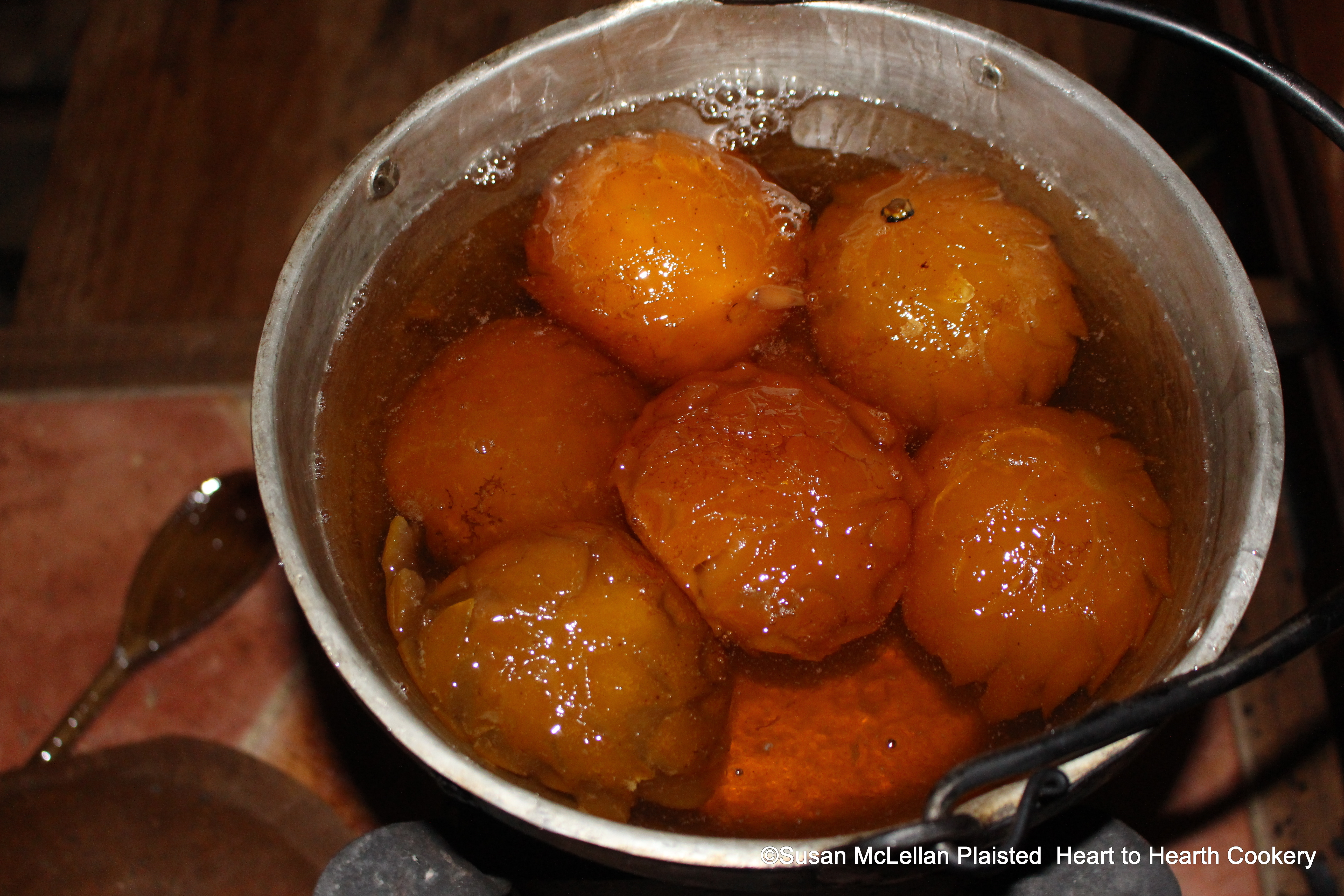
After the Seville oranges cut like artichoke leaves have been put into the syrup for the receipt (recipe) To preserve Whole Oranges let them have a boil, and then stand for twenty four hours, then boil ’em till they look clear.
Visit my website at: www.hearttohearthcookery.com
Posted in culinary history, food, food history, Food preservation, Oranges, Preserving with sugar, receipts, recipes | Tags: culinary history, food, food history, Food preservation, foodways
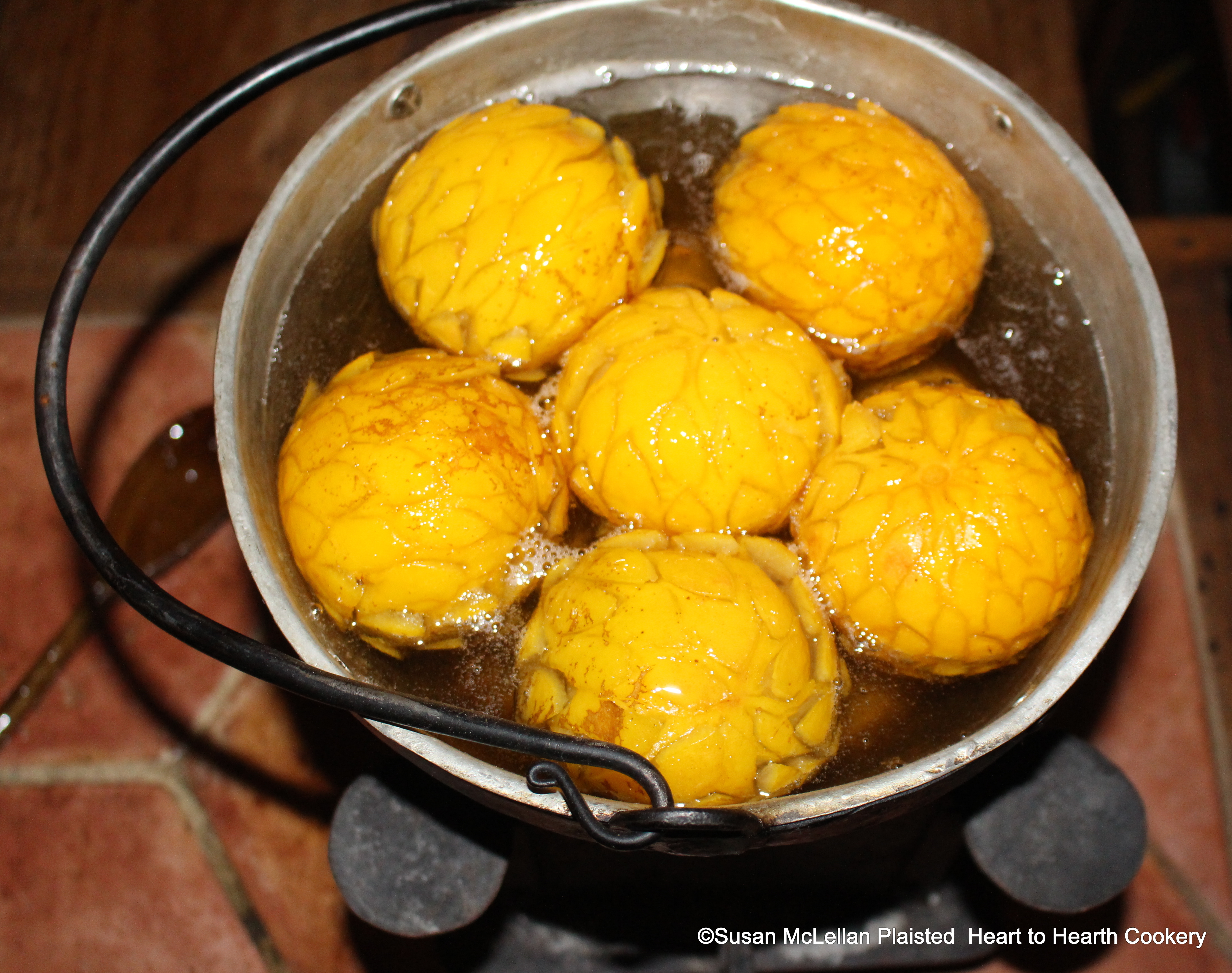
After a syrup is made with six pounds of sugar and water for the receipt (receipt) To preserve Oranges Whole take them out of the cloths, put them into the syrup and let them have a boil.
Visit my website at: www.hearttohearthcookery.com
Posted in culinary history, food, food history, Food preservation, Oranges, Preserving with sugar, receipts, recipes | Tags: culinary history, food, food history, Food preservation, foodways
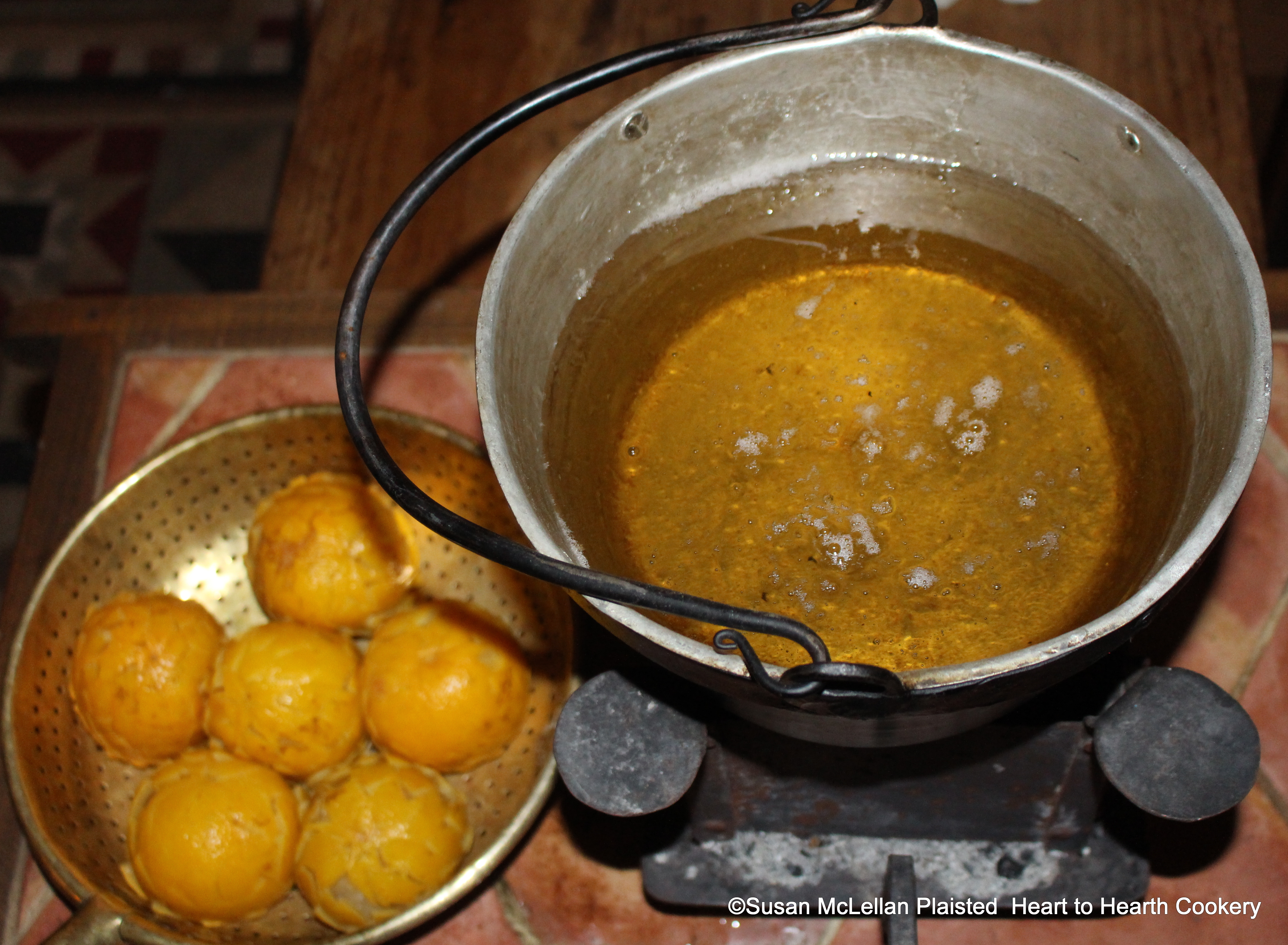
The six Seville oranges that were boiled tender tied in cloths for the receipt (recipe) To preserve Oranges Whole are in the brass colander ready to be boiled in the syrup prepared with six pounds of double refined sugar and as much water as will wet it.
Visit my website at: www.hearttohearthcookery.com
Posted in culinary history, food, food history, Food preservation, Oranges, Preserving with sugar, receipts, recipes | Tags: culinary history, food, food history, Food preservation, foodways
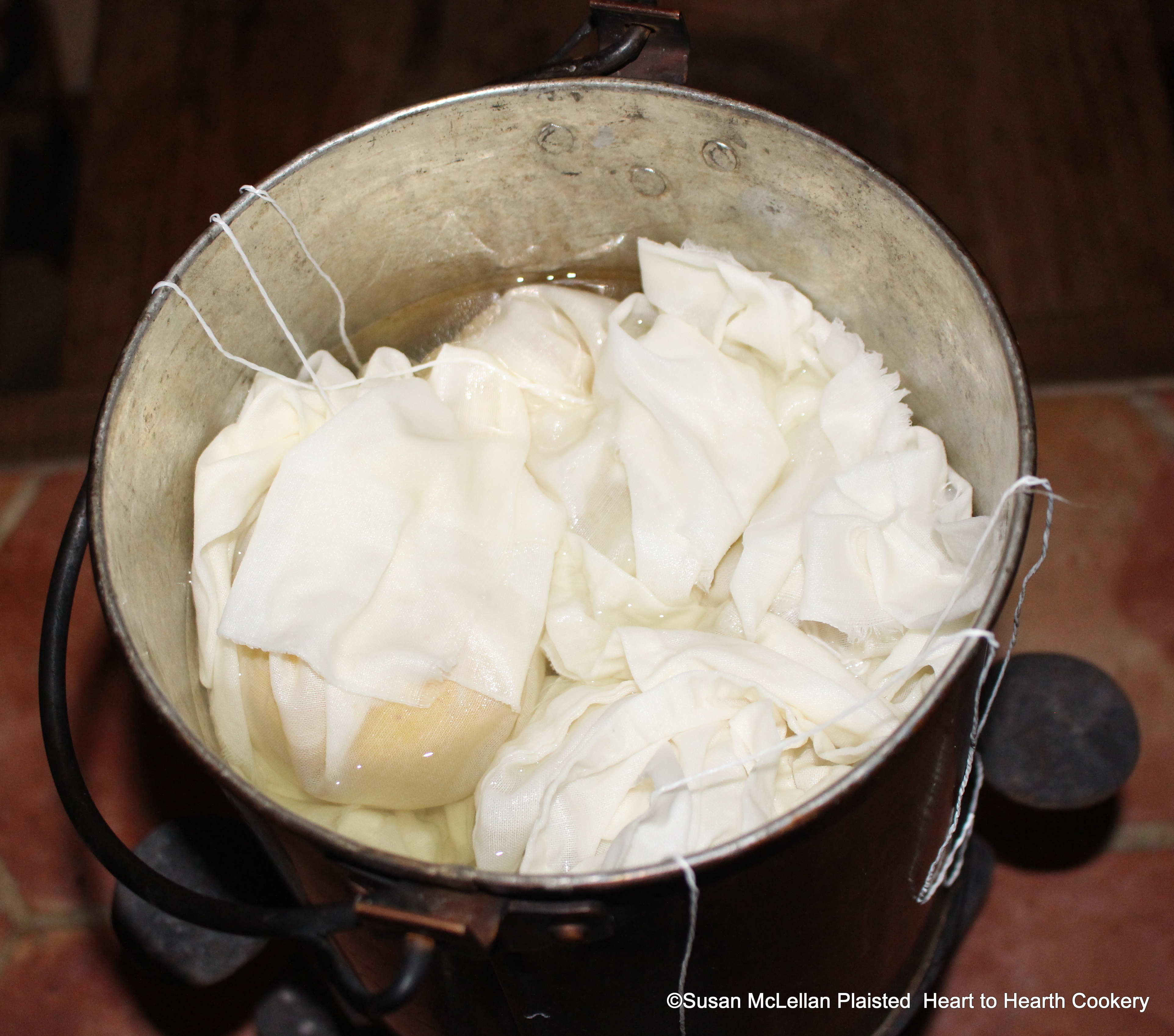
After the six Seville oranges have been tied in their cloths for the receipt (recipe) To preserve Oranges Whole boil them till tender.
Visit my website at: www.hearttohearthcookery.com
Posted in culinary history, food, food history, Food preservation, Oranges, Preserving with sugar, receipts, recipes | Tags: culinary history, food, Food preservation, foodways

