
After the carrots have been sliced for the receipt (recipe) To pickle anythinge greene: my second Cousen Clerke fill a salt-glazed stoneware pot. For pickling, the preservation pot must be stoneware.
Visit my website at: www.hearttohearthcookery.com
After the carrots have been sliced for the receipt (recipe) To pickle anythinge greene: my second Cousen Clerke fill a salt-glazed stoneware pot. For pickling, the preservation pot must be stoneware.
Visit my website at: www.hearttohearthcookery.com
Posted in carrots, culinary history, food, food history, Food preservation, Pickling, receipts, recipes, Salt-glazed crock | Tags: culinary history, food, food history, Food preservation, foodways, pickling
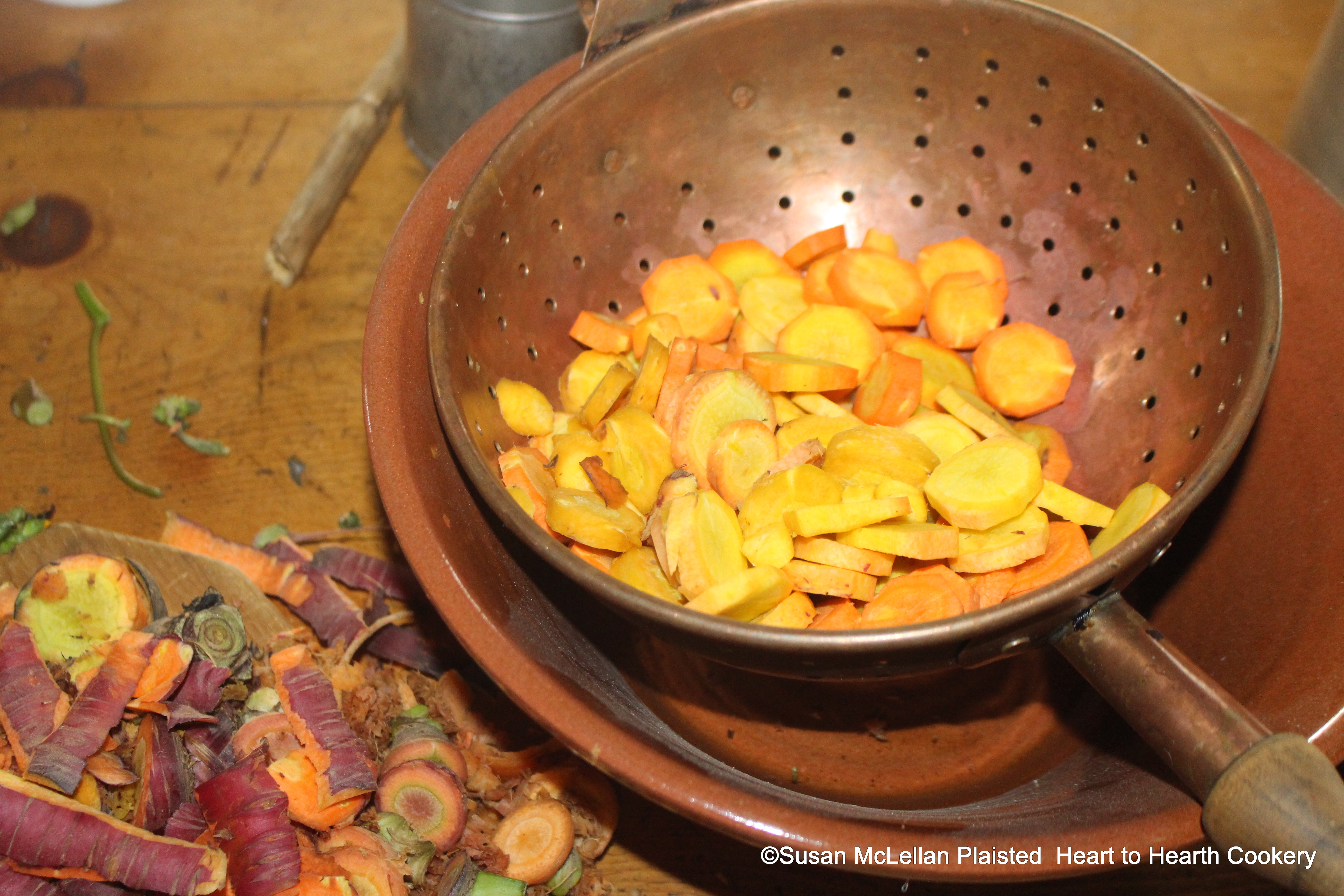
After the purple (red) carrots had been pared for the receipt (recipe) To pickle anythinge greene: my second Cousen Clerke ; the carrotts are cut in slices ready to be put in the pickle.
Visit my website at: www.hearttohearthcookery.com
Posted in carrots, culinary history, food, food history, Food preservation, Pickling, receipts, recipes | Tags: culinary history, food, food history, Food preservation, foodways, pickling

When the purple (red) carrot is pared for the receipt (recipe) To pickle anythinge greene: my second Cousen Clarke, the carrot appears close in color to the mid-sixteenth century appearance of the orange carrot that is known today.
Visit my website at: www.hearttohearthcookery.com
Posted in carrots, culinary history, food, food history, Food preservation, Pickling, receipts, recipes | Tags: culinary history, food, food history, Food preservation, foodways, pickling

The pickle for the receipt (recipe) To pickle any thinge greene: my second Cousen Clerke, needed to include a nuttmeg sliced with the other spices cloves and mace. To slice rather than grate a nutmeg use a sharp knife (and I use one of the larger nutmegs) and slice it with the knife. The results look as pictured above.
Visit my website at: www.hearttohearthcookery.com
Posted in culinary history, food, Food preservation, nutmeg, Pickling, receipts, recipes | Tags: culinary history, food, food history, Food preservation, foodways, pickling

To prepare the receipt (recipe) To pickle anything greene: my second Cousen Clerke, the first step is to boyle a pickle with halfe vinegar, and halfe water, with salt and nutmeg sliced, cloves, and mace. Note that the word pickle refers to the solution that the carrots will be covered to preserve them.
Visit my website at: www.hearttohearthcookery.com
Posted in carrots, culinary history, food, food history, Food preservation, Pickling, receipts, recipes | Tags: culinary history, food, food history, Food preservation, foodways, pickling

Pictured are the purple (red) carrots that I used for the 17th century receipt (recipe) To pickle any thinge greene: my second Cousen Clerke. Daucus carota (the botanical name for carrots) has a very hazy history of origin as archaeological evidence is scanty. In England in the 15th century artists painted carrots as purple (red) and in the mid-16th century English paintings both orange and white taproots appear. Carrots were not known to the New World until 1609 when English colonists planted them in Virginia.
Visit my website at: www.hearttohearthcookery.com
Posted in carrots, culinary history, food, food history, receipts, recipes | Tags: culinary history, food, food history, Food preservation, foodways
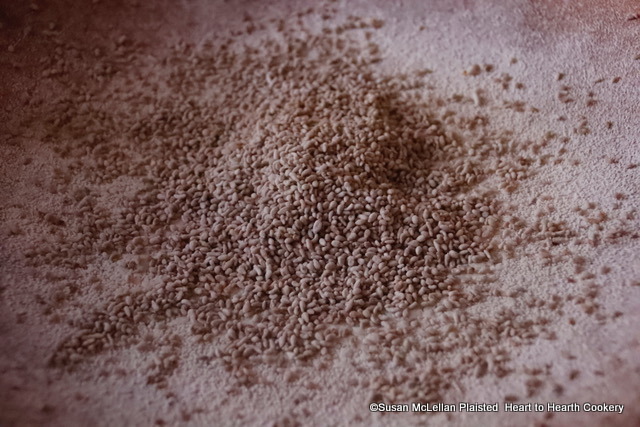
After the eighth charge of sugar syrup for the receipt (recipe) Anise Comfits, twelve more charges were added and pictured are anise seeds with 20 coats of sugar.
Visit my website at: www.hearttohearthcookery.com
Posted in Anise seed, comfits, confectionery, culinary history, food, food history, receipts, recipes | Tags: comfits, confectionery, culinary history, food, food history, foodways
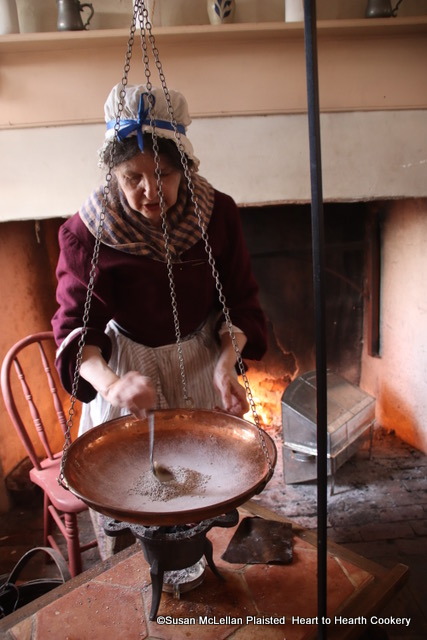
With each charge (ladle of sugar syrup) another coating of sugar is added to the anise seeds for the receipt (recipe) Anise Comfits. The anise seeds with seven coats of sugar are gathered in the center of my comfit pan and the eighth charge is added.
Visit my website at: www.hearttohearthcookery.com
Posted in Anise seed, Comfit pan, comfits, confectionery, culinary history, food, food history, receipts, recipes | Tags: comfits, confectionery, culinary history, food, foodways
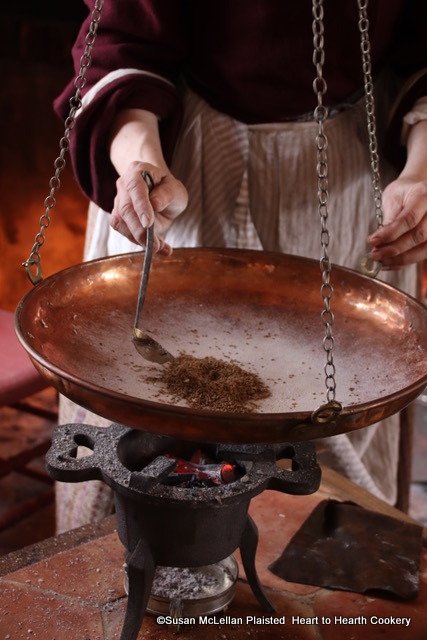
After the anise seeds have been warmed on the comfit pan for the receipt (recipe) Anise Comfits, a small ladle of hot sugar syrup (a charge) is added to the center well of the seeds and then with the flat of a hand the seeds with the syrup are moved around the comfit pan (while swinging the pan over the heat) until the seeds are dry. This is the first charge.
Visit my website at: www.hearttohearthcookery.com
Posted in Anise seed, Comfit pan, comfits, confectionery, culinary history, food, food history, receipts, recipes | Tags: comfits, confectionery, culinary history, food, food history, foodways
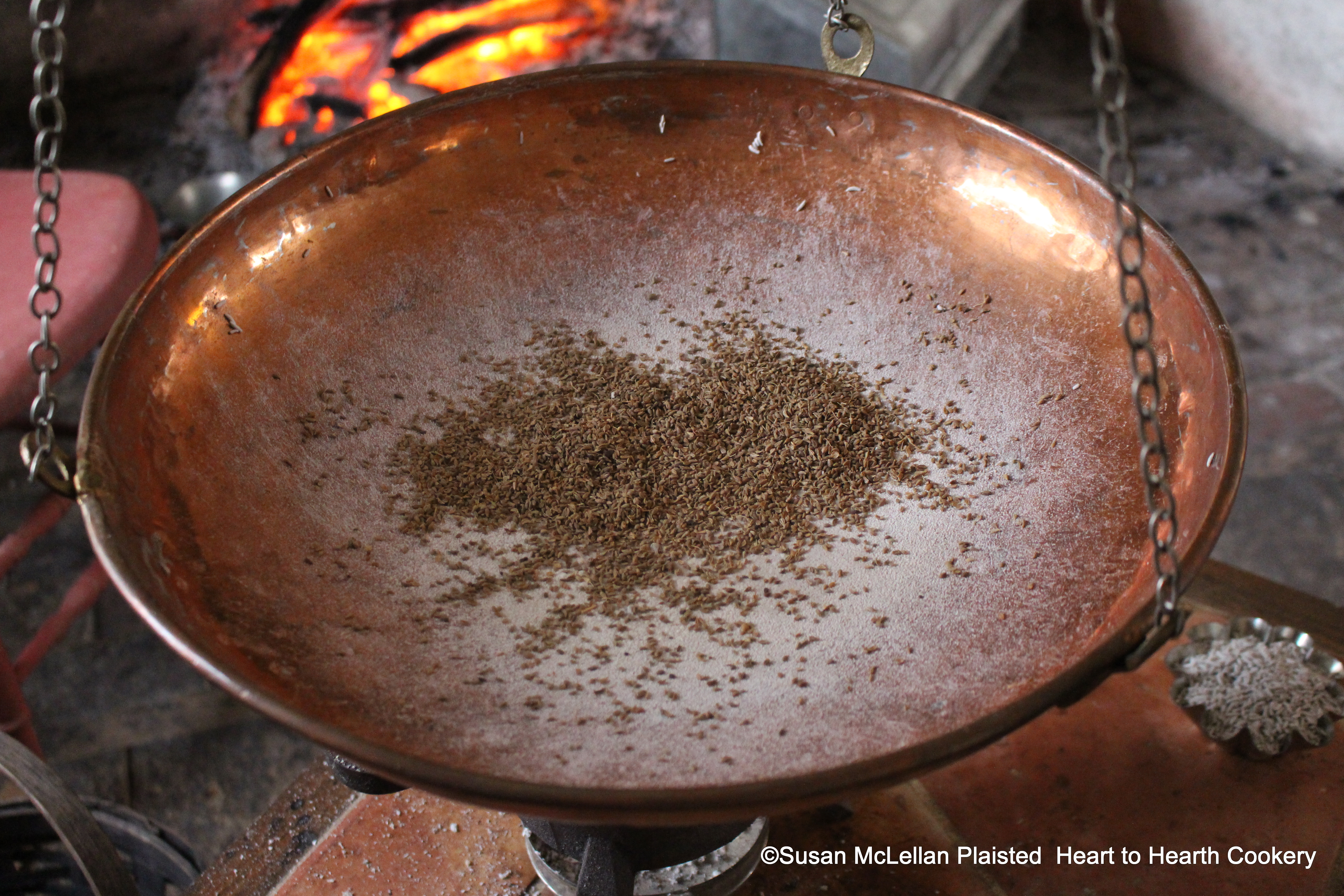
After I finished twelve more coats of sugar on caraway seeds (a total of 36) for the receipt (recipe) Caraway Comfits, I started to warm anise seeds on my comfit pan for making Anise Comfits.
Visit my website at: www.hearttohearthcookery.com
Posted in Anise seed, comfits, confectionery, culinary history, food, food history, receipts, recipes | Tags: comfits, confectionery, culinary history, food, food history, foodways
 Heart to Hearth Cookery