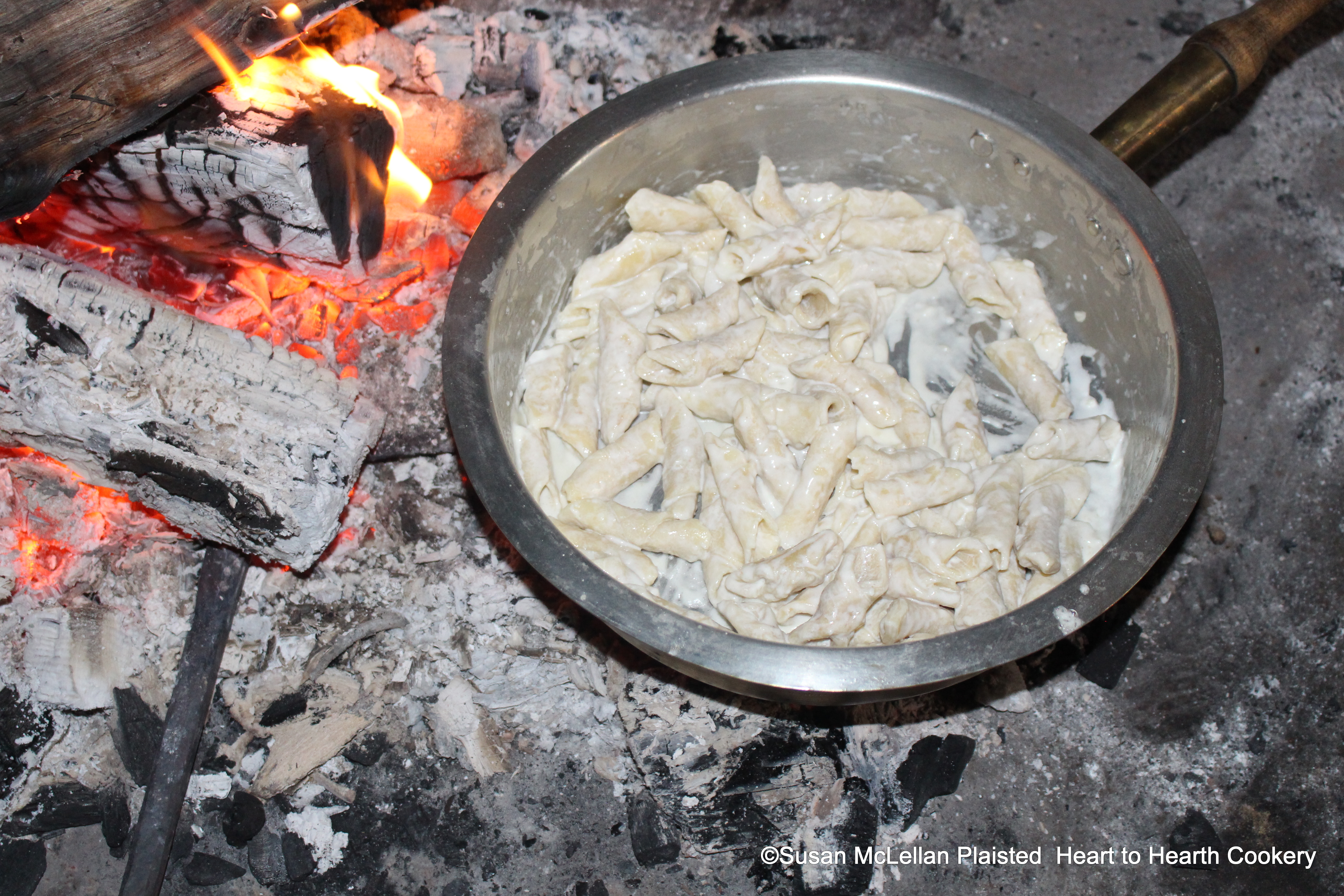
After the cooked pipe macaroni has been mixed with a gill of cream and butter rolled in flour for the receipt (recipe) Maccaroni boil it.
Visit my website at: www.hearttohearthcookery.com
After the cooked pipe macaroni has been mixed with a gill of cream and butter rolled in flour for the receipt (recipe) Maccaroni boil it.
Visit my website at: www.hearttohearthcookery.com
Posted in culinary history, food, food history, Macaroni, receipts, recipes | Tags: culinary history, food, food history, foodways
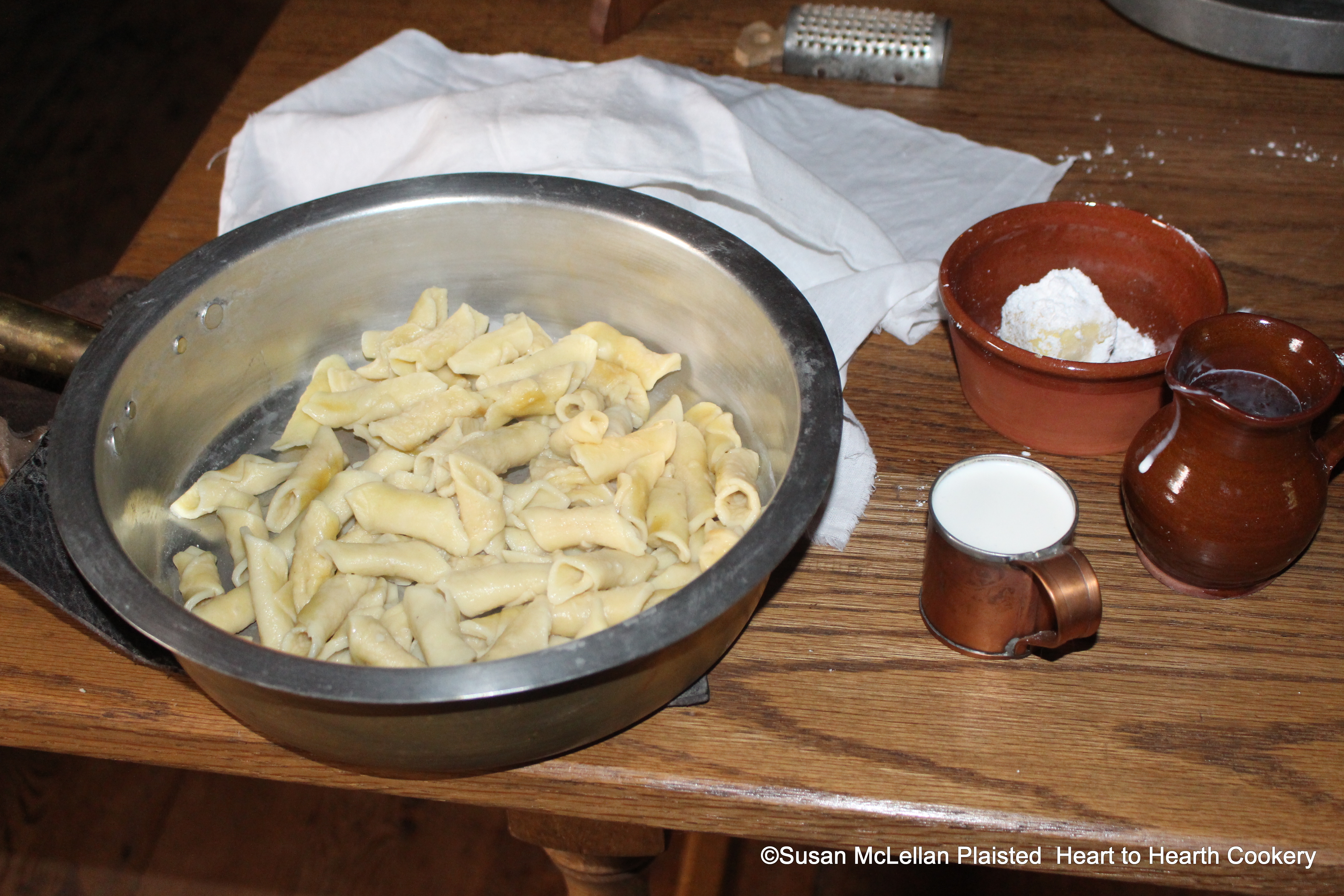
After the macaroni has been drained in a sieve for the receipt (recipe) Maccaroni then put it in a tossing pan, with about a gill of cream, and a piece of butter rolled in flour. Pictured beside the tossing pan is a gill cup full of cream and a small red ware bowl with the butter for rolling in the flour.
Visit my website at: www.hearttohearthcookery.com
Posted in culinary history, food, food history, Macaroni, receipts, recipes | Tags: culinary history, food, food history, foodways
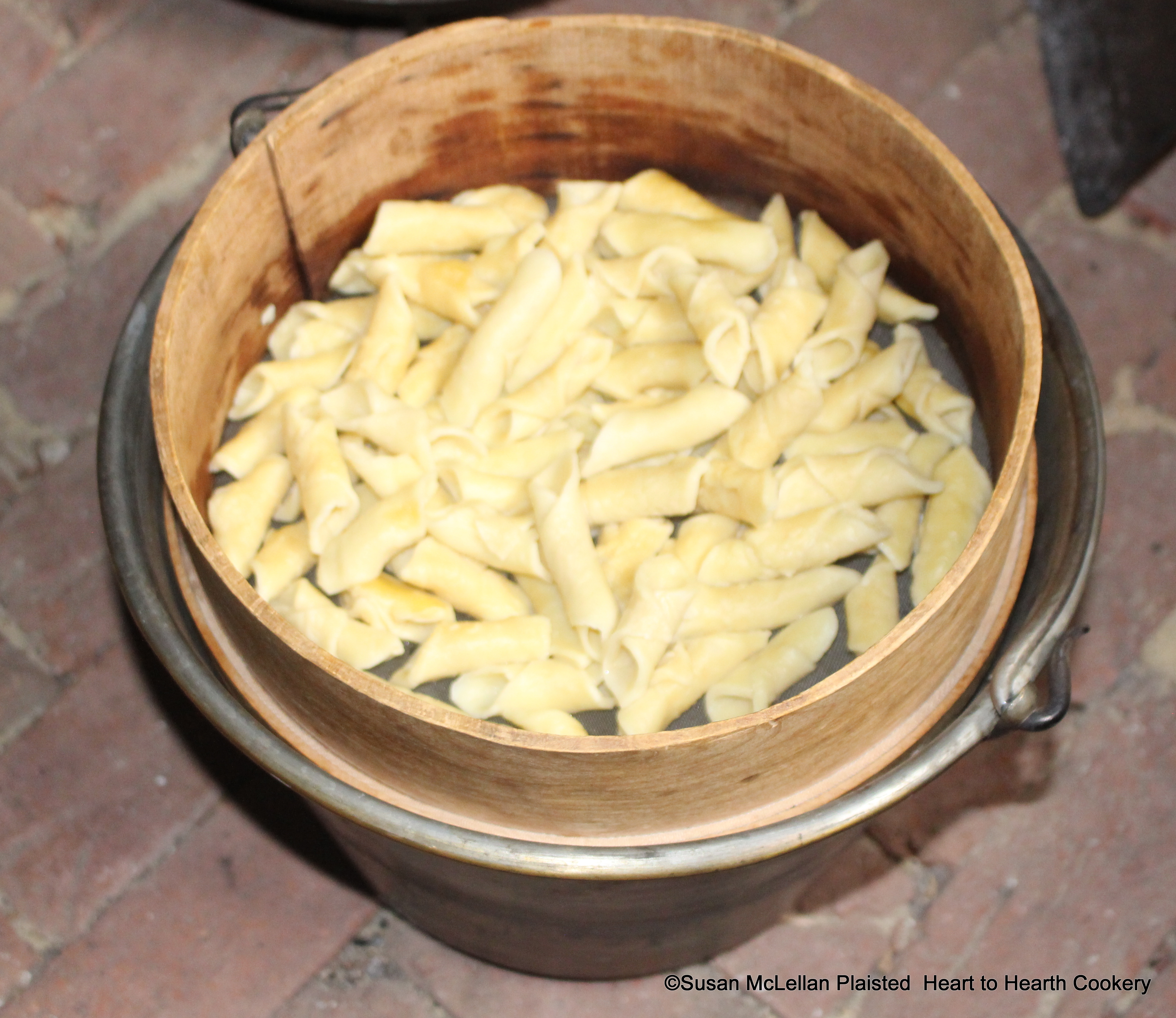
After the macaroni has been boiled tender for the receipt (recipe) Maccaroni lay it on a sieve to drain.
Visit my website at: www.hearttohearthcookery.com
Posted in culinary history, food, food history, Macaroni, receipts, recipes | Tags: culinary history, food, food history, foodways

After the freshly made pipe macaroni had dried on the sieve for the receipt (recipe) Maccaroni, four ounces of macaroni was boiled till it be quite tender.
Visit my website at: www.hearttohearthcookery.com
Posted in culinary history, food, food history, Macaroni, receipts, recipes | Tags: culinary history, food, food history, foodways

After each pipe is rolled for the receipt (recipe) Maccaroni, the pipe is placed on a sieve to day.
Visit my website at: www.hearttohearthcookery.com
Posted in culinary history, food, food history, Macaroni, receipts, recipes | Tags: culinary history, food, food history, foodways

After the paste for the receipt (recipe) Maccaroni has been kneaded, rolled and cut into small squares, a dowel is used to roll the pipe.
Visit my website at: www.hearttohearthcookery.com
Posted in culinary history, food, food history, Macaroni, receipts, recipes | Tags: culinary history, food, food history, foodways

After the eggs have been mixed well with the flour for the receipt (recipe) Maccaroni, knead the dough for quite awhile until it is pliable and ready to roll. As pictured, I rolled a small amount of the dough at a time using a minimal amount of additional flour and cut small squares. The two small dowels will be used to roll the macaroni.
Visit my website at: www.hearttohearthcookery.com
Posted in culinary history, food, food history, Macaroni, receipts, recipes | Tags: culinary history, food, food history, foodways
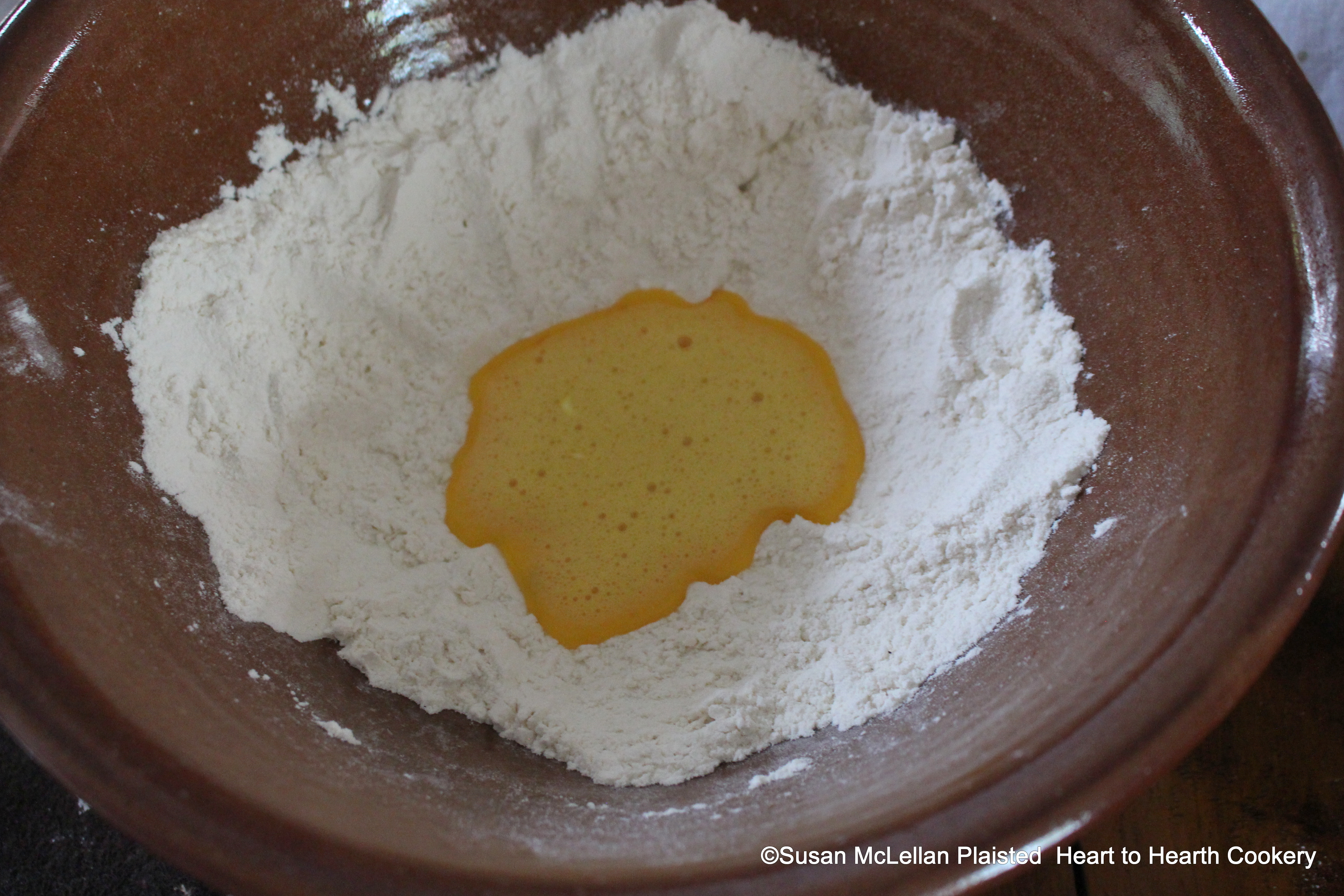
After two eggs have been whisked very well for the receipt (recipe) Maccaroni, a half pound of flour was weighed on my balance scales. I then lined my bowl with the flour and added the bubbly whisked eggs.
Visit my website at: www.hearttohearthcookery.com
Posted in culinary history, food, food history, Macaroni, receipts, recipes | Tags: culinary history, food, food history, foodways

The first step to make pipe macaroni for the receipt (recipe) Maccaroni is to take two eggs and whisk them very well.
Visit my website at: www.hearttohearthcookery.com
Posted in culinary history, food, food history, Macaroni, receipts, recipes | Tags: culinary history, food, food history, foodways, Hearth Cooking

My table is set to prepare the 1784 receipt (recipe) Maccaroni. On the table from left to right is my salt box, horse hair seive for the pipe macaroni to dry, parmesan cheese, pewter water plate, and balance scales (hanging from the floor hook).
Visit my website at: www.hearttohearthcookery.com
Posted in Balance scales, culinary history, food, food history, Macaroni, Parmesan cheese, pewter water plate, receipts, recipes | Tags: culinary history, food, food history, foodways

