After the lear has been prepared and the parsley fried for the receipt (recipe) A Dish of Trouts dish up your Trout in your dish upon sippets. The sippets are slices of a penny loaf of bread toasted.
Visit my website at: hearttohearthcookery.com
After the lear has been prepared and the parsley fried for the receipt (recipe) A Dish of Trouts dish up your Trout in your dish upon sippets. The sippets are slices of a penny loaf of bread toasted.
Visit my website at: hearttohearthcookery.com
Posted in culinary history, food, food history, receipts, recipes, Sippets, trout | Tags: culinary history, fish, food, food history, foodways
After the sliced onions are fried for the receipt (recipe) A Dish of Trouts, a handful of parslee is fryed green which will be strewed all over the dish when served.
Visit my website at: hearttohearthcookery.com
Posted in culinary history, food, food history, Parsley, receipts, recipes, trout | Tags: culinary history, fish, food, food history, foodways
After the trout is fried for the receipt (recipe) A Dish of Trouts, fry three or four sliced Onions until brown. The fried onions will be added to the lear which for this receipt is a thickened sauce made from gravy, Oyster liquor, a little Claret wine, and Vinegar. If the lear is not thick enough, you may add an egg.
Visit my website at: hearttohearthcookery.com
Posted in culinary history, food, food history, Lear, Onions, receipts, recipes, trout | Tags: culinary history, fish, food, food history, foodways
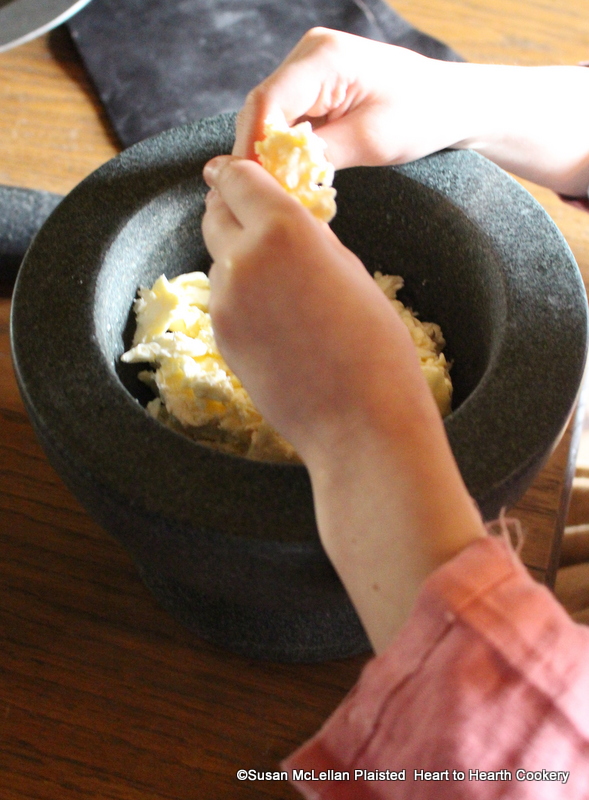
For the receipt (recipe) A dish of Trouts, the first step is indicated to let your pan be very hot with clarified butter, and give them a sudden brown, with what violence you can. Only several lines later in the receipt was it written you must note they were to be split in half before frying. The receipt is for trouts but I prepared one trout.
Visit my website at: hearttohearthcookery.com
Posted in culinary history, food history, receipts, recipes, trout | Tags: culinary history, fish, food, food history, foodways
As it was not possible to create the blackhouse earthen floor hearth with a few slab stones set in the middle of the living room to cook the oat bannocks, brick was laid outside on the ground to safely burn the smokey peat fire with its definite aroma. Historiaclly, the most frequent smoke escape in Scottish blackhouses was a hole in the roof not even placed directly over the hearth. Thus much of the smoke rose and settled in the top of the family area and the air would stay relatively clear near the floor. This writer has first hand experience as I started a peat fire in a recreated blackhouse at The Highland Folk Museum near Kingussie, Scotland.
Visit my website at: hearttohearthcookery.com
Posted in culinary history, food, food history, Peats, receipts, recipes, Scottish Foodways | Tags: culinary history, food, food history, foodways
Peat is formed by the partial decomposition of plants in the wet, acidic conditions of bogs. Peats were the main form of cooking fuels historically in the Highlands of Scotland. The process of cutting, drying, and leading peats to the homes in peat barrels was a multi-family process. The men cut the oblong peat cubes and women and children carefully spread the very soft, newly cut peats to dry. This picture is the peats used for cooking bannocks.
Visit my website at: hearttohearthcookery.com
Posted in bannocks, culinary history, food, food history, Peats, receipts, recipes, Scottish Foodways | Tags: culinary history, food, food history, foodways, Scottish Foodways
Pictured is half the receipt plated of H. Glasse’s 1747 A Boiled Plumb-Pudding. Take a pound of Suet, cut in little Pieces, not too fine, a Pound of Currants, and a Pound of Raisins stoned, eight Eggs, half the Whites, the Crumb of a Penny-loaf grated, and a Tea Spoonful of Salt, half a Nutmeg grated, and a Tea Spoonful of beaten Ginger, a Pound of Flour, a Pint of Milk. The full receipt would boil for five hours in a pudding bag. The half receipt boiled for three hours.
Visit my website at: hearttohearthcookery.com
Posted in boiled pudding, culinary history, food, food history, receipts, recipes | Tags: culinary history, food, food history, foodways, puddings