Posted by: hearttohearthcookery | August 27, 2011

Green Corn Leaf Bread

Harvesting the Leaf

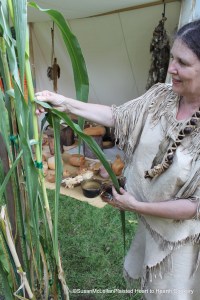
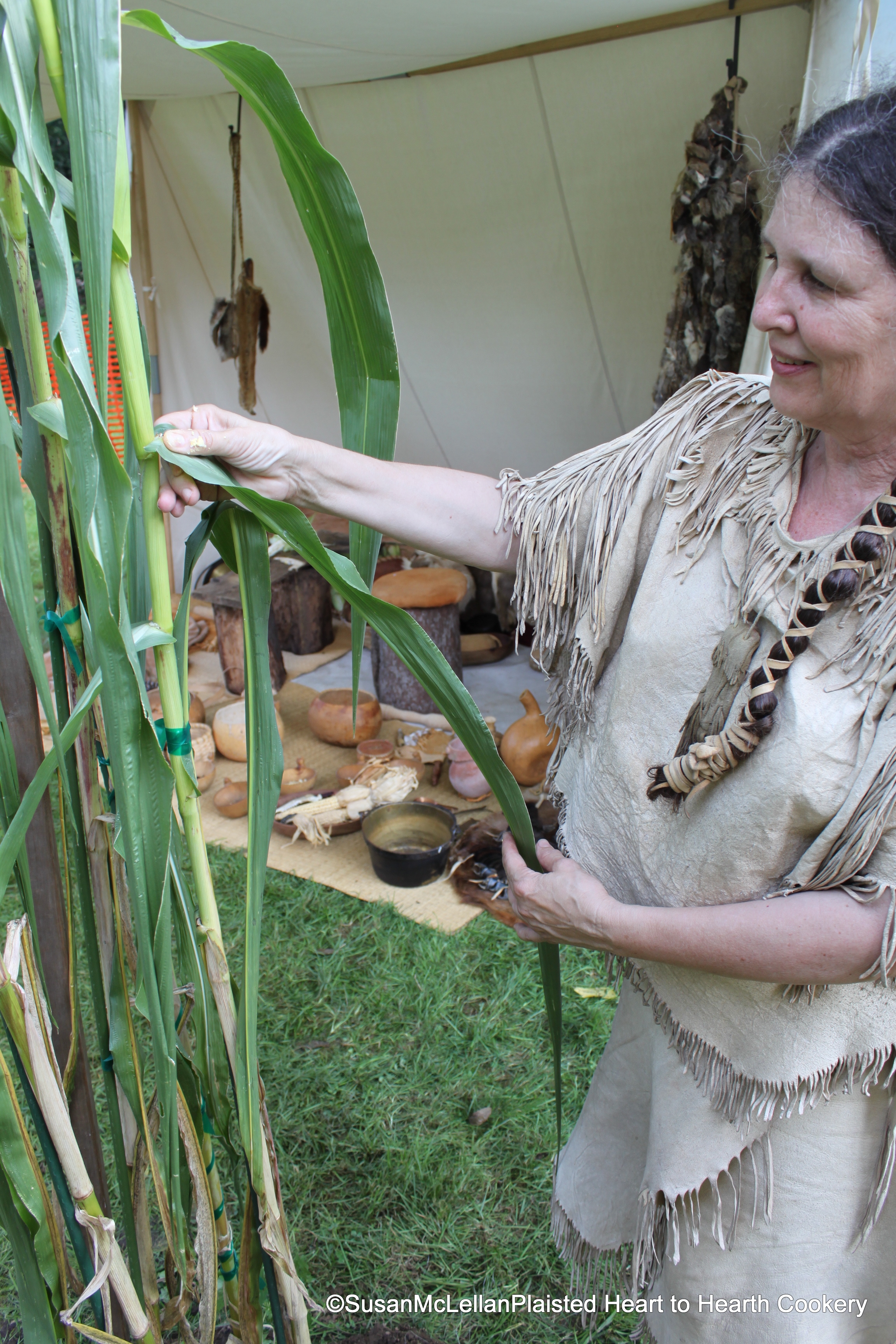
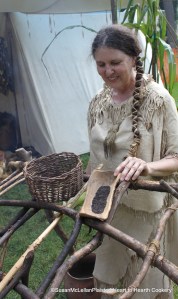
The first step in preparing green corn leaf bread is harvesting the leaf.  I am looking for a leaf that has no tears, has a pronounced midrib, and is a good width.  Having found the perfect leaf on my Lenape white flour corn plant, I will soak the leaf in water for good pliability.

 
Visit my website:
Posted by: hearttohearthcookery | August 26, 2011

Drying Corn Silks

Drying corn silks

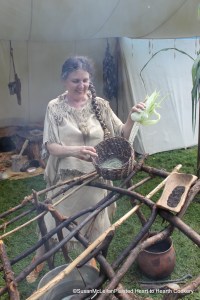
There were so many questions about harvesting corn silks and how to dry them that I am now writing a second post.  After I harvest the silks, I find that using a wild grapevine basket on my drying rack works best for drying them very quickly.  I just fluff them so they are not stuck together and the sun naturally does the work.  The dried, brittle cornsilks are then easily crumbled and added to the trade kettle (with hominy, beans, and dried squash, and dried venison reconstituting) or added to water as a tea.

 
Visit my website at:
 
 
Posted by: hearttohearthcookery | August 24, 2011

Harvesting Corn Silks

Removing Corn Silks

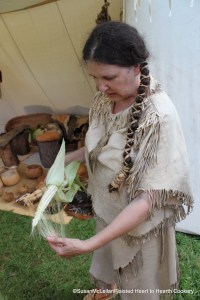
After harvesting an ear of Lenape white flour corn in the green stage, I removed the corn silks to dry  for both food and medicinal uses.  The corn silk is part of the reproduction system of the plant that carries the pollen from the male tassles to germinate the individual kernels of the corn.  There is one corn silk for each kernel of corn! 

 
Visit my website at:
Posted by: hearttohearthcookery | August 22, 2011

Green Corn Bread

Harvesting Green Corn

This weekend I dug four of my Lenape white flour corn plants and re-planted them at a Green Corn Festival.  The plants did very well and I am pictured harvesting one of the ears in the green or milk stage (The husks are green and the starchy kernels have a high water content.)  I made two types of green corn bread:  that which is prepared in the green leaf and also a flat bread prepared on a rock.

 
Visit my website at www.hearttohearthcookery.com
Posted by: hearttohearthcookery | August 22, 2011

Amaranth on the Drying Rack

Drying Amaranth

During July, I processed and water winnowed amaranth.  (See my category list to the right of this blog for earlier posts on amaranth)  Prior to storage for future use, I dried the amaranth thoroughly this weekend on my drying rack.  What is in my wood bowl on the drying rack is one-third of my total production.  This process is like collecting cattail pollen where many hands are needed for a significant harvest!

 
Visit my website at www.hearttohearthcookery.com
Posted by: hearttohearthcookery | August 19, 2011

Green Corn-Twelve Feet High!!!

Lenape White Flour Corn-Green Stage

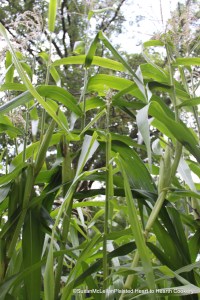
This is a picture of the Lenape white flour corn in my garden in the green stage.  Today I was digging up individual plants to transport to a Green Corn Festival this weekend.  Corn in the green stage is camouflaged among the tall plants (most of mine are over twelve feet high)!  If you look closely you can see two ears about mid-picture.  I will be boiling, roasting, and preparing green corn leaf bread.  If you have never eaten flour corn in the green stage, it is quite different than our sweet corn that we also eat in the green stage.  Sweet corn is sweet and watery,  flour corn is good but starchy and milky.  I am looking forward to the welcomed taste!

 
Visit my website at www.hearttohearthcookery.com
 
Posted by: hearttohearthcookery | August 11, 2011

Look at those Rose Hips!

Rose Hips

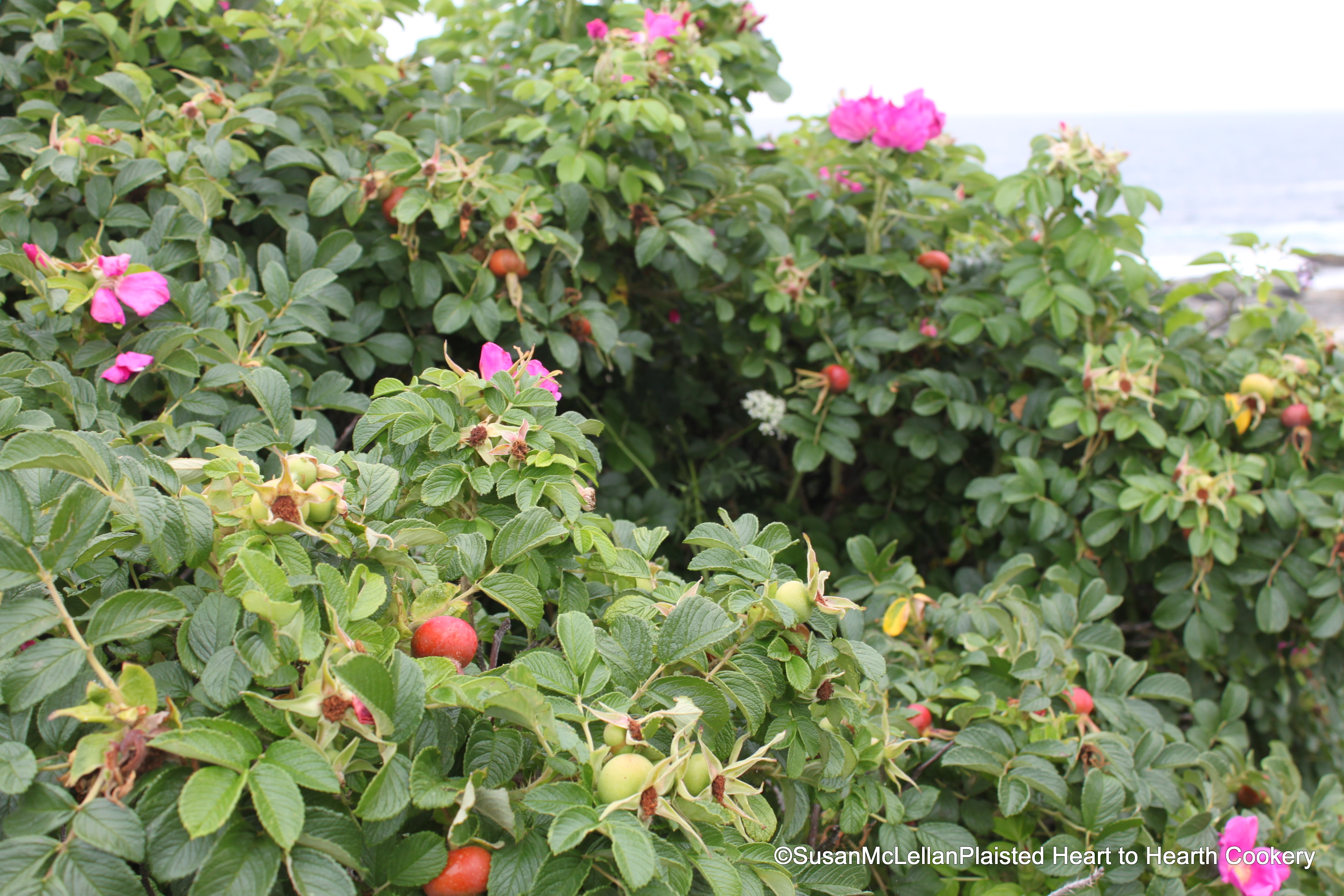
As I was eating some shrimp, clams, and scallops by the Atlantic Ocean in Maine, I looked at the familiar site of the roses that grow near the ocean with a different eye.  I have seen these roses all  my life.  My Mother liked them so much that she tried to transplant some to our house.  But while eating this time, my mind was full of questions.  Were these roses indigenous to this country?  The petals are single, five and color pink which are known typical native rose characteristics but European roses were introduced to this country very early.  And look at the size of those rose hips!  What a rich source of Vitamin C, A, B3, D and E, bioflavonoids, citric acid, and zinc!  If anyone knows more about this rose pictured, please comment below or e-mail me at foodhxsmp@gmail.com

 
Visit my website at www.hearttohearthcookery.com
 
Posted by: hearttohearthcookery | August 7, 2011

Dairying in Fredericksburg

Dairying in Fredericksburg

I had a wonderful experience in Fredericksburg at the first annual Family Table Festival!  Here I am pictured holding a linen cheese cloth that is hiding my cheese basket underneath.  The whey drained into my kettle and I will tie the cloth for more whey to drain from the fresh cheese.  Just above the brick wall, you can see my rennet stomach that I processed this year for my cheesemaking.  And underneath my saltbox on the second shelf you see just a little of the tansy on the linen cheesecloth covering my five and eight gallon cheeses. 

 
Visit my website at www.hearttohearthcookery.com
Posted by: hearttohearthcookery | August 5, 2011

Tansy for Cheese

Tansy in August

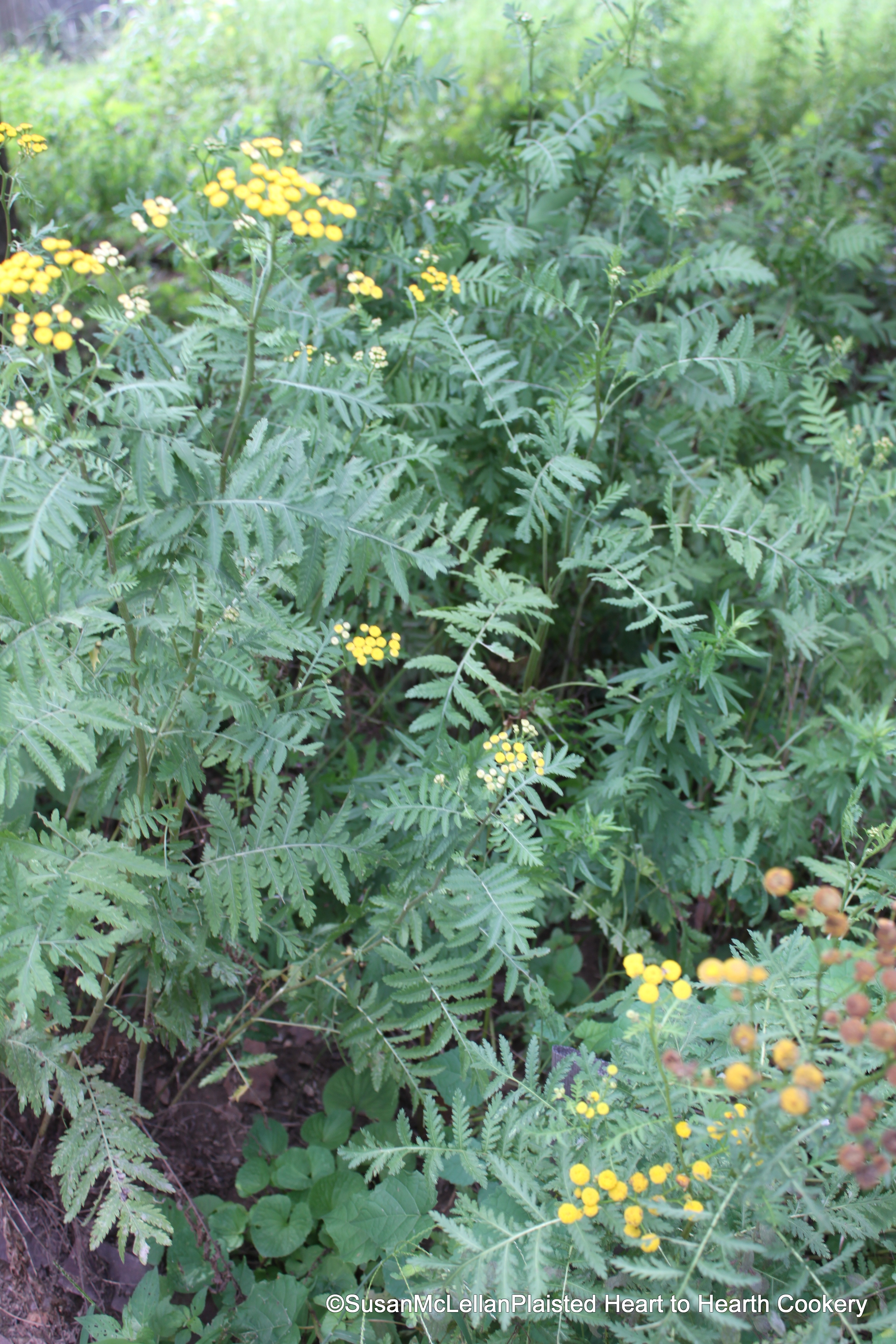
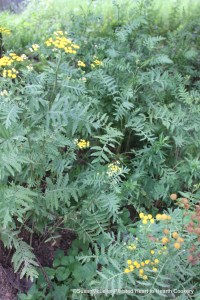
Today I have been preparing for a dairying presentation tomorrow August 6, 2011  at the annual Family Table Food Festival in Fredericksburg, VA.  And harvesting some tansy was part of my preparation.  This bed of tansy looks far different from the picture that I posted in my blog It’s Spring! Time for Tansy in April 2011.  The tansy that I harvested today, I will be using to demonstrate its use in the storage of cheese to aid in keeping insects from the wheels.    And I am hoping that 21st century flies and insects are deterred by this 18th century method.

If you live near Fredericksburg, VA, come out and visit my dairying demonstration in the historic district from noon to 4 pm.

Visit my website at www.hearttohearthcookery.com

Posted by: hearttohearthcookery | August 3, 2011

Amaranth-Six

Amaranth Seed

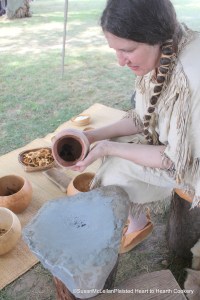
After separating the black amaranth seed from the water  using the grass basket. there was still some seed that remained in the clay pot.  If you look carefully in the picture, you can see both the tiny black seeds both in the bottom of the pot and the few that I have already placed on the rock to dry and heat in the sun.  After a parching, the seeds will be ready to grind into flour.

 
Visit my website at www.hearttohearthcookery.com
 

« Newer Posts - Older Posts »

Categories