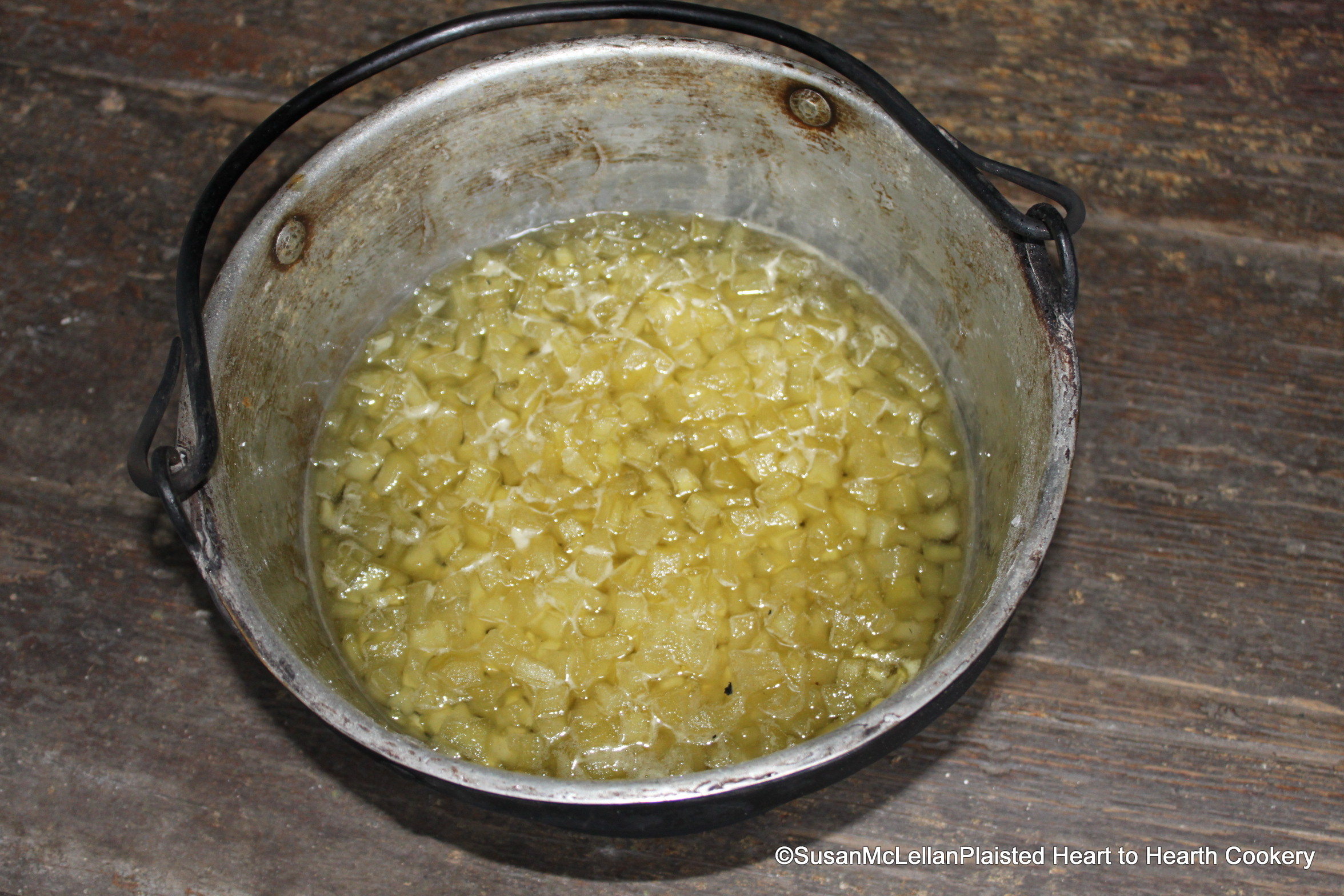
 When the receipt (recipe) for The American Citron is completed, the melon cut into small pieces are almost translucent from the infusion of the sugar solution. The melon boiled gently for two hours.
Visit my website at: www.hearttohearthcookery.com
When the receipt (recipe) for The American Citron is completed, the melon cut into small pieces are almost translucent from the infusion of the sugar solution. The melon boiled gently for two hours.
Visit my website at: www.hearttohearthcookery.com
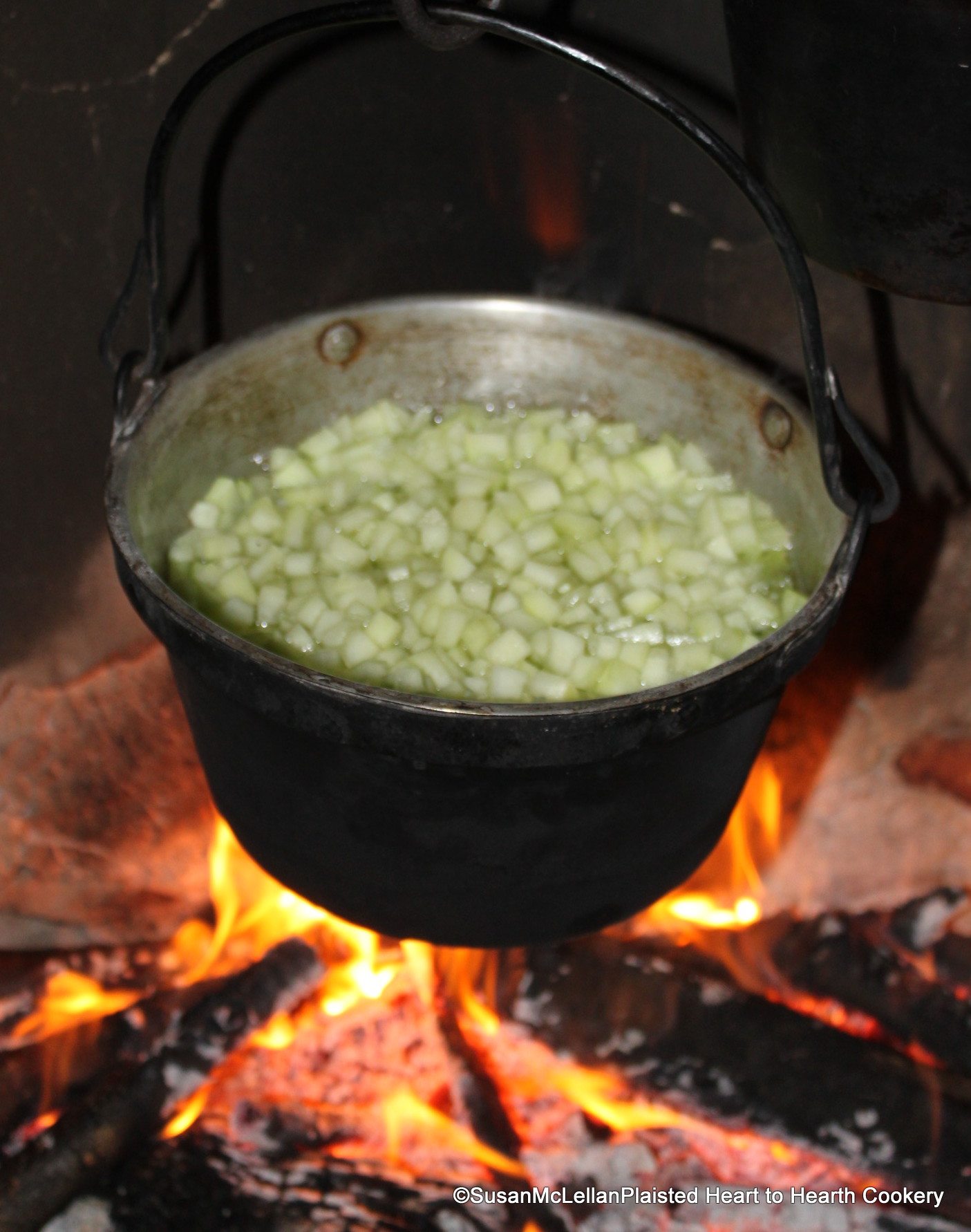
A medium sized American citron melon, not too ripe, cut into small pieces in a preserving solution of two pounds loaf sugar in one pint of water is boiling gently for two hours in the kettle.
Visit my website at: www.hearttohearthcookery.com
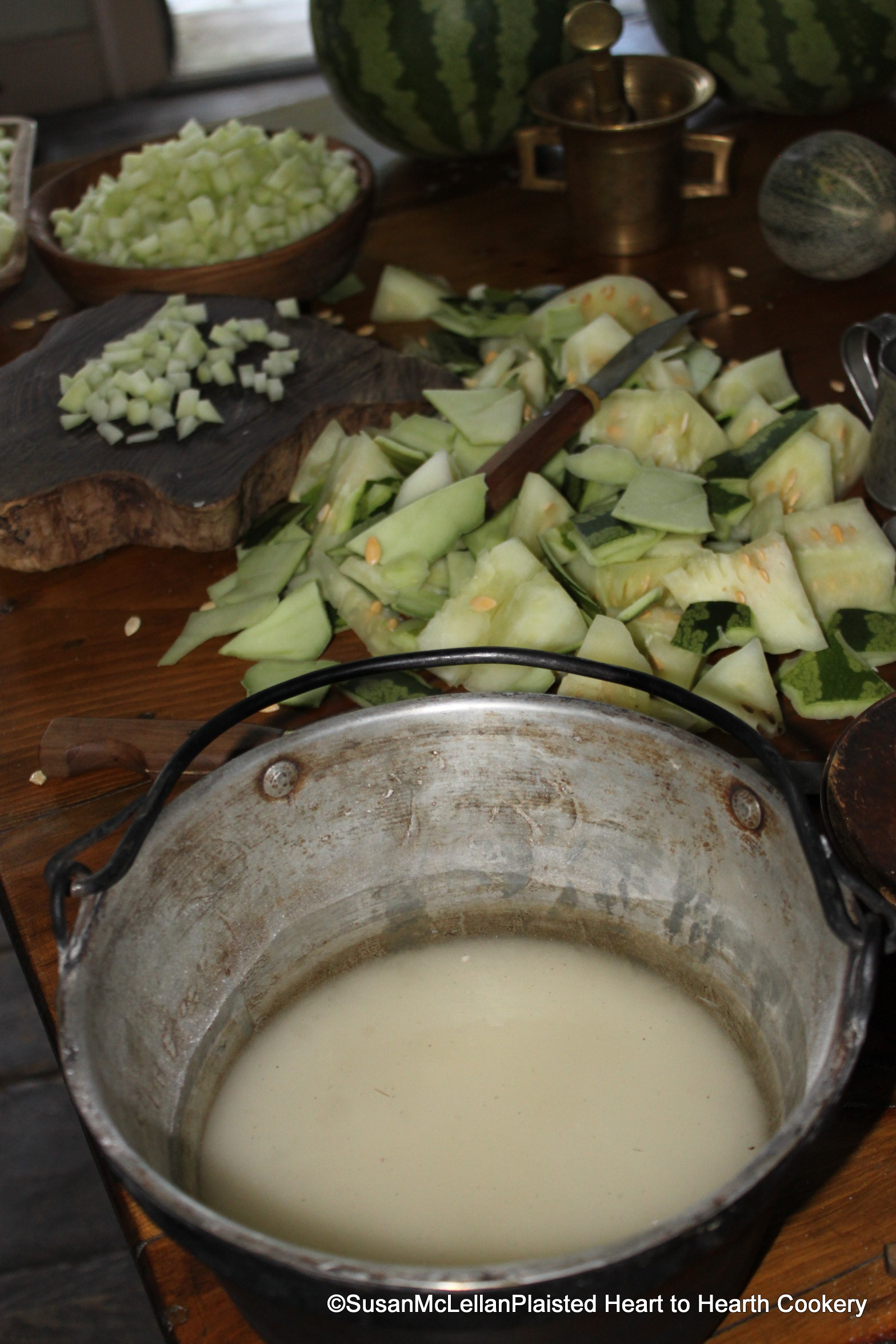
The two pound of loaf sugar is added to one pint of water for the preserving solution for Amelia Simmons’ receipt (recipe) The American Citron.
Visit my website at: www.hearttohearthcookery.com
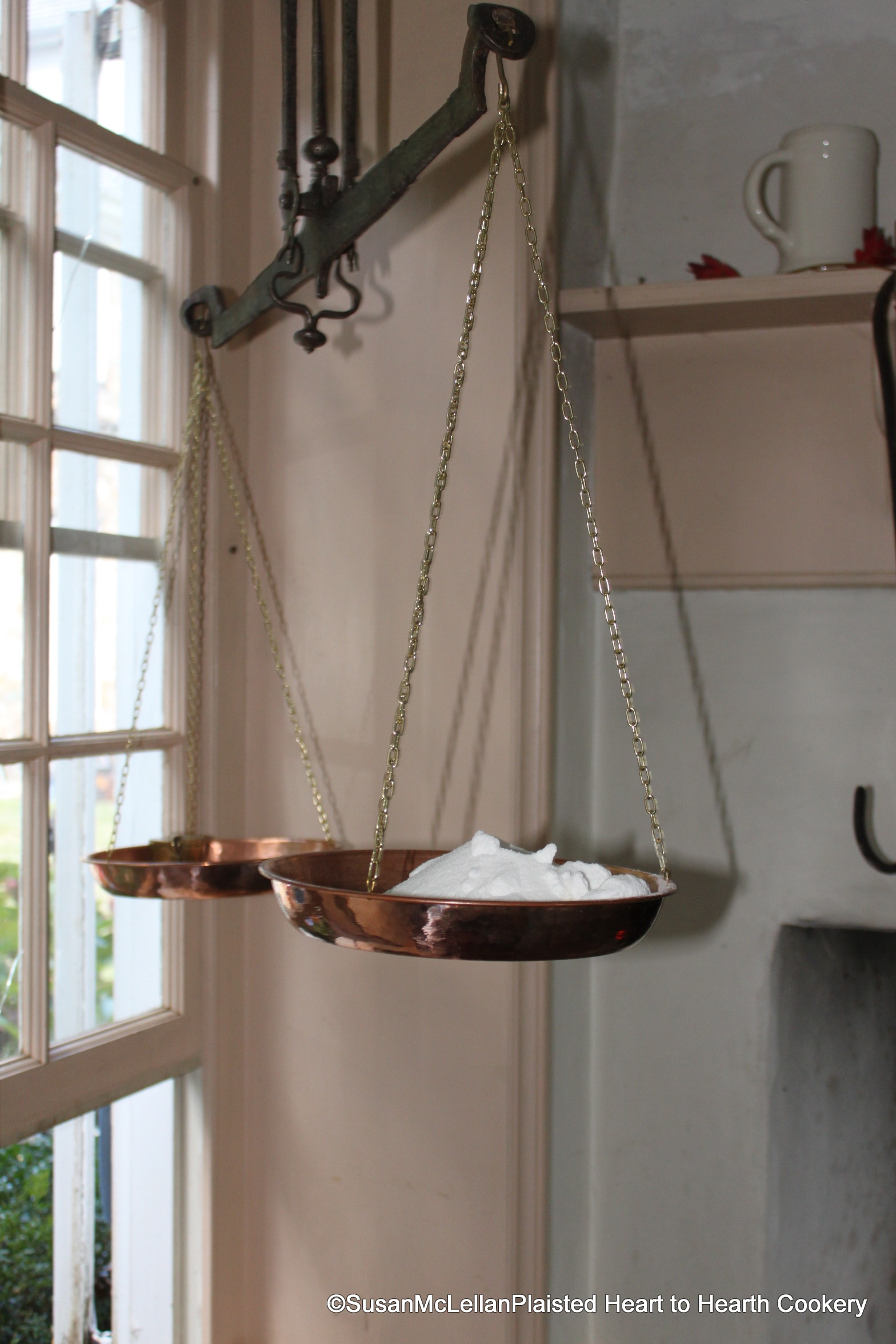 These balance scales were used to weigh the two pound of loaf sugar needed for Amelia Simmons’ The American Citron receipt (recipe) to use for preserving the fruit.
Visit my website at: www.hearttohearthcookery.com
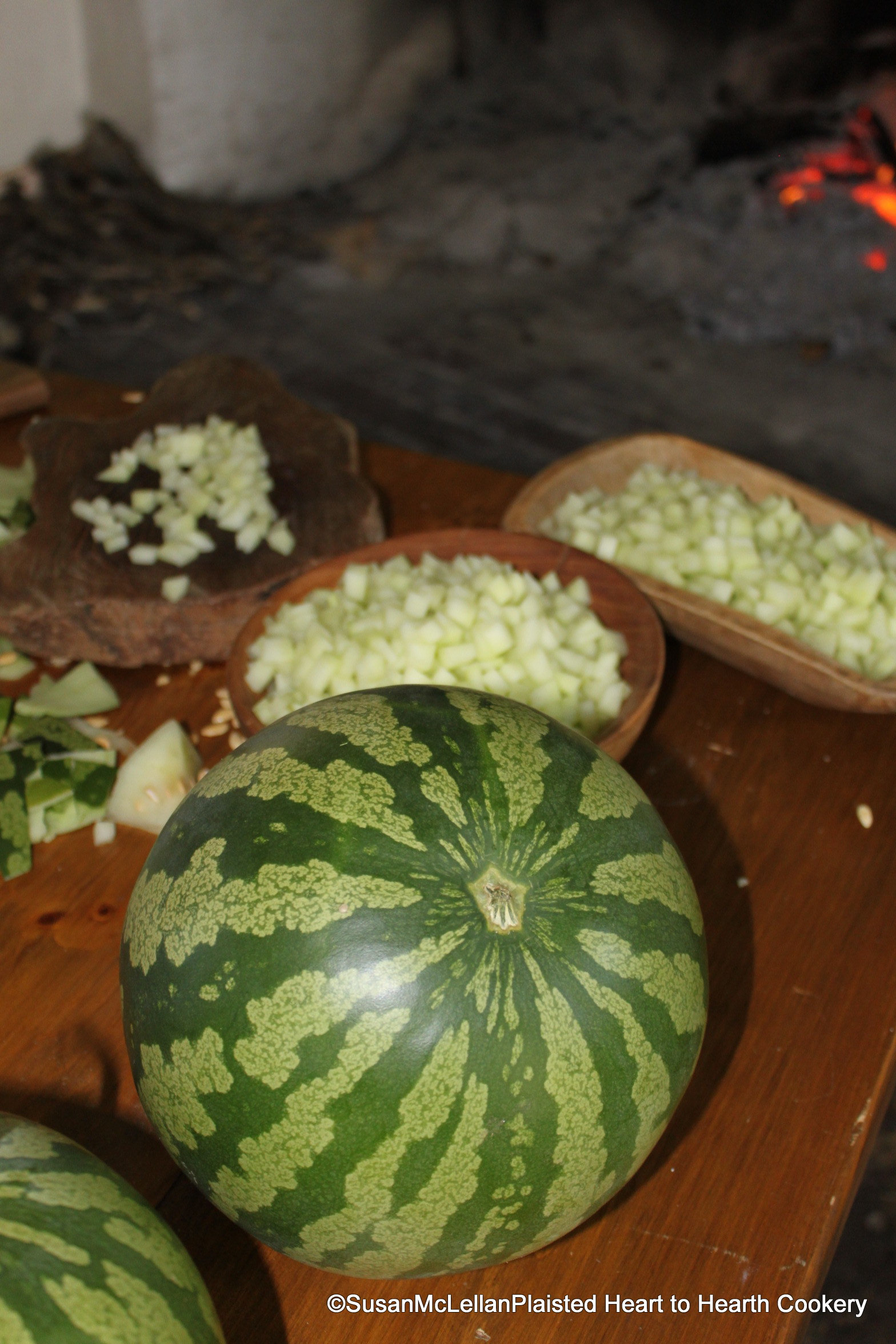
To prepare the receipt (recipe) The American Citron, Take the whole of a large watermelon (seeds excepted) not too ripe, cut it into small pieces. One average sized American citron melon yields a large quantity of cut up melon for preserving. (See prior post for more on the American citron melon)
Visit my website at: www.hearttohearthcookery.com
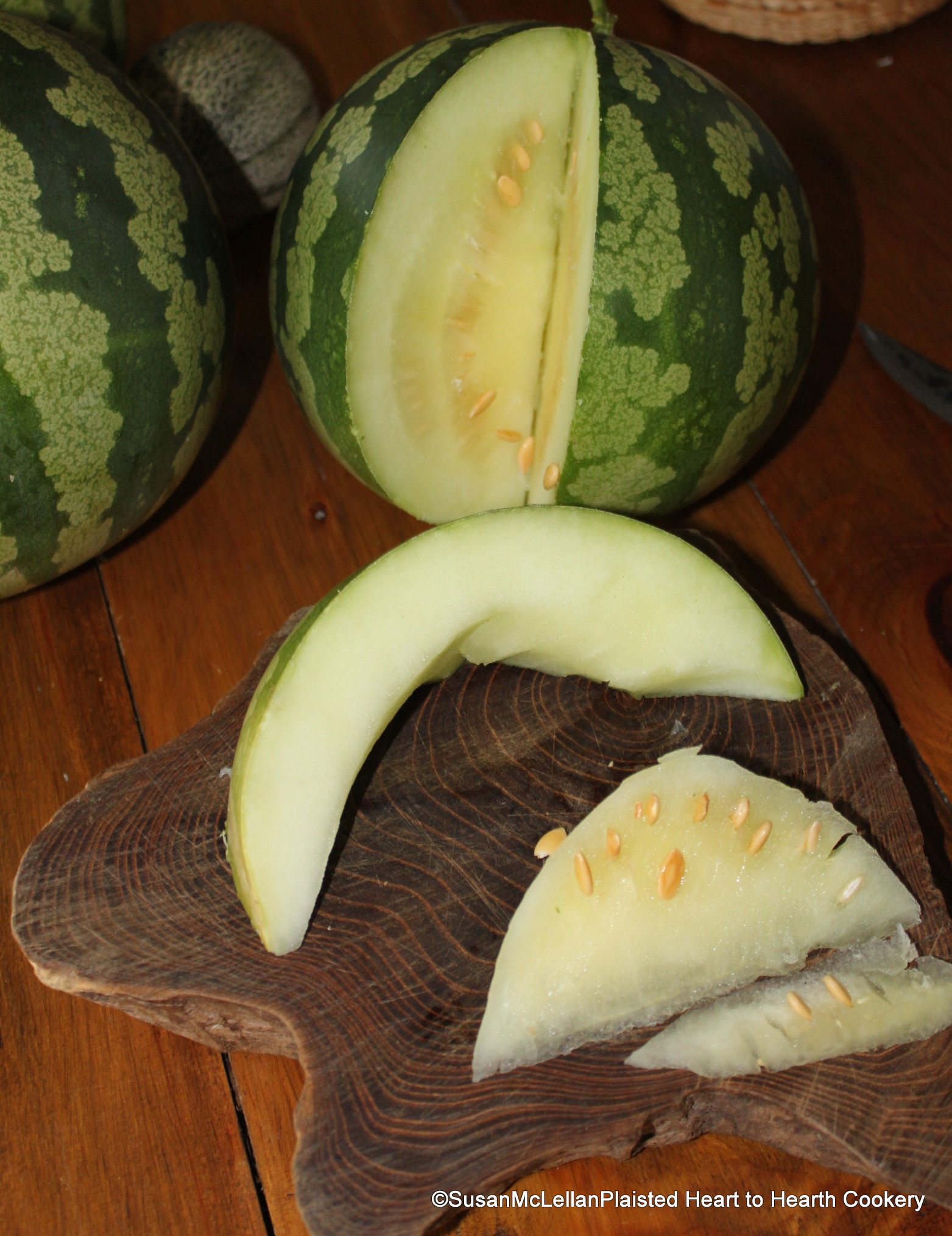
This bland, seedy, ancestor to the watermelon was referred to as The American Citron by Amelia Simmons in American Cookery published in 1796. But is it truly American? It was used by European colonists in America to preserve as they did the rind of a citron, a citrus fruit native to the Middle East and Mediterranean. But the origins of this old watermelon is Africa.
Visit my website at: www.hearttohearthcookery.com
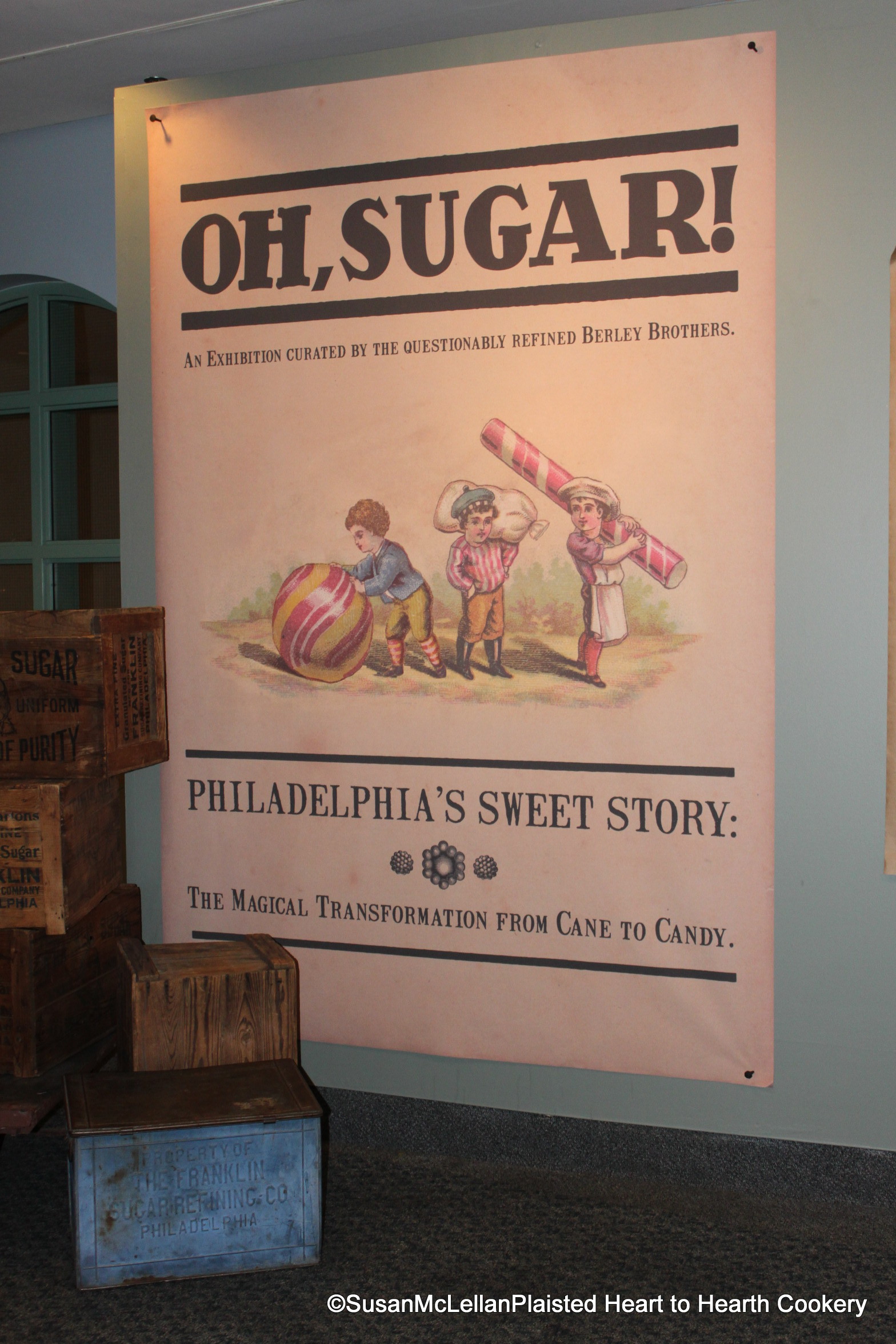
On January 23, 2014, I presented a chocolate demonstration at an exhibition OH, SUGAR! curated by the questionably refined Berley Brothers. This exhibit is housed at Independence Seaport Museum at Penn’s Landing on the Delaware in Philadelphia, Pennsylvania. If your travels include Philadelphia prior to February 17, 2014, I would recommend a visit to learn about Philadelphis’s Sweet Story: The Magical Transformation from Cane to Candy.
Visit my website at: www.hearttohearthcookery.com
Posted in confectionery, culinary history, food history, Sugar | Tags: chocolate, confectionery, culinary history, food, food history, foodways
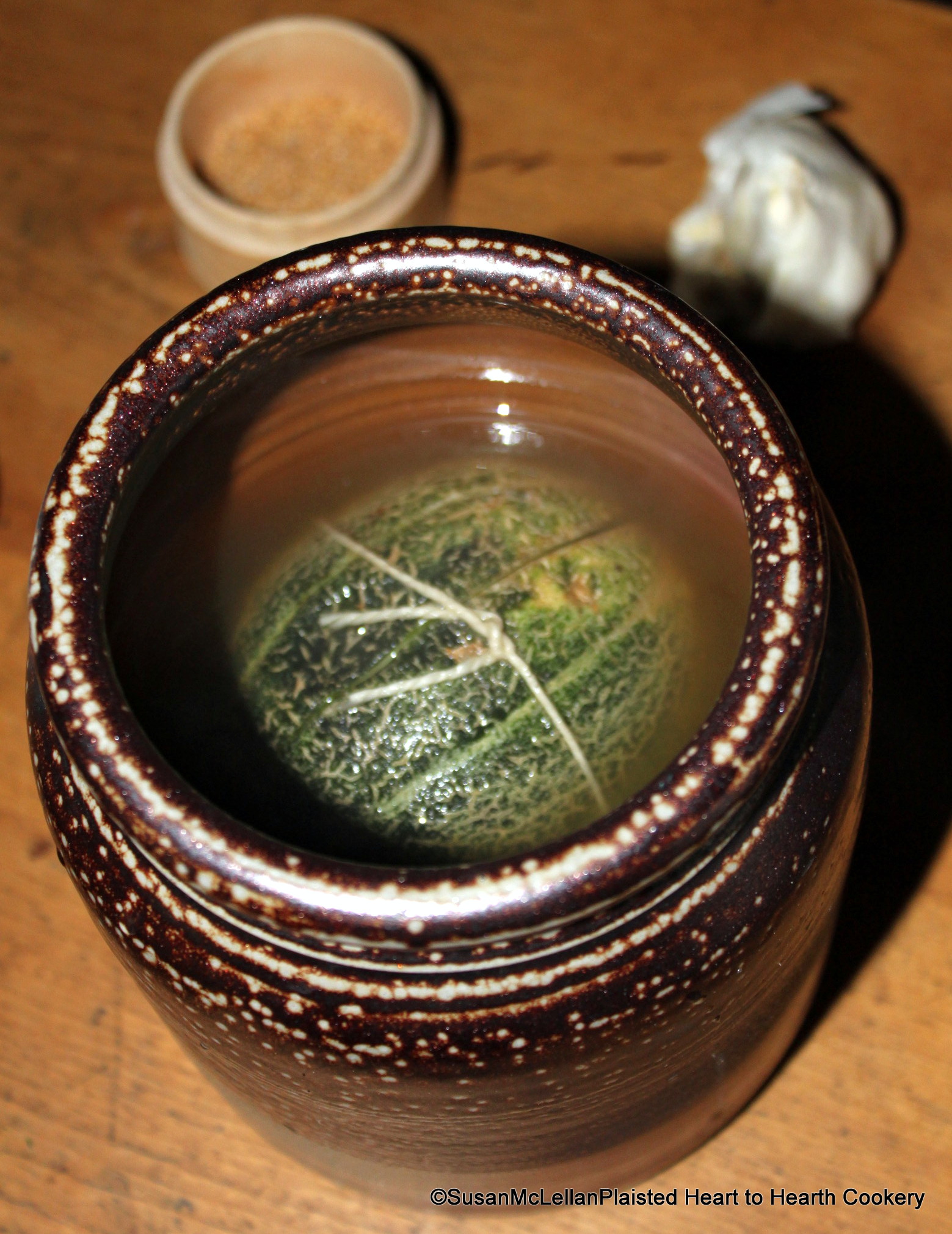 The receipt (recipe) To make Melon Mangoes states to pour in scalding hot over your mangoes, the pickling solution which contains vinegar, whole peppers, some salt and Jamaica pepper. Then cover them close to keep in the steam: repeat this nine days, and when they are cold cover them with leather.
Visit my website at: www.hearttohearthcookery.com
Posted in culinary history, food, food history, Melon, Pickling, receipts, recipes, Salt-glazed crock | Tags: culinary history, food, food history, Food preservation, foodways, pickling
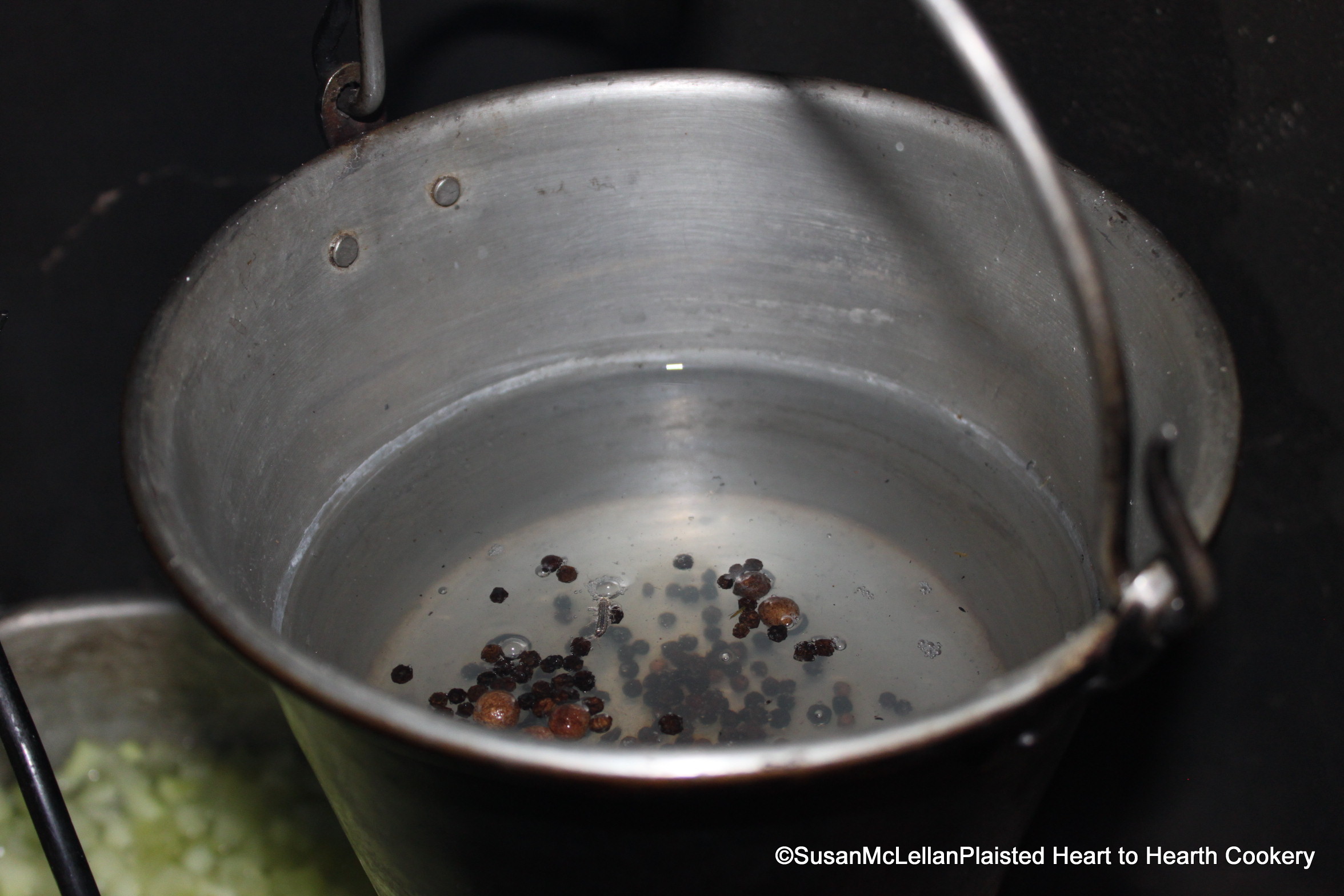 The pickling solution for To make Melon Mangoes is preparing by boiling some vinegar (as much as you think will cover them) with whole peppers, some salt, and Jamaica pepper. Jamaica pepper is known to us as all spice. The whole all spice can be discerned in the kettle as it is larger than the whole pepper.
Visit my web site at: www.hearttohearthcookery.com
Posted in food, food history, Food preservation, Jamaica pepper, Melon, Pickling, receipts, recipes | Tags: culinary history, food, food history, Food preservation, foodways, pickling

Just to demonstrate the process, I am using a very small reproduction salt-glaze crock for this pickle: To make Melon Mangoes. The crock needs to be salt-glaze, not redware due to the vinegar. After the fruit is tied together, put them into your pot. See previous posts for all the steps.
Visit my website at: www.hearttohearthcookery.com
Posted in culinary history, food, food history, Melon, receipts, recipes, Salt-glazed crock | Tags: culinary history, food, food history, Food preservation, foodways, pickling
 Heart to Hearth Cookery