Posted by: hearttohearthcookery | December 12, 2009

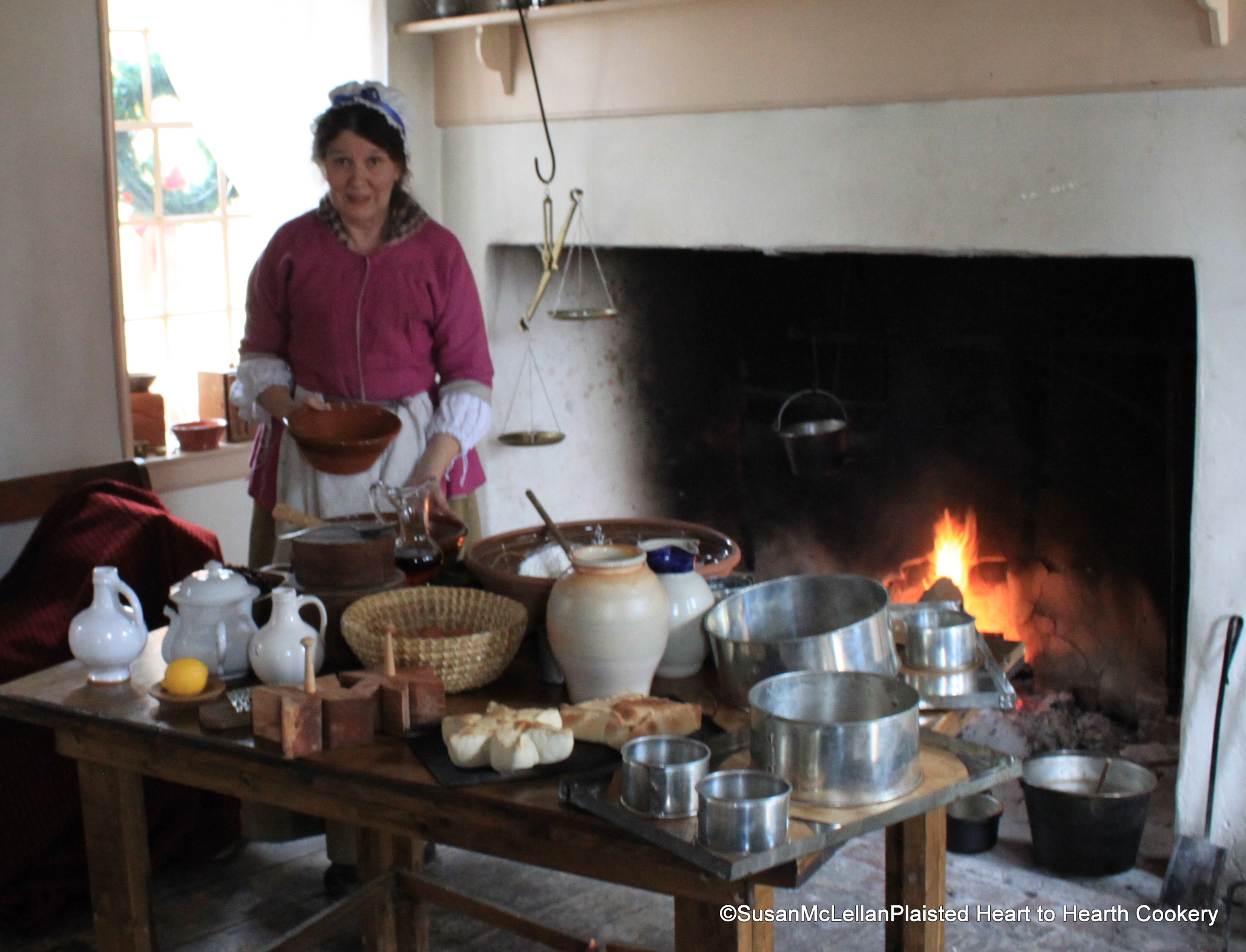
Great Cakes in the Oven!

Preparing Great Cakes

 There are many different receipts for “great cakes” but the one that I am preparing is A Pretty Cake from H. Glasse.  It is made with 5 pounds of flour, 22 eggs minus 6 whites and 7 pounds of currents!!  You can see the large redware bowl to my right.  The currents are plumped in brandy and the cream and butter heated over the fire and are now cooling until blood warm in the large kettle on the hearth.  The cake hoops are buttered and on the tin sheets to contain the batter.  Below the cakes are baking in the oven.

Please visit my website at www.hearttohearthcookery.com
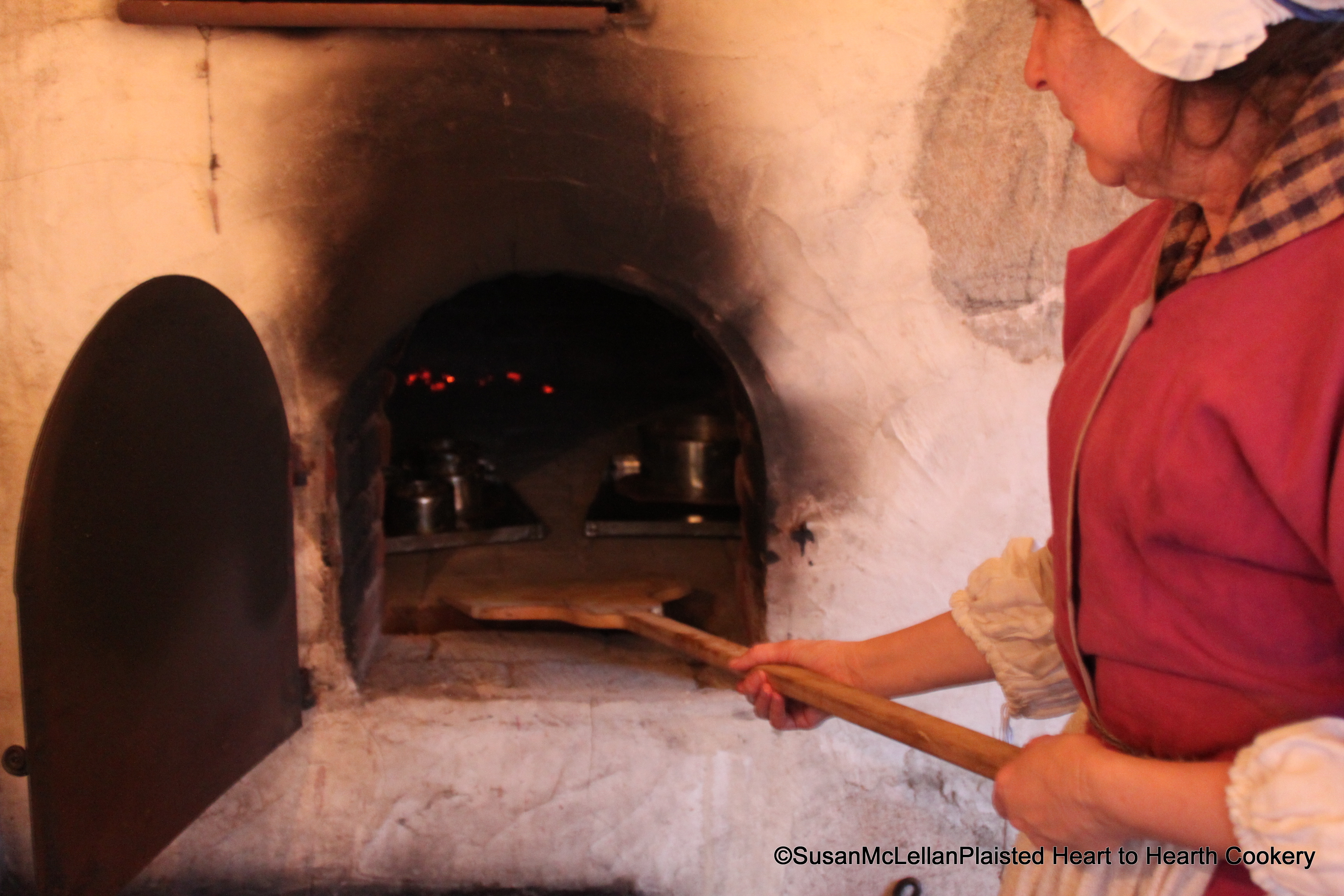
Baking great cakes

Posted by: hearttohearthcookery | December 5, 2009

Coffins, Syllabub and Sweetmeats

Mince Meat Coffins, Syllabub and Sweetmeat

The four shapes of coffins filled with mince meat have been arranged in a symmetrical design in the center of the table.  I am holding one of the six hand blown reproduction glasses containing syllabub (a mixture of white wine, cream, lemon juice and rind, and sugar)  One of the two sweetmeat cones giving both symmetry and height to the table is in view to the right.   This is one of my festive holiday December programs  prepared for the public to enjoy.

Visit my website at www.hearttohearthcookery.com

Posted by: hearttohearthcookery | November 29, 2009

Holiday House at Bolton Mansion

Forming a coffin

Every year the Friends of Bolton Mansion decorate the Mansion into a holiday wonderland!  This year it is complete with Santa Claus, wonderful baked goods, and an upside-down Christmas tree.

November 28, 2009, I was there with a crock of mince meat, formed coffins, and baked the mince meat pyes in the bake oven!  I will again be at Holiday House, Saturday December 5th from 10 am to 4 pm.  I will be firing the oven, baking great cakes, using a syllabub engine, and the minced pyes from yesterday will be out to view.  If you are in the Bolton Mansion (Levittown, PA), I would love to see you.  Visiting Bolton Mansion will put you in the holiday spirit!  Directions are available on the Bolton Mansion website www.boltonmansion.com.  And visit my website at www.hearttohearthcookery.com.  The featured Chocolate Workshop makes an excellent Christmas gift!  Gift certificates are available.
Posted by: hearttohearthcookery | November 24, 2009

Food History-Hands On!

Working the Quern

Grating and Grinding

Yesterday at Howell Living History Farm, I was at the hearth with many hands helping!  This was a day of shelling corn, using a quern for grinding, sieving the flour, mashing pumpkin and grating and grinding spices.  The pumpkin corn cakes (a flatbread) were then fried in butter in a spider.  The quern is one of several programs that I do with school groups.   Visit my website at www.hearttohearthcookery.com

Posted by: hearttohearthcookery | November 21, 2009

Swedish Fika

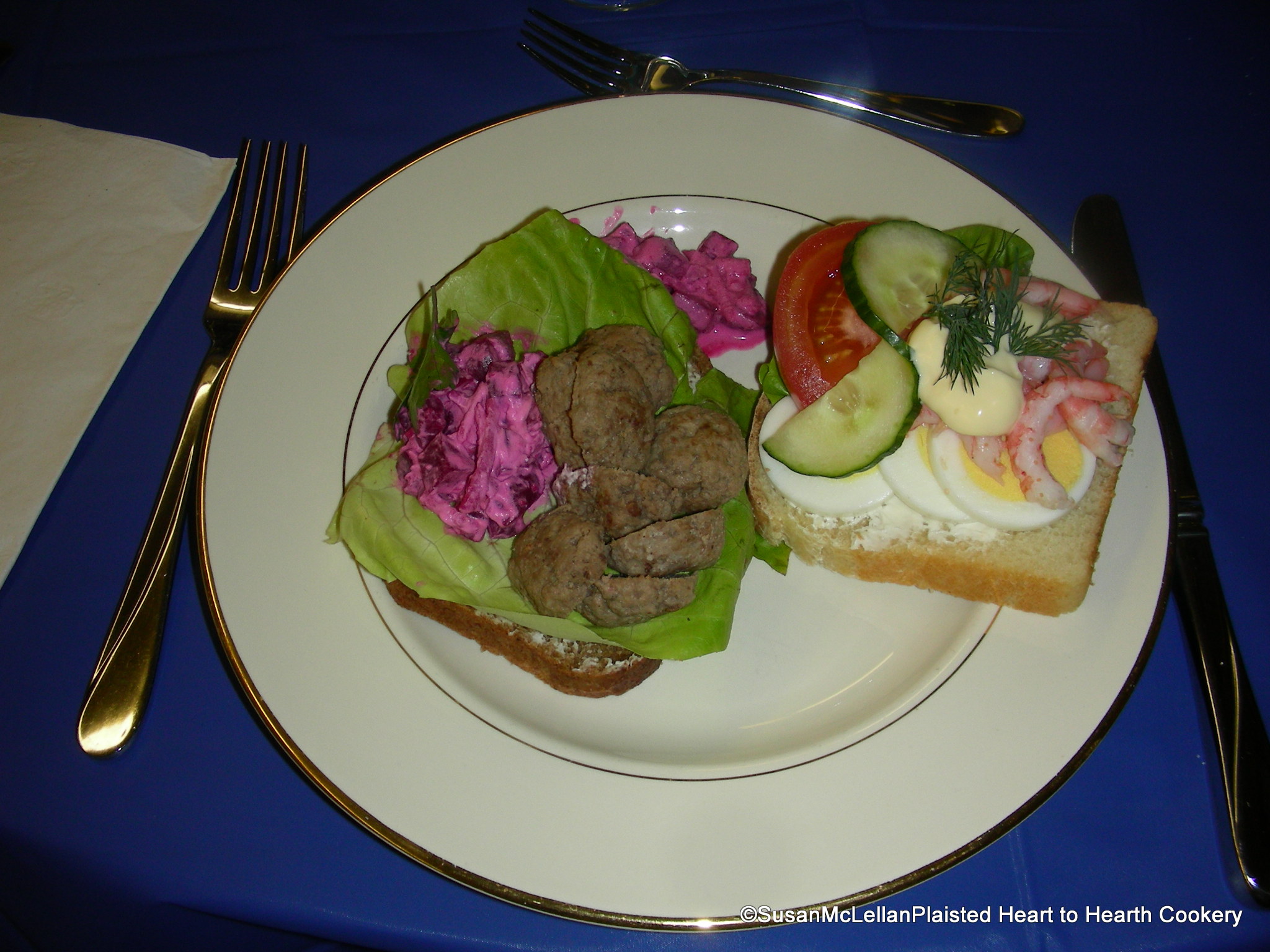
Open-faced sandwiches

The Swedish word fika was explained today at the American Swedish Historical Museum as a “play” on the word kaffi (coffee) that was done in the 19th century when syllables of words were reversed.  But Stockholm had several cafes in the early 1700’s and most served coffee with wheat bread or buns according to the French fashion. 
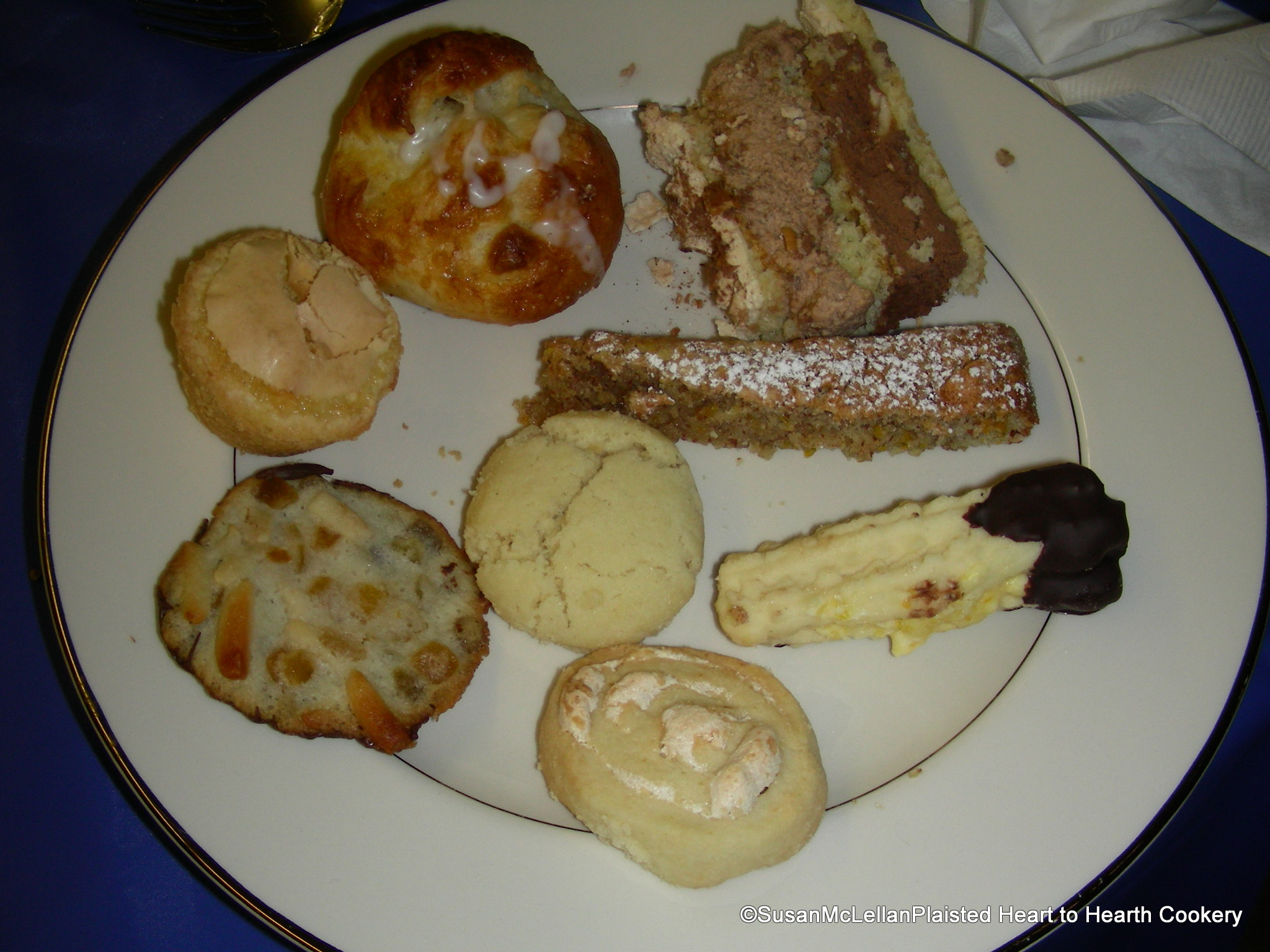
Margaretha Joelsson, Gullbritt Mengelbier and Birgitta Paddack demonstrated the preparation of foods served at a fika since the late 1800’s.  The “Seven Kinds of Cookies” is the tradition of how many different kinds of cookies a hostess should offer.  Below is pictured the eight “kinds of cookies” that were just simply delicious!   The beautiful open-faced sandwiches were the traditional Meatball Sandwich with red beet salad and Shrimp Sandwich!  The word fica is a verb and a noun for having coffee with sweet buns, cookies, or open-face sandwiches.           Visit my website at www.hearttohearthcookery.com

"Seven Kinds of Cookies" plus one!

Posted by: hearttohearthcookery | November 16, 2009

Coffins for the Bake Oven

Mince Pye Coffins

The coffins are on the tin baking sheets waiting for the bake oven to be the correct temperature for baking.  This past Sunday, I prepared To make minced Pies of Beef  from The Accomplisht Cook by Robert May.  This 17th century receipt contains beef, suet, salt, nutmeg, pepper, cloves, mace, currants and raisins.  The salt glazed crock contains the stored mince which was used to fill  the many shaped coffins.  After baking, the pies will be dressed and arranged in a symmetrical  pattern based on the patterns printed in May’s book.

Please visit my website at www.hearttohearthcookery.com.

The next scheduled workshop is Chocolate and will be held February 6, 2010.  More information and how to register is on my website.  A unique holiday gift idea is a gift certificate to the workshop!

Posted by: hearttohearthcookery | November 9, 2009

1806 Bill of Fare

To stew brisket

To stew brisket

November 7th Hearth Cooking Class
It was as good as it looks!

Saturday, November 7th, 2009 at Historic Speedwell, a hardy group of beginners and experienced hearth cooks prepared this 1806 bill of fare at the hearth under my direction.  The receipt for To stew brisket was the focal point of the meal.  The brisket was melt in your mouth, fork tender and the sausages were divine!  My next hearth cooking class will be at Bolton Mansion on November 14th.  Please check my website www.hearttohearthcookery.com for more information. 


Posted by: hearttohearthcookery | November 5, 2009

Roasting on a String Documentation

Roasting a duck

Roasting duck on a string

 
Roasting on a string is one of my preferred methods of roasting but one that is very difficult to find the documentation in the 18th century.  The two most quoted references are from Susannah Carter’s The Frugal Housewife and Hannah Glasse’s The Art of Cookery made Plain and Easy,  but in both sources the receipt is for roasting pigeons.
Priscilla Lewis White (b. 1794)  grew up in Walpole, Massachusetts.  Her reminiscences of growing up were published which included this description “…Meats hung to roast in front of the fire with a spider to catch juice underneath…” 
19th century documentation is much more easy to find.  In a letter Charlotte Haven wrote in Illinois to her family in Portsmouth, New Hampshire in 1843, included the following:
  “….dined…on roast turkey, which was cooked by being suspended by a string from the mantel-piece, with the spider beneath to catch the gravy…”    I find (and so do class memebers of my hearth cooking classes) that roasting on a string is one of the best methods of roasting and results in succulent flesh to eat!   My November 7th hearth cooking class is filled but there are still a few openings in the November 14th class at Bolton Mansion.  Please visit my website – www.hearttohearthcookery.com – for more information on the class and for information on how to reserve a place.
Posted by: hearttohearthcookery | October 27, 2009

To stew Cauliflower

To stew Cauliflower

To stew Cauliflower

This weekend, I chose to do some Dutch receipts at the hearth and used Peter Rose’s translation of To stew Cauliflower from The Sensible Cook.  This gave me an opportunity to use a bronze kettle that was identical to one in the exhibit –The Dutch Table.  The receipt was simple and basic but the results were surprisingly rich.  Several, who tasted the receipt, described it as similar to a meat dish.

Mutton broth with pepper, nutmeg, and salt

Mutton broth with pepper, nutmeg, and salt

Cauliflower in the Dutch kettle

Cauliflower in the Dutch kettle

 The Dutch kettle has mutton-broth, whole pepper, nutmeg and salt “without forgetting the excellent Butter of Holland”.  When served as in the picture above, a hard-boiled egg yolk was  rubbed fine and placed over the cauliflower as Peter Rose recommends. 

Please visit my website (www.hearttohearthcookery.com) for more information on programs, demonstrations, and hearth cooking classes.

Posted by: hearttohearthcookery | October 22, 2009

For Oyster Sauce

Oysters, anchovies, nutmeg and lemon

Oysters, anchovies, nutmeg and lemon

Oysters were native to this country and large shell heaps can be found containing oyster shells.  As Europeans arrived, they were familiar with oysters and took to the New World oysters with a passion.  This week I prepared a receipt For Oyster Sauce at the hearth.   I used fresh butter, white wheaten flour, and gravy from some roosters that had been roasted.  After the butter was melted in the posnet and flour added, the oyster water and oysters, anchovies,  gravy, lemon juice and grated nutmeg were added.  This sauce, as pictured below, was served on pork puddings.

The November 7th hearth cooking class is filled but there are still openings in the November 14th class.  Visit my website (www.hearttohearthcookery.com ) for more information on classes  and contact me at foodhxsmp@gmail.com if there are specific hearth cooking receipts or techniques that you are interested in learning.

Oyster sauce in the posnet

Oyster sauce in the posnet

« Newer Posts - Older Posts »

Categories