- Lenape White Flour Corn
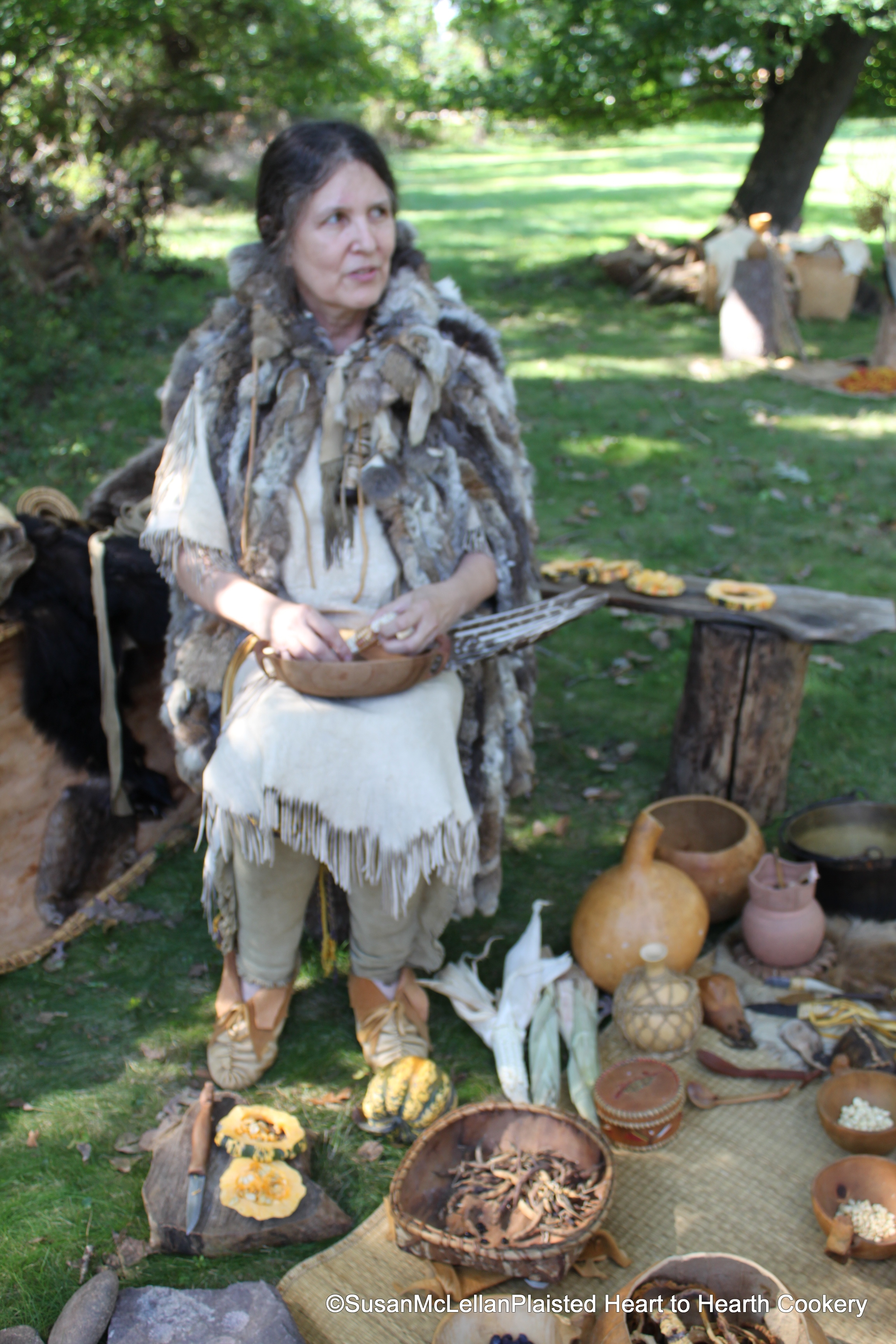
This past week I harvested my Lenape white flour corn that I grow in my gardern. The ears, in the large elm bark basket, are not very attractive due to the wet conditions this summer and fall without the sun to dry the husks.

This past week I harvested my Lenape white flour corn that I grow in my gardern. The ears, in the large elm bark basket, are not very attractive due to the wet conditions this summer and fall without the sun to dry the husks.
Posted in Corn, culinary history, food, food history, Lenape, Native American | Tags: corn, culinary history, food, food history, foodways, Lenape, Native American
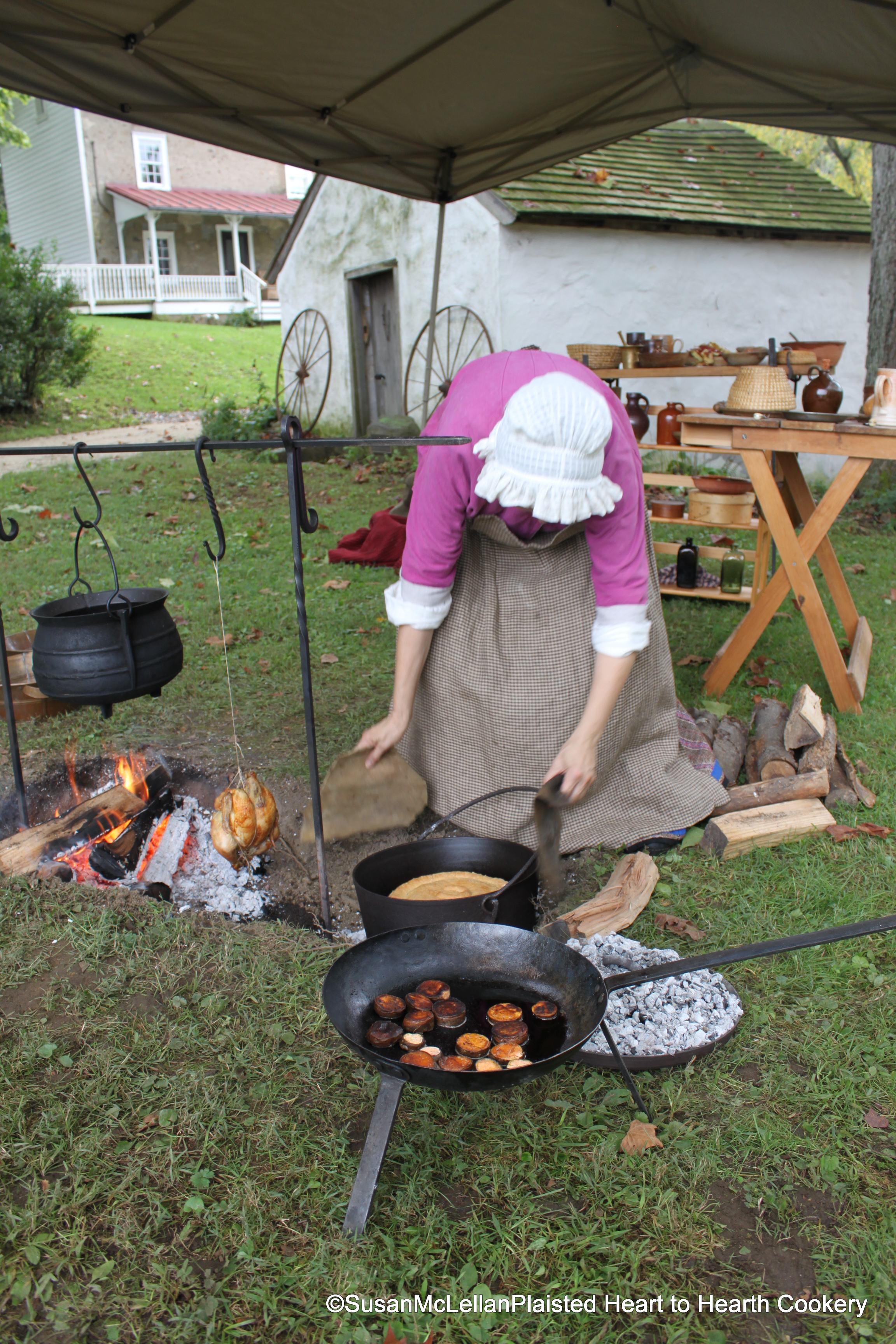
Finding documented “inn” receipts for the Conestoga Day program was not easy but the Historical Society of York County, Pennsylvania has an ink and watercolor circa 1819 of Mrs. Lottman frying sweet potatoes. The fried sweet potatoes (cut 1/2 inch thick with peel on) were fried in my spider using the coals on the top of my bake kettle for heat.

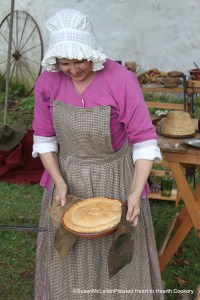
My Conestoga Turnpike Road Day tavern demonstration included the baking of an apple pie. Thus the “C” on the nicely browned paste. This is not just an ordinary apple pie! The thinly sliced pared ripe apples are layered alternately with powdered sugar till the dish is full. A few tea-spoonsful of rose water and some cloves are placed on top, a top crust put on and the pie was baked in my original bake kettle.
Posted in apples, culinary history, food, food history, Fruits, Pyes (pies), receipts, recipes, Tavern food | Tags: apples, bake kettle, culinary history, food, food history, foodways

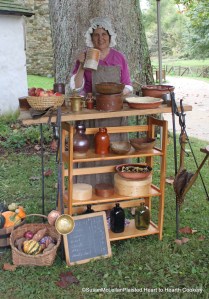
The offerings at the “tavern” are listed on the slate board (center): Breakfast, Dinner, Supper, Bread, Cheese, Ale and Hard Cider. Breakfast and Supper are ready in the cast iron pot, The chicken for dinner is roasting on the string (blurry in the picture as it turns). In the bake kettle, a pie is baking and Spanish (sweet) potatoes are frying in the spider. The table to the right of the picture is set for the next traveler with bread, cheese, plate, two-tined fork, broad blade knife and large mug for either ale or hard cider.
Posted in Bread, cheese, culinary history, food, food history, hearth cooking demonstrations, roasting on a string | Tags: culinary history, food, food history, foodways, Roasting, tavern food

The Mill at Anselma (located on Conestoga Rd in Chester Springs) hosted a festival in honor of the bicentennial of the incorporation of the Conestoga Turnpike in 1811. The Conestoga Turnpike was an inportant link for teamsters of the Conestoga wagons and drovers to move produce and livestock to Philadelphia and mercantile goods into the more “wilderness” country of Chester Springs and beyond. My “wagoners” tavern is outside but captured the spirit of the taverns of that time.

In my previous post on bear grease, I was preparing the rock with bear grease to start the process of making kahahpon (a preservation method for “corn-in-the milk” bread). Touching Leaves Woman describes making kahahpon when the “corn got in the milky stage”. She writes that you have to “get the corn early in the morning and prepare it” by removing the silks and husks and scraping off the corn. I am cooking and turning the bread which needs to be baked prior to preserving.
Posted in Corn, culinary history, food, food history, Food preservation, Lenape, Native American, recipes | Tags: corn, culinary history, food, food history, Food preservation, foodways, Lenape, Native American

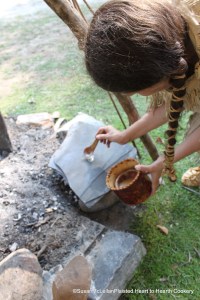
I keep my bear grease in a small gourd bowl inside another bark container. In the picture, I am placing bear grease on a rock so that the green corn flatbread will not stick.
Posted in Bear, culinary history, food, Lenape, Native American | Tags: bear, culinary history, food, food history, foodways, Lenape, Native American
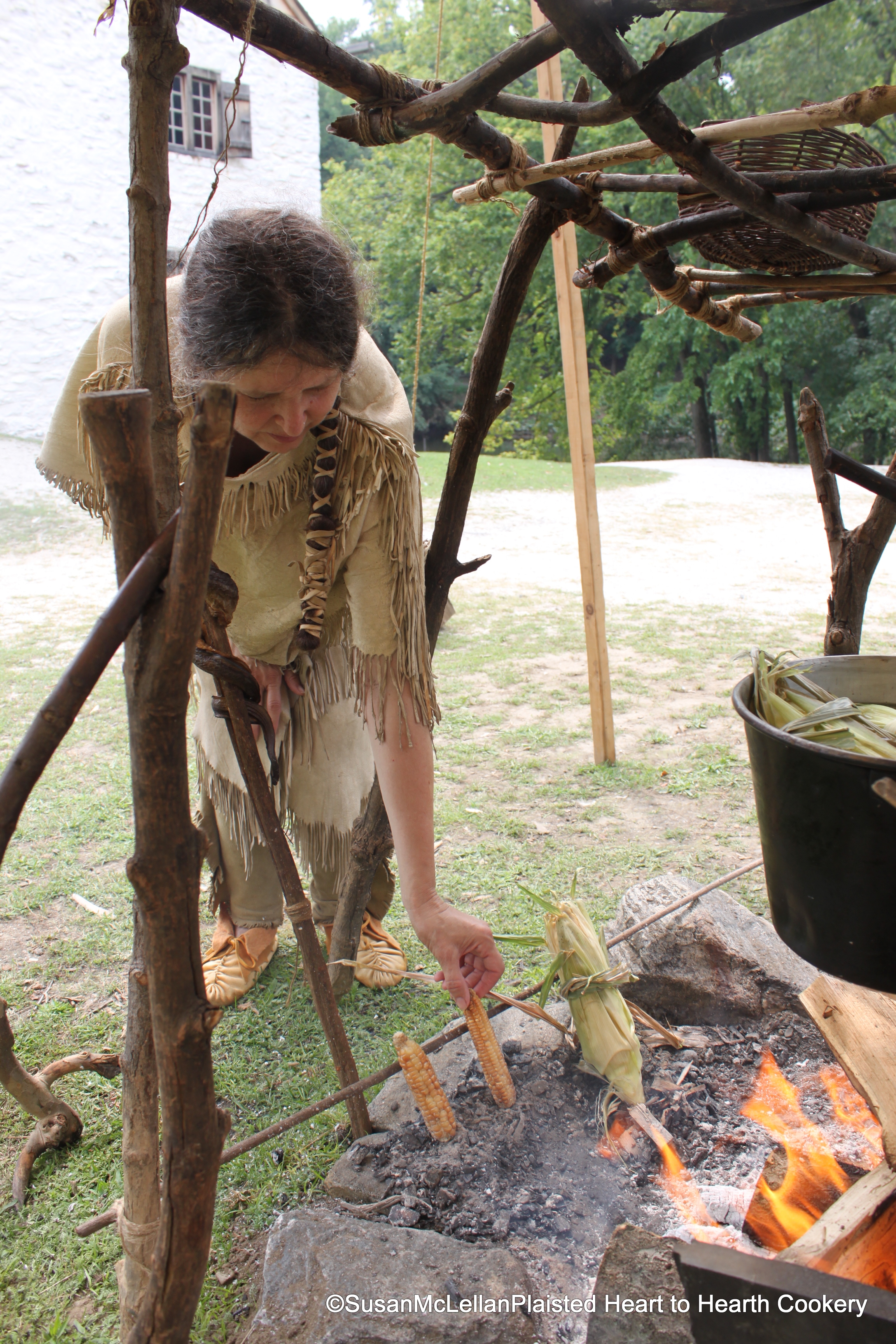
This picture shows green corn processed in three ways. I am turning the Lenape white flour corn as it is browning nicely for tasemenana (preservation of green corn). On the same stick is a roasting ear of green corn with the green husks tied after the silks were removed. In the trade kettle to the far right of the picture is a third method of preparing green corn by boiling.
Visit my website at:
Posted in Corn, culinary history, food, food history, Food preservation, Green corn, Lenape, Native American | Tags: corn, culinary history, food, food history, Food preservation, foodways, Lenape, Native American