Posted by: hearttohearthcookery | March 8, 2012

The Gridiron

Reproduction and original gridiron

I have this fascination for gridirons, which were used for what we now currently refer to as broiling.  Being made of wrought iron, gridirons with their characteristic almost parallel metal bars were commonplace at the hearth.  Typical of early gridirons are flatter bars but unlike the reproduction  (left), it was important for the bars to slant down toward the handle to minimize the fat dripping on the coals.  The original gridiron (right) slants nicely to the handle, has grooved bars which channel the fat into a reservoir in the handle.  Notice the splayed rear legs, this was for placing the gridiron on a grate.  There was an increased use of cooking grates in England in the 18th century and this gridiron functions well either down hearth or on a grate. My next open hearth cooking class is May 19th at Historic Speedwell!       Visit my website at:    www.hearttohearthcookery.com
Posted by: hearttohearthcookery | March 4, 2012

Copper Shining!


Shining Copper

There is A beautiful secret to clean brass or copper which can be found in old Servant’s Directories on how to clean all manners of things.  Just Dissove in one quart of rain or soft water, one ounce of oxalic acid, shake it up together, then add half an ounce of butter of antimony…..  The shining reproduction tea kettle, hemisherical kettle, and large kettles did not receive that treatment but took a combination of elbow-grease and modern tools.  With reproductions one can with much labor clean the kettles to a just-made look but that is not recommended for original pieces.  For original copper pieces use a small amount of laundry detergent in a gallon of water and a soft rag to clean the surface.  Then apply a tablespoon of baking soda on a soft rag and rub the kettle.  The original copper piece will be clean, shine but the patina of much loving use will still be there. Visit my website at: www.hearttohearthcookery.com My next hearth cooking class is March 17th, 2012 
Posted by: hearttohearthcookery | March 2, 2012

The Jug

Batter Jug

  I had several inquiries as to the jug I was using to pour the mush cake batter in the spider (see Mush Cakes for George blog).  The jug is a reproduction stoneware batter jug and is listed in my food history source page.

Visit my website at:  www.hearttohearthcookery.com
My next hearth cooking class is March 17th, 2012.  More information is on my website.
Posted by: hearttohearthcookery | February 29, 2012

Mush Cakes for George!

Mush Cakes for George

  This is my 300th blog post!  Since I have one extra day in February this year, I do not want to let the month pass without remembering George.  Eleanor (Nelly) Parke Custis Lewis, granddaughter of Martha Washington wrote in a letter that George Washington rose before sunrise, always wrote or read until 7 in the summer or half past seven in winter. His breakfast was then ready-he ate three small mush cakes.  The three small mush cakes have just been poured in the spider in the picture.

Visit my website at www.hearttohearthcookery.com
Next hearth cooking class is March 17th, 2012 and filling fast!
Posted by: hearttohearthcookery | February 27, 2012

Looking like Jewels!

Gyngerbrede ready to day

  The Gyngerbrede is completed and in the early evening sunlight looked like jewels.  This bake oven drying rack would be placed in a slack oven to dry the gingerbread overnight.

Visit my website at: www.hearttohearthcookery.com
My next hearth cooking class is March 17, 2012!
Posted by: hearttohearthcookery | February 26, 2012

And then a Boxwood leaf

Boxwood Leaf on Gyngerbrede

  Before the Gyngerbrede completely dries, it is cut into squares and decorated with ground red sandalwood and a boxwood leaf impaled with a clove.  I am placing a boxwood leaf in the picture.

Visit my website at:  www.hearttohearthcookery.com
My next hearth cooking class is March 17, 2012!
Posted by: hearttohearthcookery | February 24, 2012

After the Honey is Seethed..

Gingerbread drying

  Once the honey was “seethed” (boiled) with the spices (pepper, ginger, and saffron), bread crumbs were added and  the gingerbread allowed to dry.  In the picture, I have started to cut the gingerbread into squares on one of my bake oven drying racks.

Visit my website at:  www.hearttohearthcookery.com
My next hearth cooking class is March 17th, 2012!
Posted by: hearttohearthcookery | February 22, 2012

Seething in the Kettle

Seething Honey

  There have been many questions asked about what is in the kettle on the brazier in the recent post on Hearth Cooking without a Fire. The answer is that I am seething honey (bringing it to a boil)  and (as you can see from my picture) it worked very well.

Visit my website at: www.hearttohearthcookery.com
My next hearth cooking class is March 17th, 2012!
Posted by: hearttohearthcookery | February 21, 2012

Hearth Cooking without a Fire

Making Gynger Brede

  At the annual Washington Birthday Celebration at the Johnson Ferry House located in Washington Crossing Park, New Jersey, the large hearth that was the center of 18th century life was lifeless.  Just recently, fires have been banned until chimney work is completed.  In an attempt to bring a little glow and life to the kitchen, I used a reproduction brazier as a heat source to prepare an early gingerbread receipt.  Braziers provide a way for sites that have insurmountable problems with using a hearth to offer actual cooking programs and demonstrations but use of a hearth is always the best.

Anyone who is interested in advocating for the quick repair of the chimneys at both the Johnson Ferry House and Nelson House (also located at the park), please write to:
   Regional Superintendent Joe Winnicki
   Superintendent Neal Ferrari
  My next Hearth Cooking Class is March 17th, 2012.  Celebrate St Patrick’s Day at a hearth!
  Visit my website at:  www.hearttohearthcookery.com
Posted by: hearttohearthcookery | February 15, 2012

Milk with Mendelson-A Must Read

Susan McLellan Plaisted and Anne Mendelson. 

  A book that is high on my list of recommended reading is:  Milk: The Surprising Story of Milk Through the Ages.  This book is more than just a history and evolution of the product of milk but a journey leading to changes in a reader’s thoughts about dairy products in Part 1.  Part 2 is full of recipes to try which will further your understanding of milk as you try these receipts and make yogurts, cheeses and many other milk-containing foods.

In the picture, Anne Mendelson. the author,  and I are holding my signed copy of her book.
Visit my website at:  www.hearttohearthcookery.com
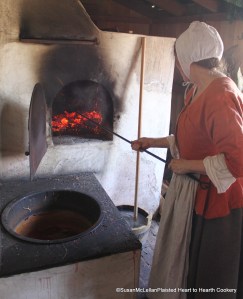
My next hearth cooking class is March 17th, 2012!

« Newer Posts - Older Posts »

Categories