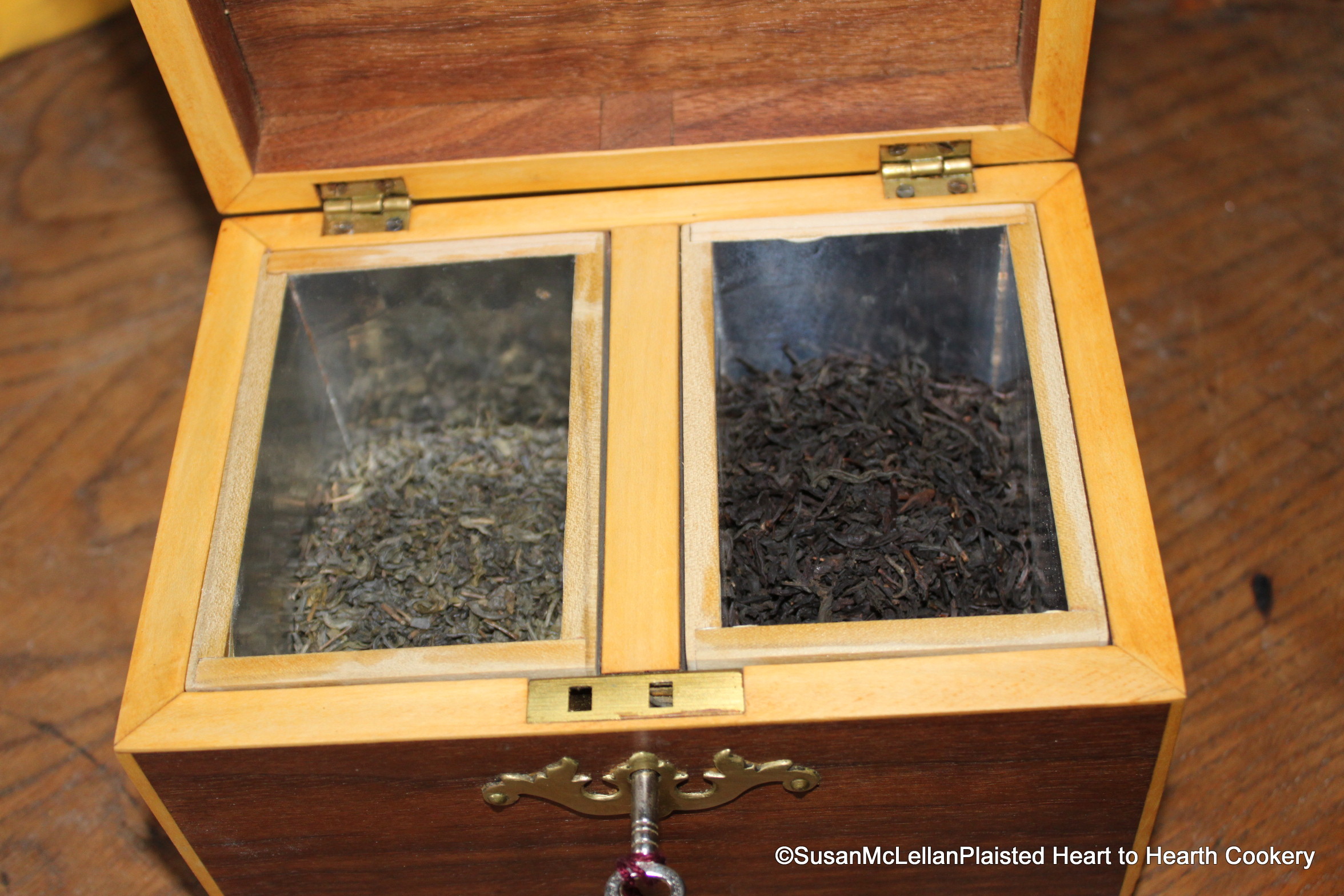
Tea Chest
This is a reproduction tea chest with green tea in the left compartment and black on the right. The inlaid wood chest has lock and key to keep the precious tea safe.
Visit my website at: www.hearttohearthcookery.com
Tea Chest
This is a reproduction tea chest with green tea in the left compartment and black on the right. The inlaid wood chest has lock and key to keep the precious tea safe.
Visit my website at: www.hearttohearthcookery.com
Posted in Beverages, culinary history, food history, food history equipment, Tea, tea chest | Tags: culinary history, food history, foodways

Lumps of Sugar
Using sugar nippers, the workshop participants created nice white lumps of sugar (double refined) for the tea tray. The silver sugar tongs with sea shell design are beside the blue and white porcelin bowl for the sugar.
Visit my website at: www.hearttohearthcookery.com
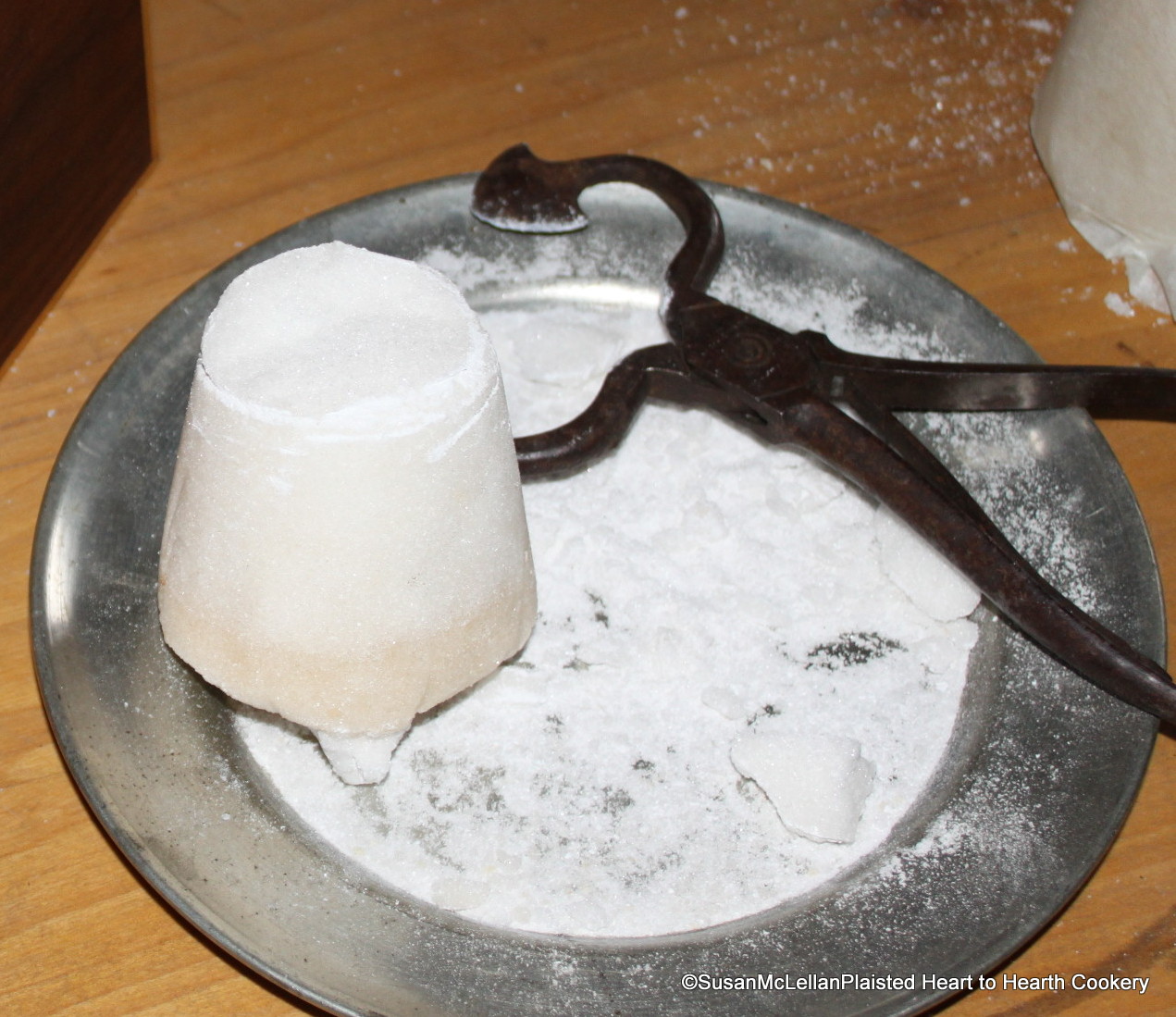
Using Sugar Nippers
Sugar nippers were used on a piece of a sugar loaf to prepare the lumps of sugar for the tea by both scoring and cutting the sugar.
Visit my website at: www.hearttohearthcookery.com
Posted in culinary history, food history, food history equipment, Sugar, Sugar nippers, Tea | Tags: beverages, culinary history, food history, foodways

Swedish Copper Iron Legged Tea Kettle?
At my tea workshop, this small, tin-lined copper tea kettle with iron attached legs and copper closure over the spout, was my favorite to use to fill the tea pots. I have seen a similar kettle on display at the American Swedish Historical Museum in Philadelphia and the only picture I have discovered refers to it as a Swedish mini copper tea kettle. I would love to know more about this piece. Please comment if you have any information.
Visit my website at: www.hearttohearthcookery.com
Posted in Copper water kettle, culinary history, food, food history, food history equipment, Swedish foodways, Tea | Tags: culinary history, food history, foodways
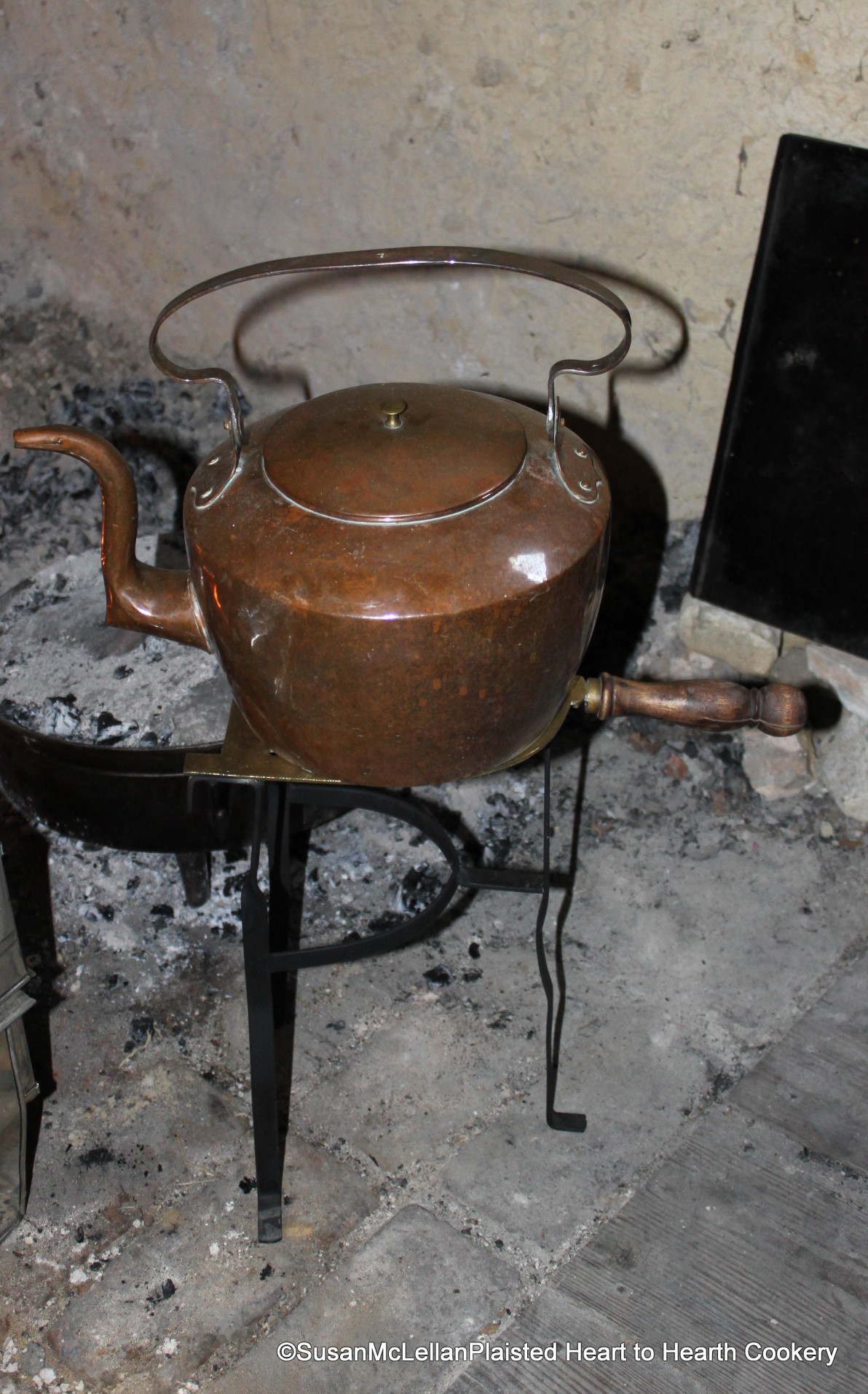
Copper Tea Kettle on Stand
The tea kettle’s primary purpose was to boil water. Cast iron kettles were primarily used at the hearth and the tin lined copper kettles in the parlor. This copper kettle is on an elegant stand with brass top and wood handle supported by an iron frame.
Visit my website at: www.hearttohearthcookery.com
Posted in Copper water kettle, culinary history, food history, Tea, Trivets/stands | Tags: beverages, culinary history, food, food history, foodways
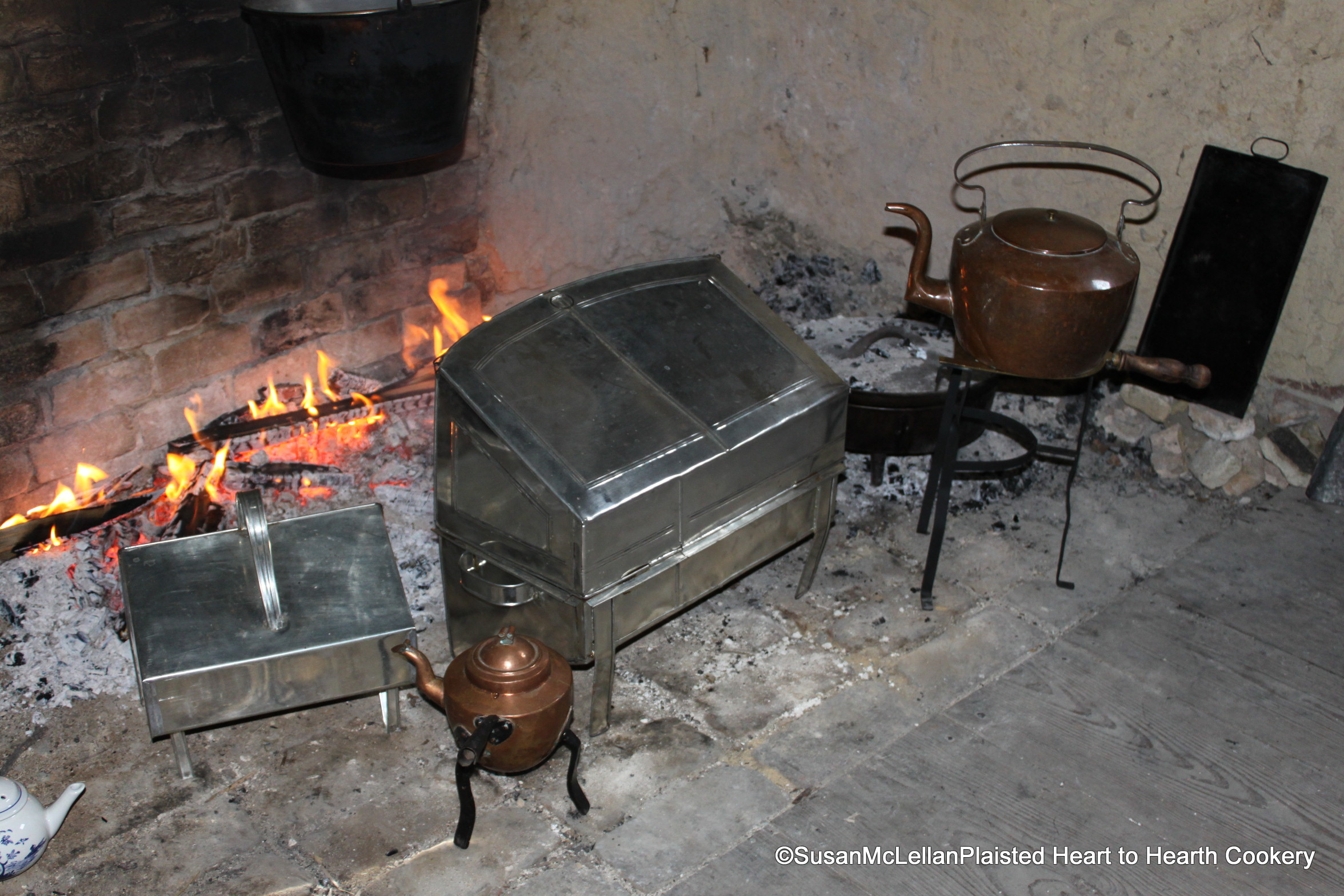
Preparing for Tea
Recently I conducted my first workshop focused on the subject of tea. This is a picture of the hearth with a bake kettle and tin bakers for preparing the food and copper kettles heating the water.
Visit my website at: www.hearttohearthcookery.com
Posted in Copper water kettle, culinary history, food, food history, Hearth cooking classes, Tea, Tin baker | Tags: classes, culinary history, food, food history, foodways, tea
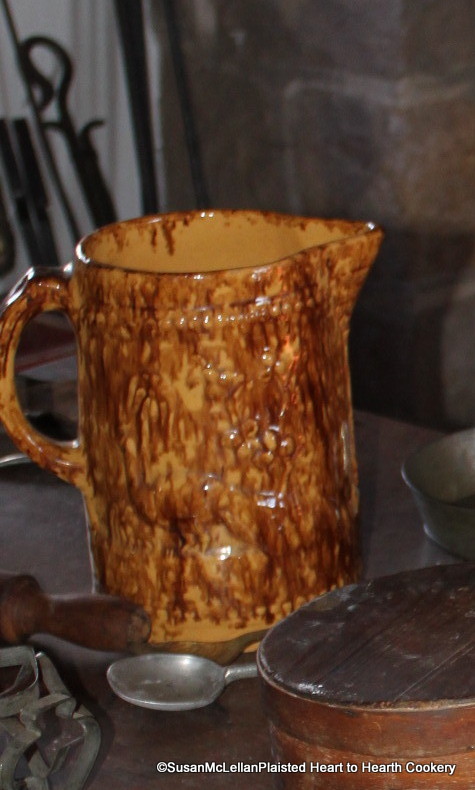
Rockingham Pitcher
This pitcher has a manganese brown glaze called “Rockingham glaze” which was discovered by Rockingham Pottery in England. In the United States, several factories began using the brown glaze technique after 1840 and the pottery became know as Rockingham.
Visit my website at: www.hearttohearthcookery.com
Posted in 19th century foodways, culinary history, food history, food history equipment, pottery | Tags: culinary history, food history, foodways, pottery
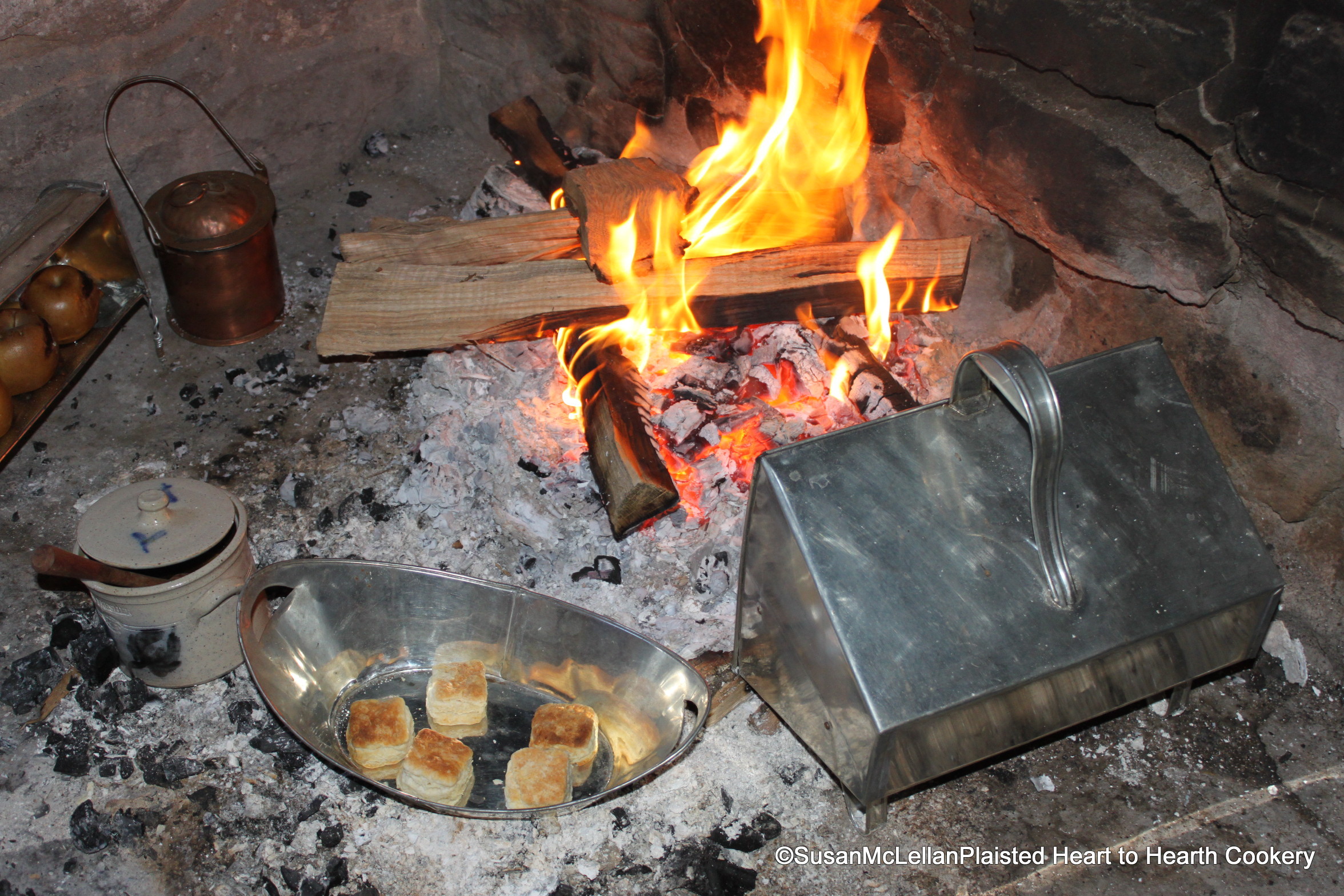
Biscuits Done and Baking
As the Lincoln bisuits were done, they were placed in a tin bowl (center) and samples were provided with sorghum molasses (in the stoneware crock). The temperature of the log cabin was so chilly even with the fire that the sorghum became too thick to serve if left on the work table.
Visit my website at: www.hearttohearthcookery.com
Posted in 19th century foodways, Biscuits, culinary history, food, food history, receipts, recipes, sorghum, stoneware, Tin baker, tin bowl | Tags: culinary history, food, food history, foodways
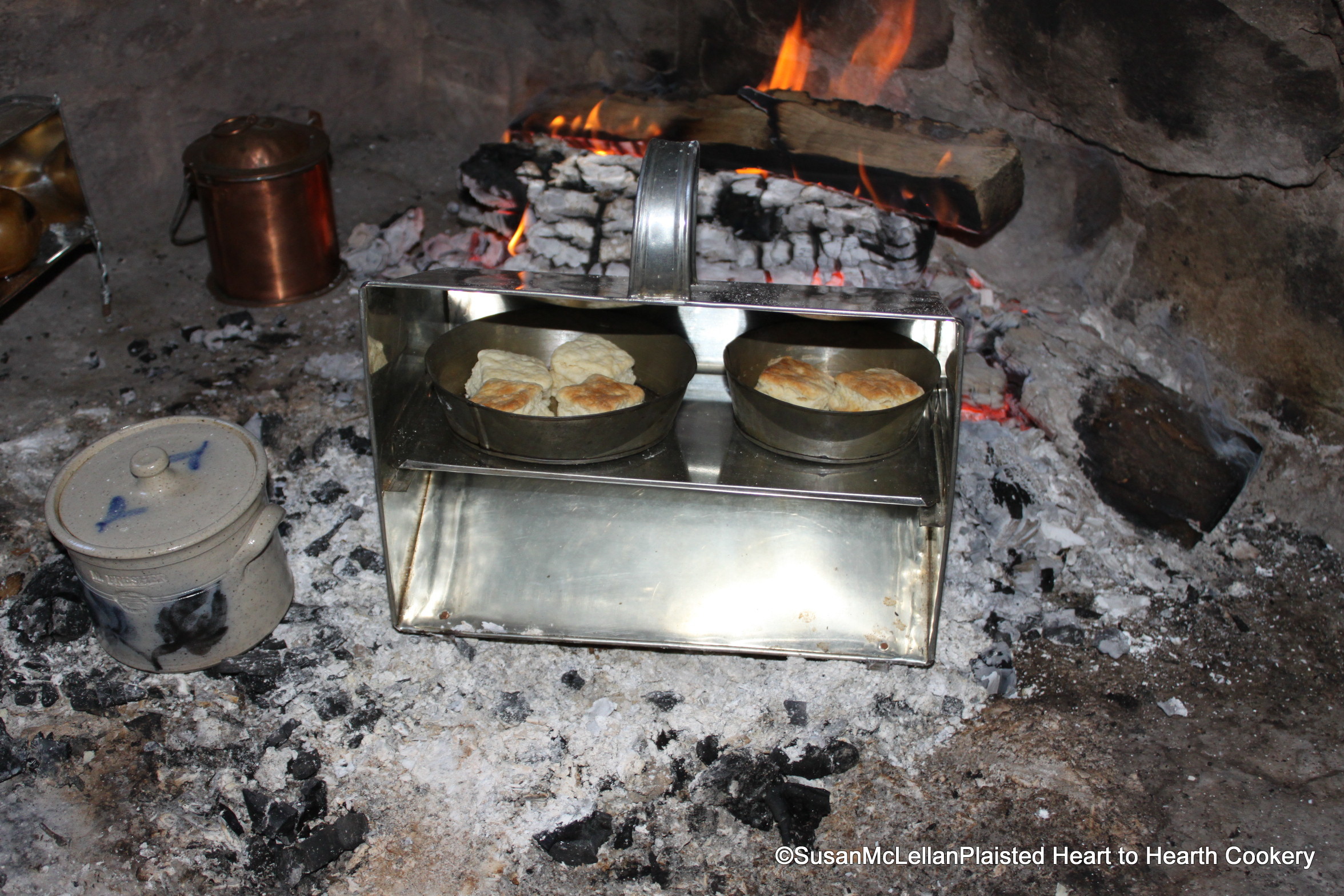
Turning the Biscuits
With the reflective heat from the tin baker, the tins need turning for even baking. The tin on the left was just turned and shows the two pale biscuits in the back and browned ones in the front.
Visit my website at: www.hearttohearthcookery.com
Posted in 19th century foodways, Abraham Lincoln, Biscuits, culinary history, food, food history, receipts, recipes, Tin baker | Tags: culinary history, food, food history, foodways

Cutting Biscuits
For the Lincoln biscuits, the square shape of the six-sided tin multi-cutter was chosen. The un-baked biscuits are visible in the tin baking pan to the left of the picture.
Visit my website at: www.hearttohearthcookery.com
Posted in 19th century foodways, Abraham Lincoln, Biscuits, culinary history, food, food history, receipts, recipes | Tags: culinary history, food, food history, foodways
 Heart to Hearth Cookery