 The finished To Roast a Shad filled with a good forcemeat was presented to table on a redware serving platter garnished with Spinach improved with Sorrell.
Visit my website at: www.hearttohearthcookery.com
The finished To Roast a Shad filled with a good forcemeat was presented to table on a redware serving platter garnished with Spinach improved with Sorrell.
Visit my website at: www.hearttohearthcookery.com
Posted in culinary history, Fish, food, food history, receipts, recipes, Redware platter, shad, sorrell, spinach | Tags: culinary history, fish, food, food history, foodways, redware, shad
 If the shad is turned carefully, the skin will remain intact on the side of the fish that has been against the plank during the roasting. This side will now receive an egg yolk wash and bread crumbs (see previous posts) and the plank set before the fire.
Visit my website at: www.hearttohearthcookery.com
Posted in culinary history, fish plank, food, food history, receipts, recipes, Roasting, shad | Tags: culinary history, fish, food, food history, foodways, Roasting, shad
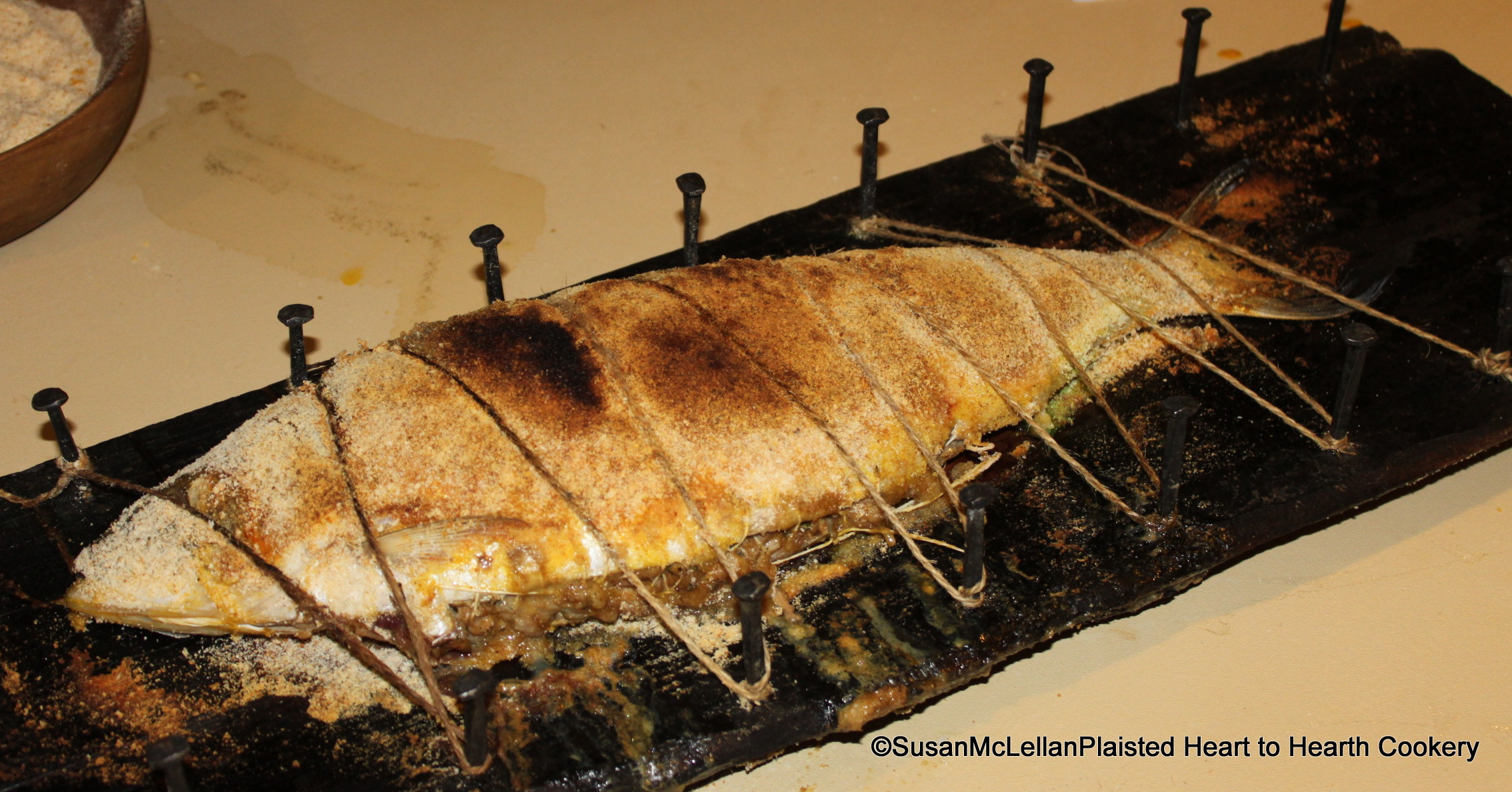 When the roasting shad was done on one side, the fish was removed from the fire to be untied very carefully from the plank and turned.
Visit my website at: www.hearttohearthcookery.com
Posted in culinary history, fish plank, food, food history, receipts, recipes | Tags: culinary history, fish, food, food history, foodways, Roasting, shad
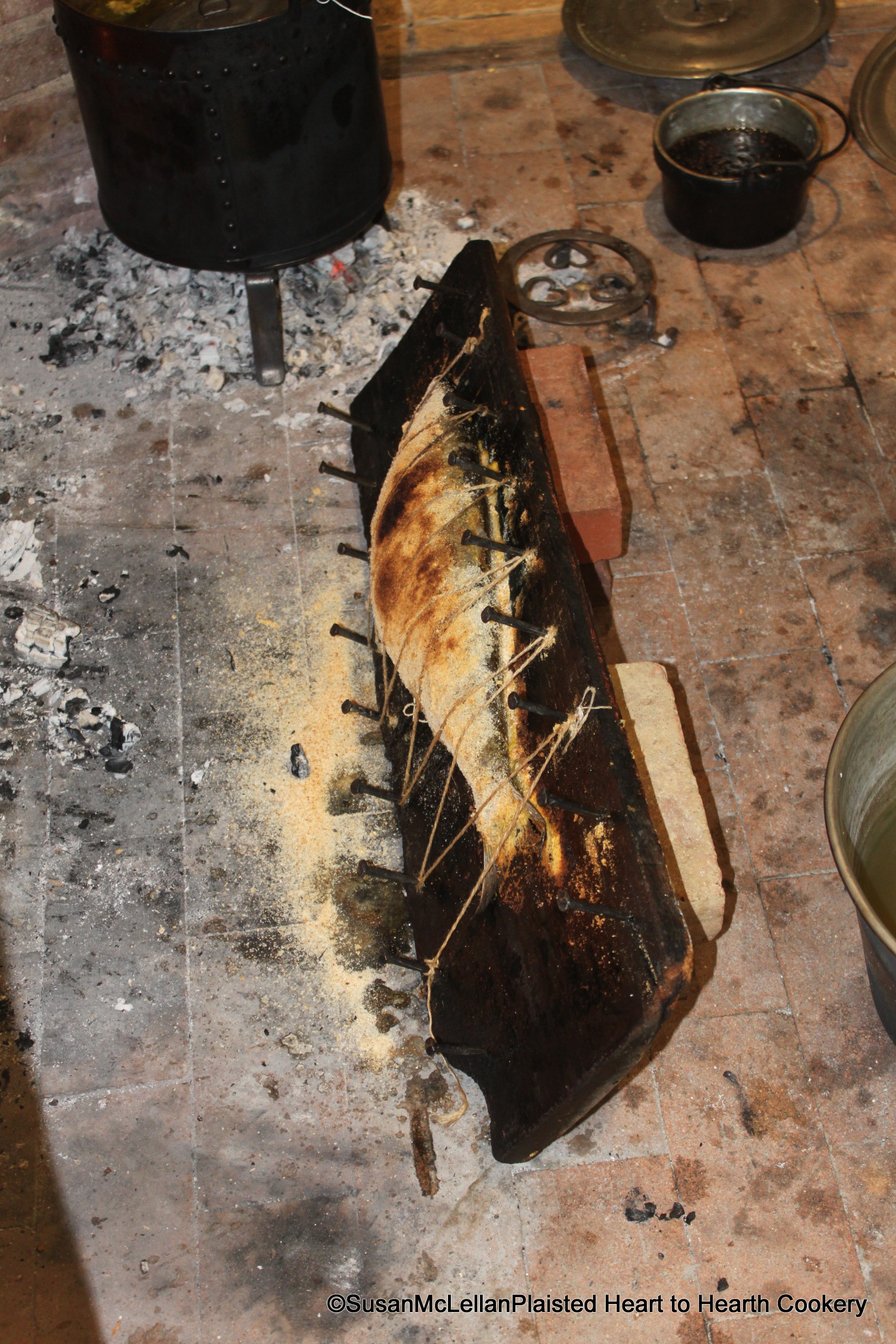 After one side of the shad was covered with bread crumbs, the fish tied to the fish plank was set before the fire to roast. At this hearth, bricks were used to prop the fish and board to receive the roasting heat from the embers.
Visit my website at: www.hearttohearthcookery.com
Posted in culinary history, fish plank, food, food history, receipts, recipes, Roasting, shad | Tags: culinary history, fish, food, food history, foodways, Roasting, shad
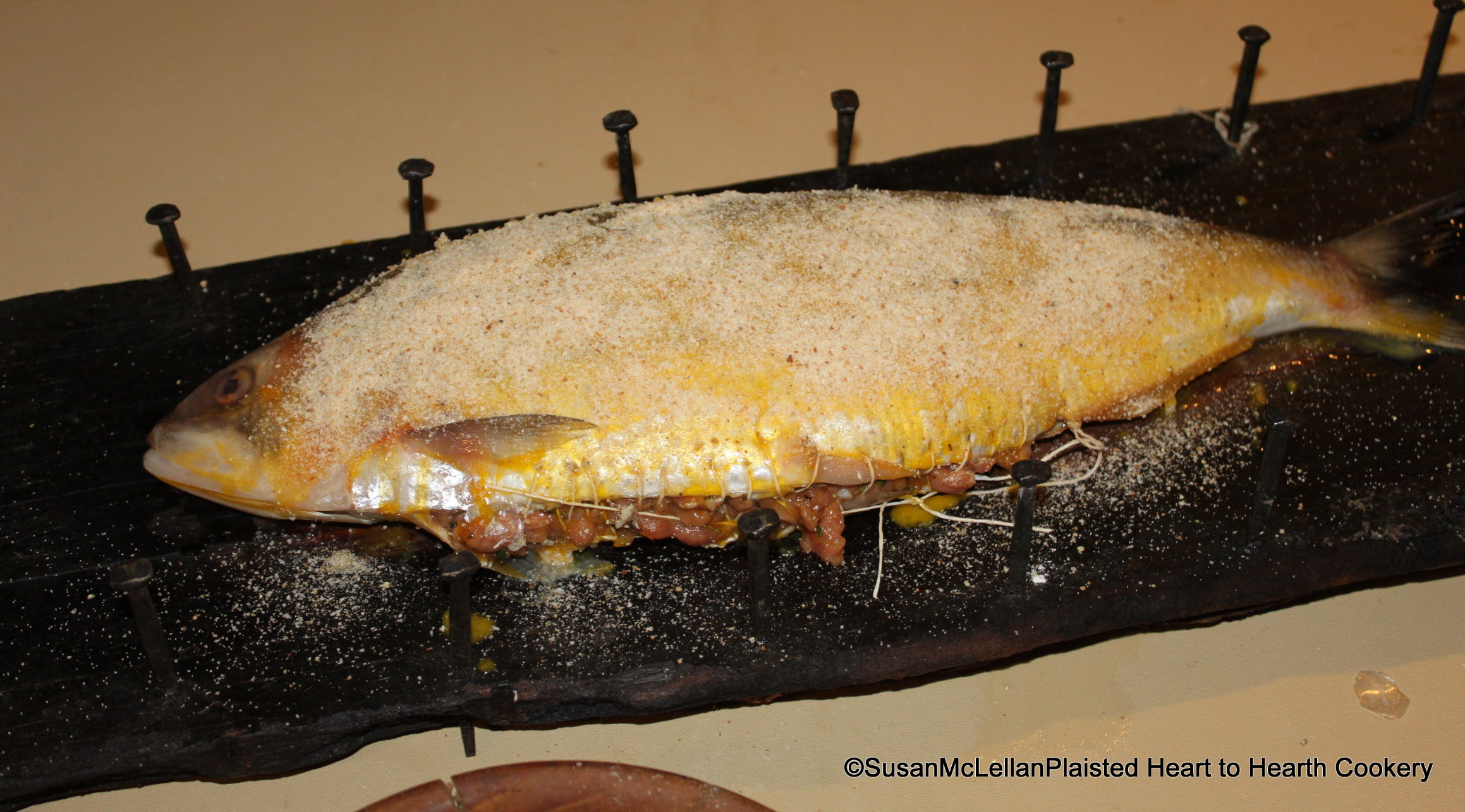 The shad was first covered with an egg yolk wash and then bread crumbs before being roasted at the fire.
Visit my website at: www.hearttohearthcookery.com
Posted in culinary history, fish plank, food, food history, receipts, recipes, Roasting | Tags: culinary history, fish, food, food history, foodways, shad
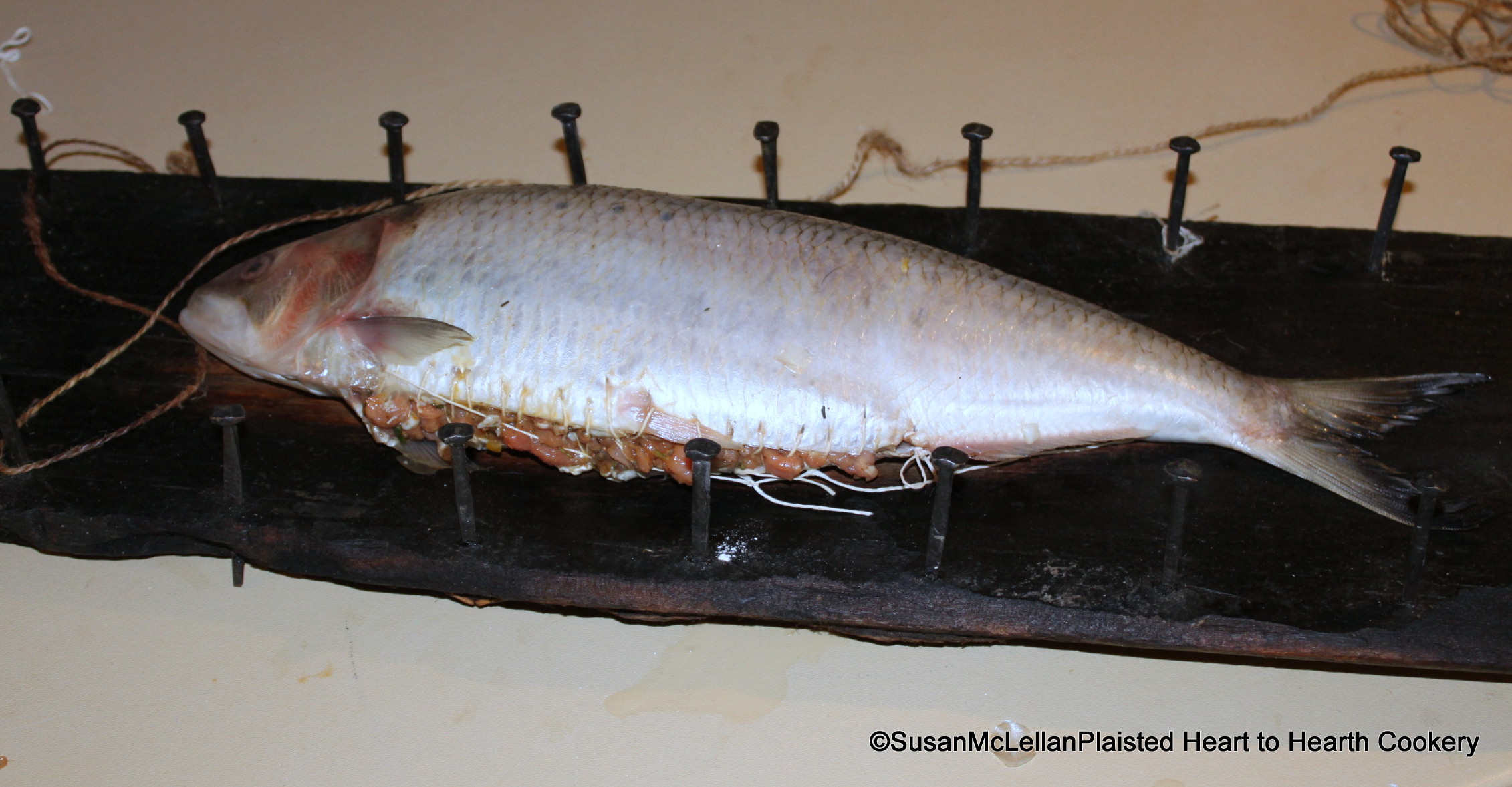 After the cavity of the shad was filled with good forcemeat and sewn up, it was tied on a board of proper size. My fish plank has nails and linen twine is used to lace the shad to the board.
Visit my website at: www.hearttohearthcookery.com
Posted in culinary history, fish plank, food, food history, receipts, recipes, Roasting, shad | Tags: culinary history, food, food history, foodways, Roasting, shad
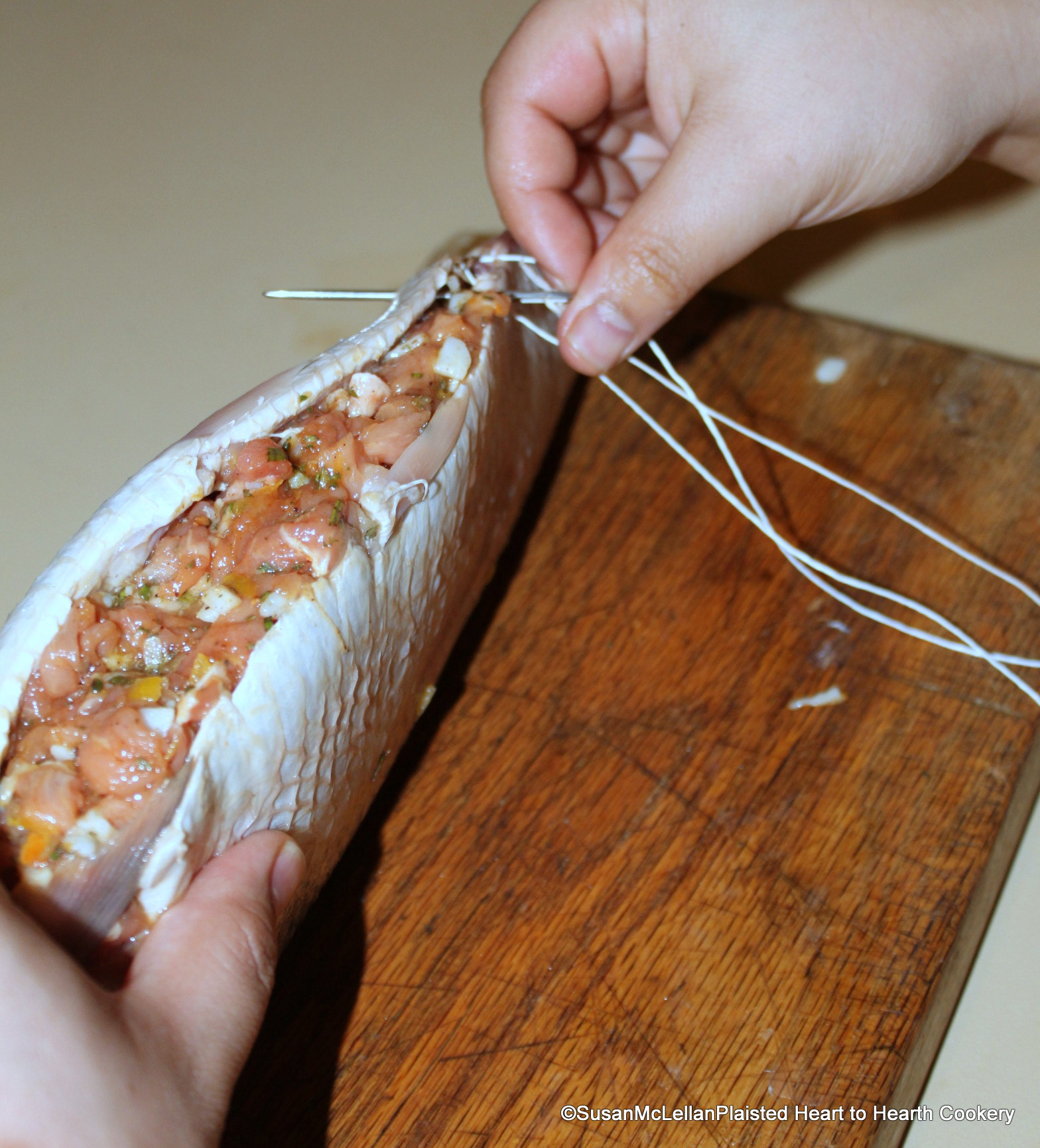 The shad was filled with a good forcemeat (see previous post) and sewn up with linen thread.
Visit my website at: www.hearttohearthcookery.com
Posted in culinary history, Fish, food, food history, receipts, recipes, shad | Tags: culinary history, fish, food, food history, foodways, shad
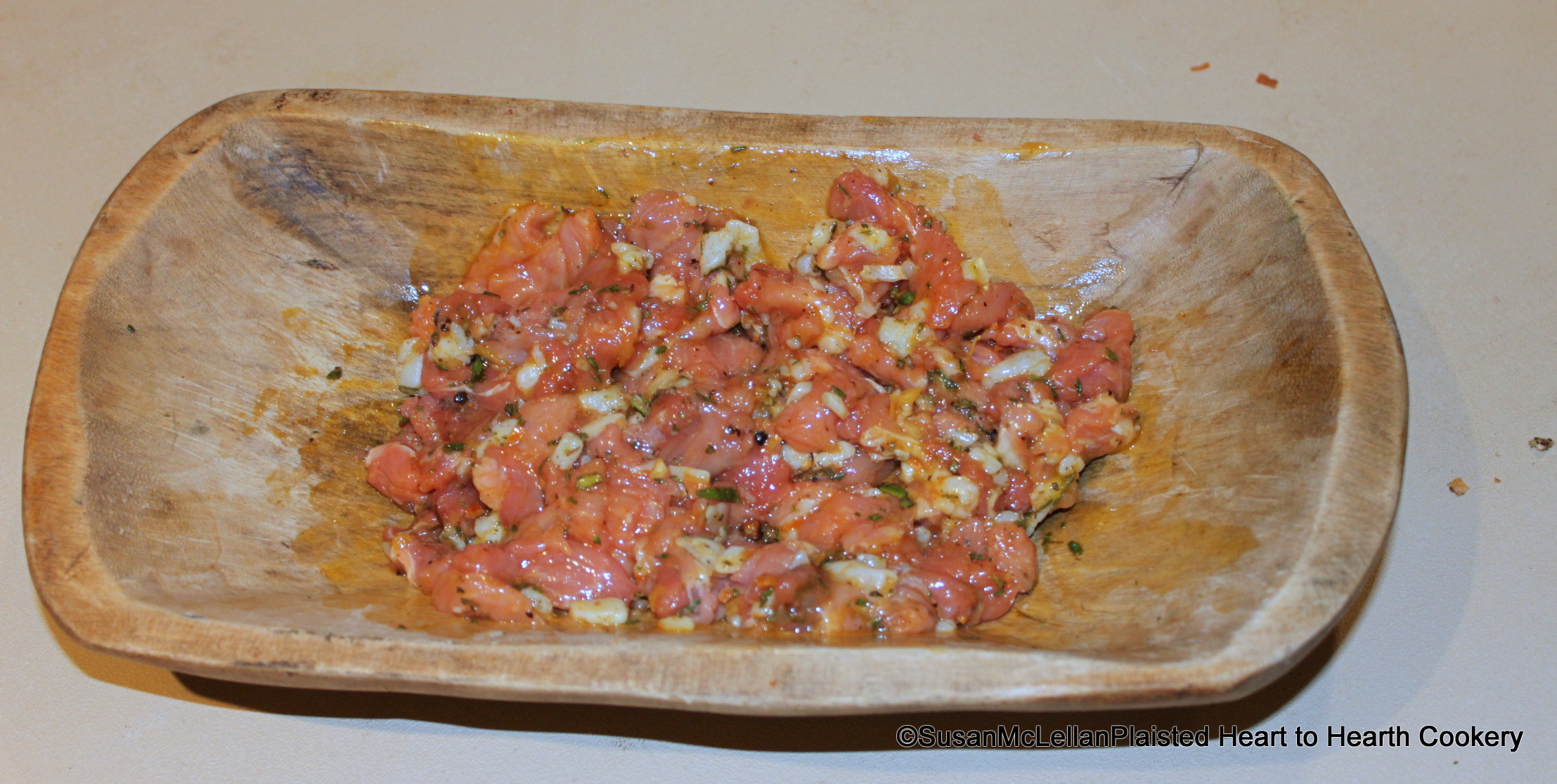 The receipt (recipe) for To Roast a Shad begins with the words: Fill the cavity with good forcemeat. The forcemeat (pictured) was prepared by taking half a pound of veal, and half a pound of suet cut fine, and beat in a wooden bowl; add a few sweet herbs shred fine, a little mace pounded fine, a small nutmeg grated, a little lemon peel, some pepper and salt, and the yolks of two eggs.
Visit my website at: www.hearttohearthcookery.com
Posted in culinary history, food, food history, receipts, recipes, shad | Tags: culinary history, food, food history, foodways, shad
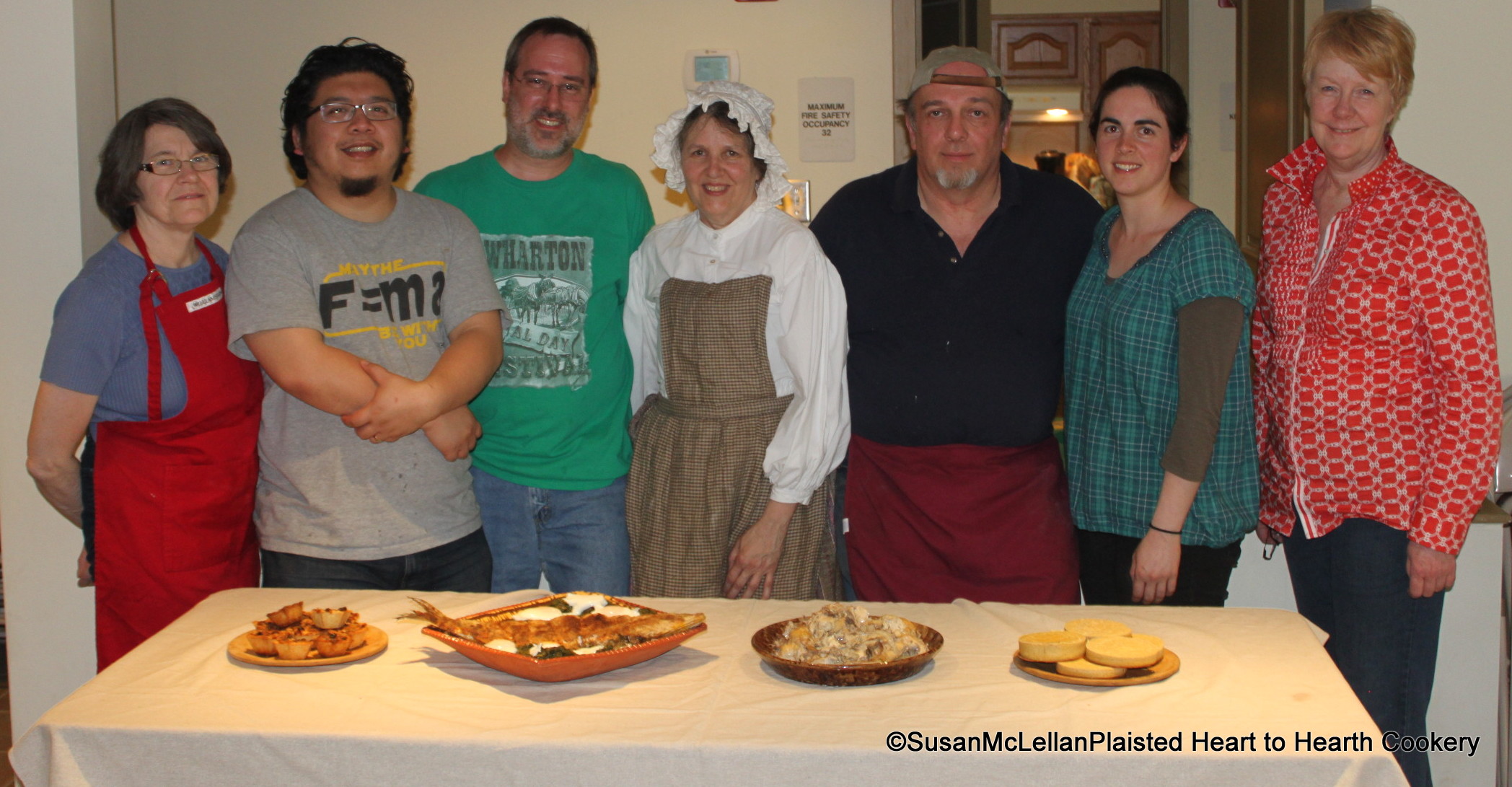 This group of students had both “class” and experience. Every student had taken at least one of my hearth cooking classes and the range was from one class to more than ten! I actually could sit down and watch during a class! It is exhilarating to pass on the old skills! Presented at table from left to right: Cheesecakes, To Roast a Shad with Forcemeat, Fricasee of Chicken, Spinach improved with Sorrel and Indian Muffins.
Visit my website at: www.hearttohearthcookery.com
Posted in culinary history, food, food history, Hearth cooking classes, receipts, recipes | Tags: classes, culinary history, food, food history, foodways, Hearth cooking classes
 These two hand-blown glasses are filled with To make Raspberry Cream with Sorrel. Take a pinte of cream & boyle it with 3 whites of eggs beaten well with warme cream, put in a blade or 2 of mace & some leamon pill, & when it is pretty well boyled take it off & season it with sugar & put in some juice of raspberries, stir it well together & when it is cold serve it up, thus you may make curranberrie, sorrel, or leamon cream. I made sorrel cream by substituting the juice of sorrel for the juice of raspberries. The early spring sorrel leaves have a lemon flavor.
Visit my website at: www.hearttohearthcookery.com
Posted in confectionery, creams, culinary history, food, food history, receipts, recipes, sorrell | Tags: confectionery, culinary history, food, food history, foodways
 Heart to Hearth Cookery