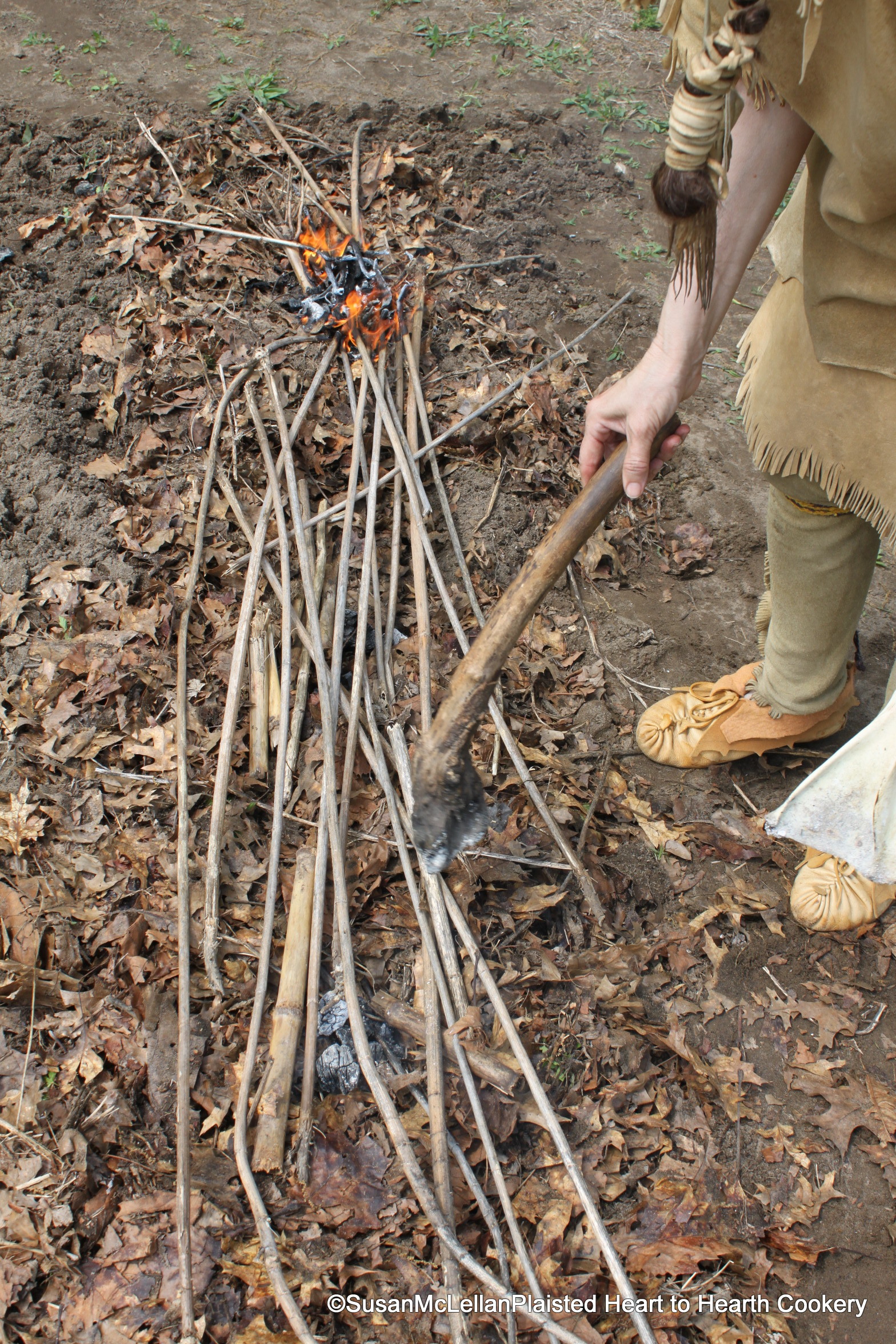
 Dried corn stalks and Jerusalem artichoke stalks were added to the dried leaves to fire a part of the three sisters garden.
Visit my website at: www.hearttohearthcookery.com
Dried corn stalks and Jerusalem artichoke stalks were added to the dried leaves to fire a part of the three sisters garden.
Visit my website at: www.hearttohearthcookery.com
Posted in culinary history, food history, Gardening, Jerusalem artichokes, Lenape, Native American | Tags: culinary history, food, foodways, gardening, Lenape, Native American
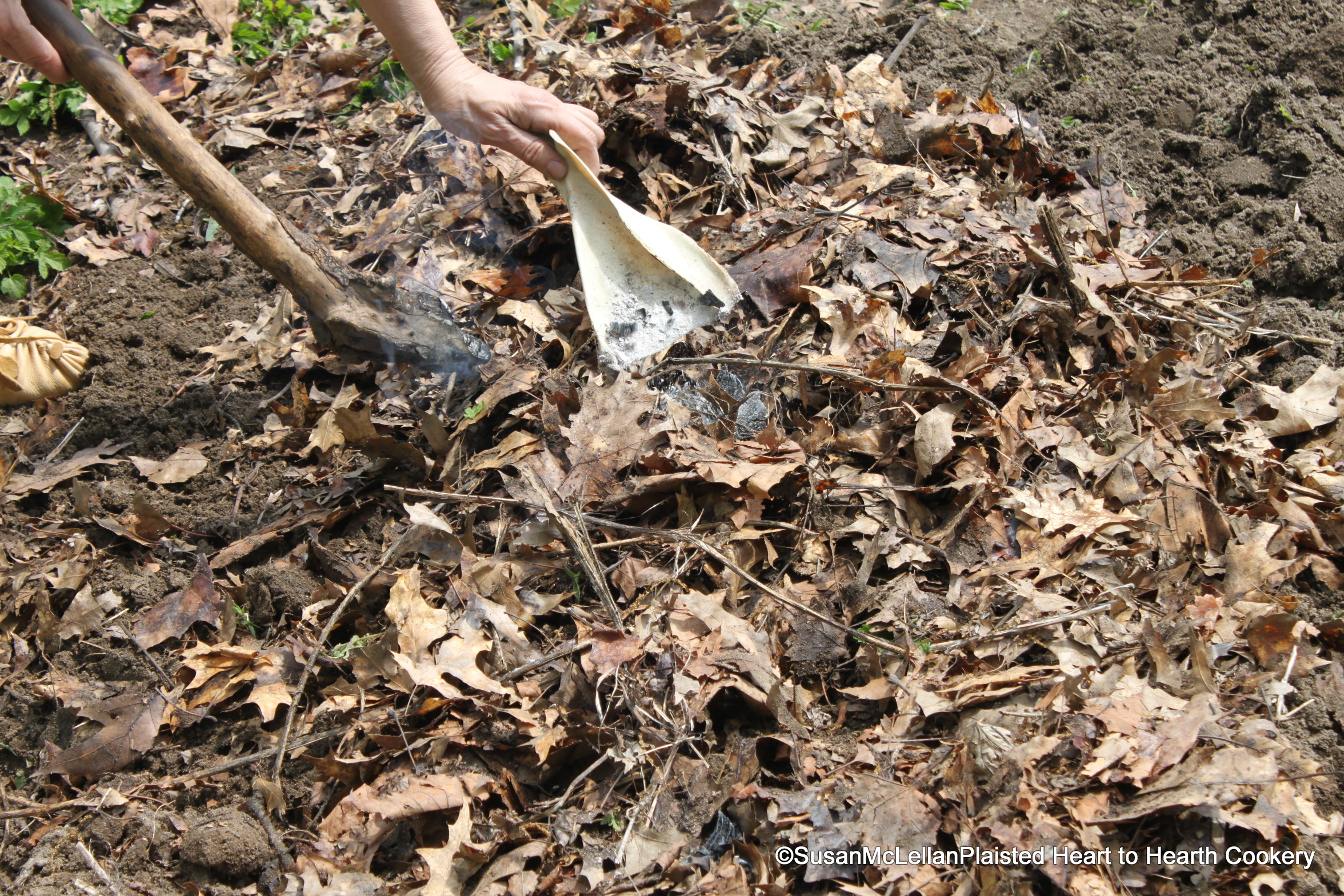 The fire for the garden was started by using the shoulder blade of a deer to obtain hot embers from the main fire. (See previous post)
Visit my website at: www.hearttohearthcookery.com
 Before firing the garden, the dried grass and leaves were raked so the fire would not spread. The small piles of roots, weeds, small brush that had been dug from the garden were dried in small piles and then burned. Since this was a one day project, my small piles are still green and I am raking the dried leaves with my deer antler rake onto the prepared garden for the burn.
Visit my website at: www.hearttohearthcookery.com
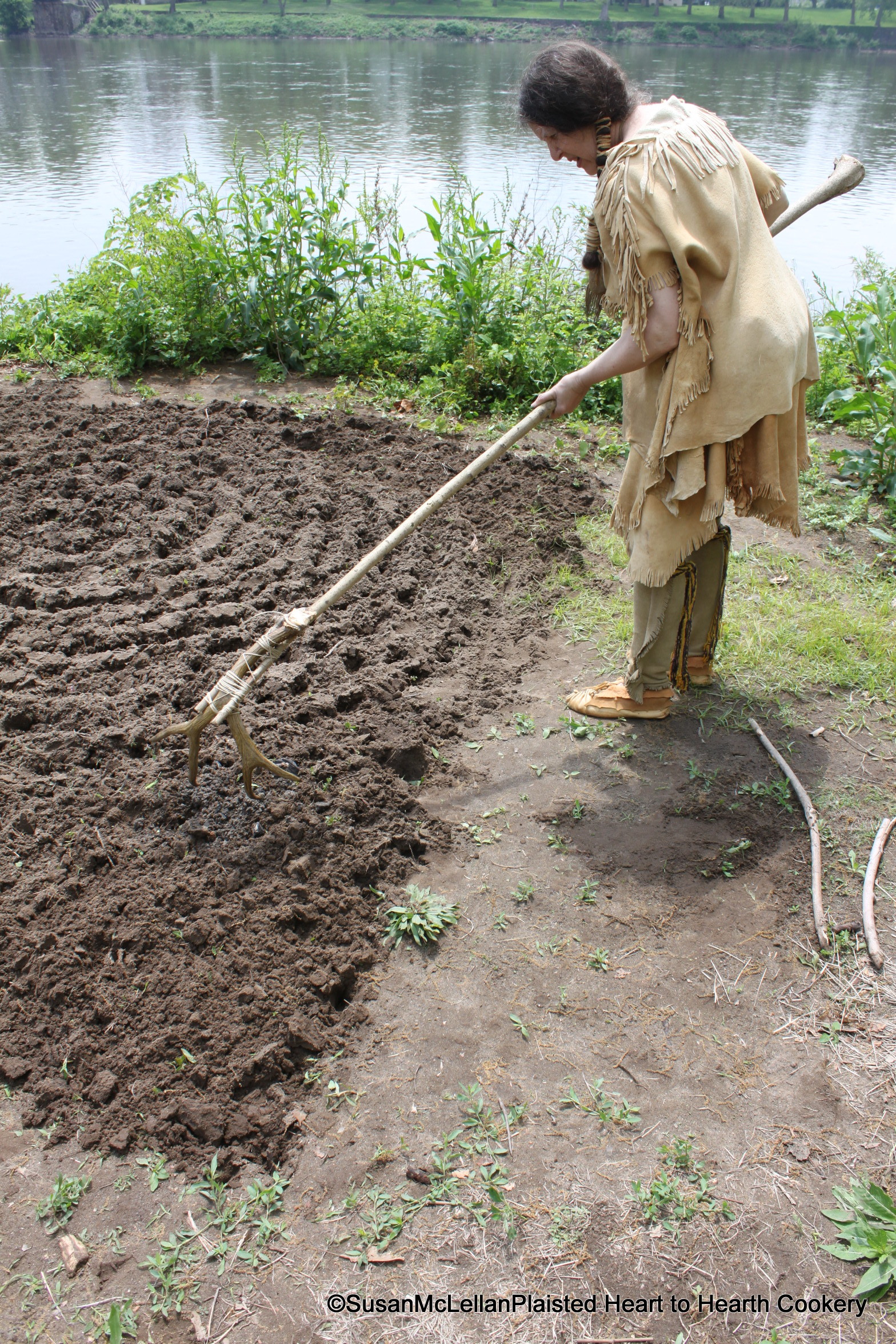 As the circling with the digging stick reached the size of the garden, I dug along the edges of the garden to enlarge the garden and make the edges even and straight. The digging stick worked very well and the circling pattern seemed the best method for the tool.
Visit my website at: www.hearttohearthcookery.com
Posted in culinary history, Digging stick, Gardening, Lenape, Native American | Tags: culinary history, food history, foodways, gardening, Lenape, Native American
 The digging stick (also hardened-see previous post) was used to break new soil for a garden. The best soil was near rivers as it was softer to prepare and my opportunity was to utilize reproduction Lenape garden tools close to the Delaware River. I started in the center of the garden by pressing the digging stick into the soft earth with my foot and prying up the soil to create a small circle and continued working in a circular path.
Visit my website at: www.hearttohearthcookery.com
 The tip of the dibble stick, which was used by the Lenape to plant seeds in mounds of earth in the garden, is being fire hardened for planting.
Visit my website at: www.hearttohearthcookery.com
Posted in food history, Lenape, Native American | Tags: food history, foodways, gardening, Lenape, Native American
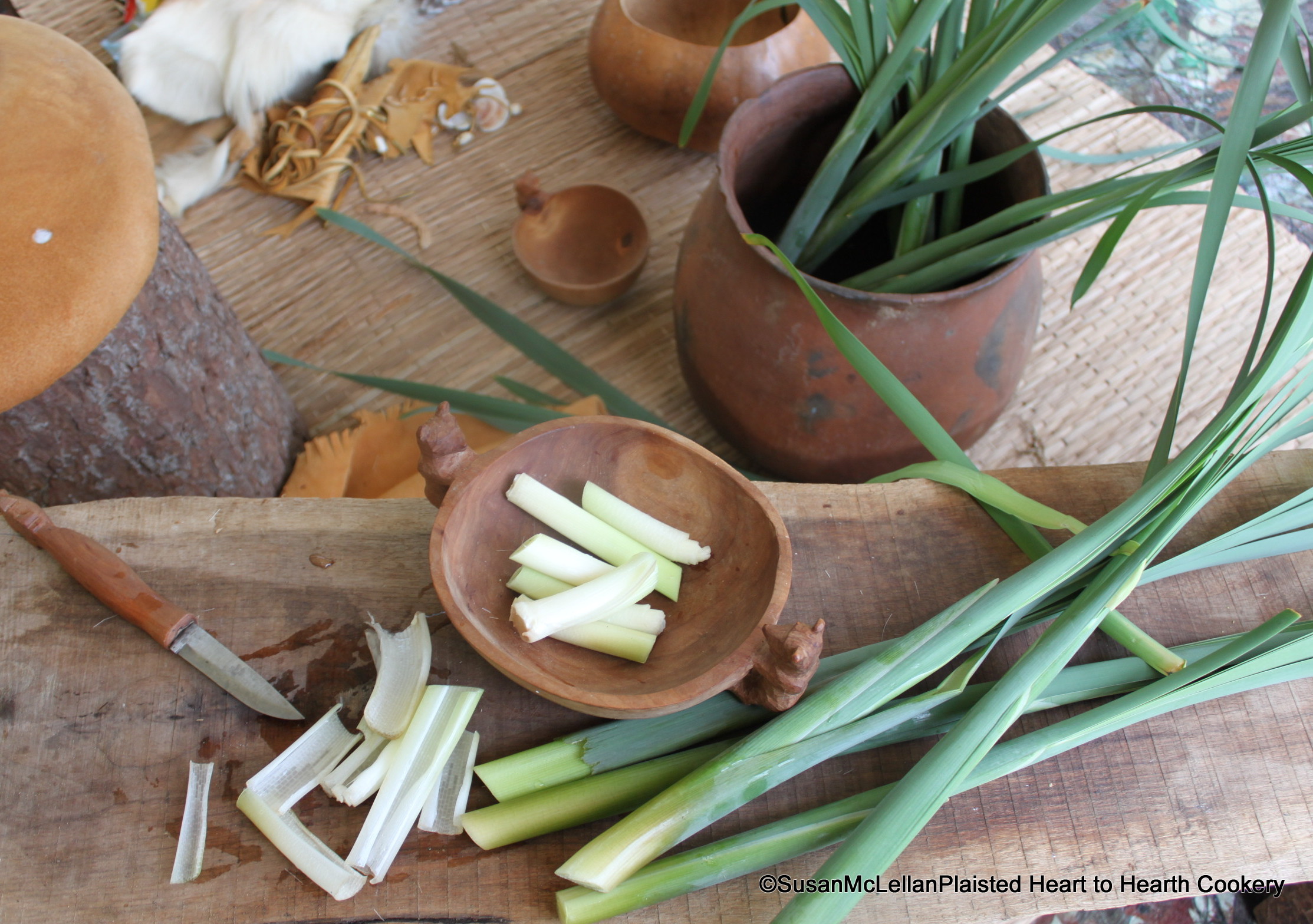 This cattail “tongue” or pure, white tender, center section (pictured in the wood bowl) tastes somewhere between a cucumber and watermelon. It is wonderful raw but also can be boiled and cooked like asparagus. Since the Cossacks of Russia considered this cattail edible a delicacy, the name Cossacks asparagus is frequently used.
Visit my website at: www.hearttohearthcookery.com
Posted in cattails, culinary history, food, food history, Lenape, Native American, receipts, recipes | Tags: culinary history, food, food history, foodways, Lenape, Native American
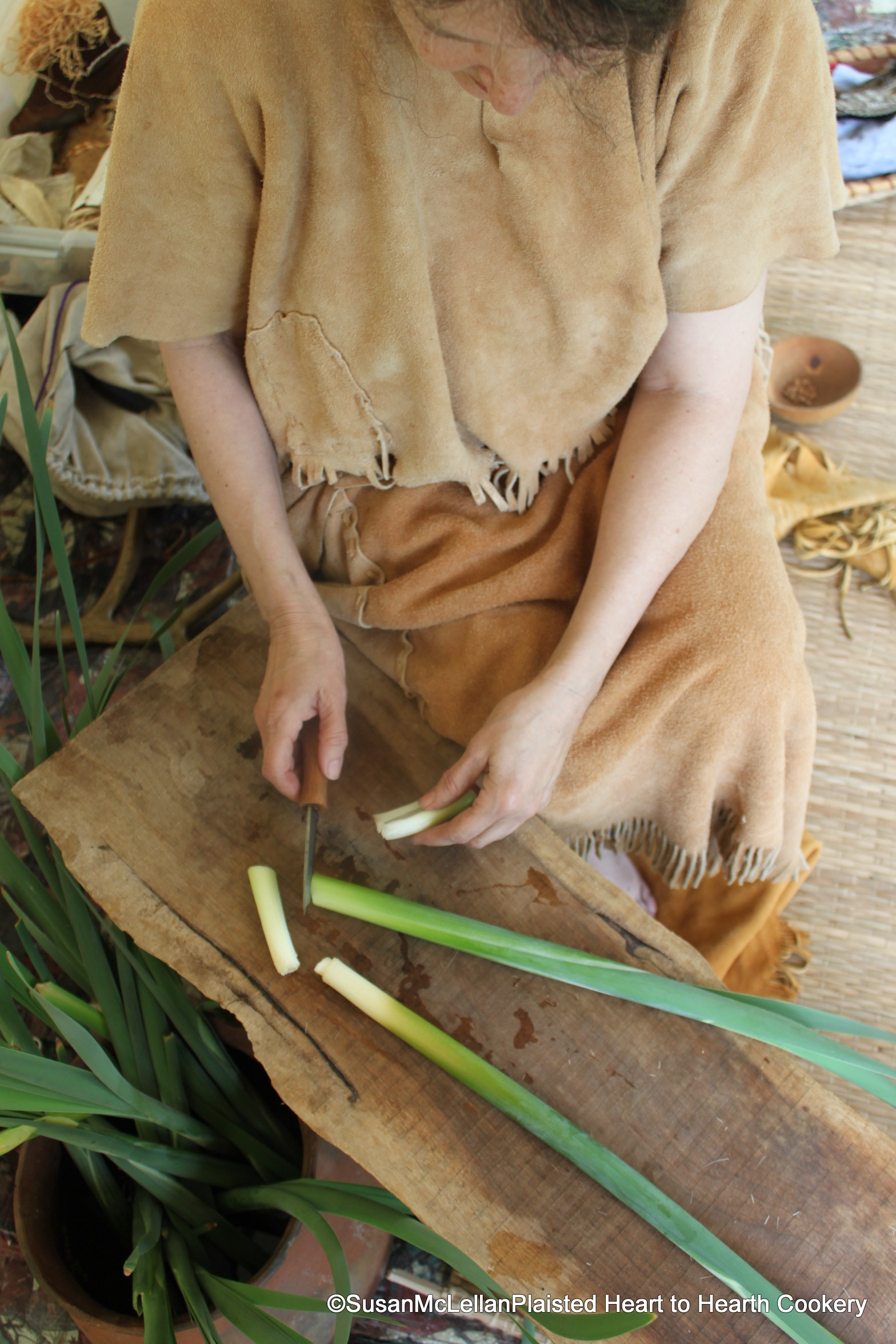 In the spring, the young cattail can be yanked from the ground. The bottom, tender, white part of the cattail (the tongue-which is from six to twelve inches in length) is peeled and is delicious either raw or cooked.
Visit my website at: www.hearttohearthcookery.com
Posted in cattails, food, food history, Lenape, Native American, receipts, recipes | Tags: culinary history, food, food history, foodways, Lenape, Native American
 In the spring the cattail stands (Typha latifolia) are easy to recognize by the furry, over-wintered seedheads, but hidden beneath are the first young, green, edible shoots. To harvest the shoots, just reach down into the mud and pull quick and hard.
Visit my website at: www.hearttohearthcookery.com
Posted in cattails, culinary history, food, food history, Lenape, Native American | Tags: culinary history, food, food history, foodways, Lenape, Native American
 A pewter spoon filled with Cream Ice of Violets is resting on the sabotiere. The flavor is delicate and color subtle but a wonderful ice cream.
Visit my website at: www.hearttohearthcookery.com
Posted in confectionery, culinary history, food, food history, ice cream, receipts, recipes, sabotiere, Violets | Tags: confectionery, culinary history, food, food history, foodways, ice cream
 Heart to Hearth Cookery