Posted by: hearttohearthcookery | July 1, 2025

Grate Manchet-A Taste of Hearth Cooking

After a half pound of parmesan cheese has been grated for the receipt (recipe) A made dish of Pamezant then grate as much Manchet.  The grated bread crumbs are on the left in the picture and parmesan cheese on the right.

After a half pound of parmesan cheese has been grated for the receipt (recipe) A made dish of Pamezant then grate as much Manchet.  The grated bread crumbs are on the left in the picture and parmesan cheese on the right.

Visit my website at:   hearttohearthcookery.com
Posted by: hearttohearthcookery | June 29, 2025

Grate Parmizant-A Taste of Hearth Cooking

The first step for the receipt (recipe) A made dish of Parmizant is to take a Grater, and grate half a pound of Parmizant.  Parmesan is a hard cheese with origins in Italy.

The first step for the receipt (recipe) A made dish of Parmizant is to take a Grater, and grate half a pound of Parmizant.  Parmesan is a hard cheese with origins in Italy.

Visit my website at:   hearttohearthcookery.com

Posted by: hearttohearthcookery | June 27, 2025

Ready for Parmizant-A Taste of Hearth Cooking

The table is ready with the ingredients for the next 17th century receipt (recipe), A made dish of Parmizant.  Note the horse radish in the lower right of the table, small manchets (bread) in the rye straw basket, wedge of Parmesan cheese to the left of the basket, and caraway comfits in the blue and white porringer in the center.  Only the tarragon is missing from view.

The table is ready with the ingredients for the next 17th century receipt (recipe), A made dish of Parmizant.  Note the horse radish in the lower right of the table, small manchets (bread) in the rye straw basket, wedge of Parmesan cheese to the left of the basket, and caraway comfits in the blue and white porringer in the center.  Only the tarragon is missing from view.

Visit my website at:   hearttohearthcookery.com
Posted by: hearttohearthcookery | June 25, 2025

Eats Like Gooseberry-A Taste of Hearth Cooking

Peter Collinson, a English Quaker wrote to John Bartram of Philadelphia that this receipt (recipe) for a rhubarb tart eats best cold.  It is much admired here..it eats like gooseberry pie.  The tart consists of pieces of peeled rhubarb with sugar and cinnamon with a top crust.

Peter Collinson, a English Quaker wrote to John Bartram of Philadelphia that this receipt (recipe) for a rhubarb tart eats best cold.  It is much admired here..it eats like gooseberry pie.  The tart consists of pieces of peeled rhubarb with sugar and cinnamon with a top crust.

Visit my website at:   hearttohearthcookery.com
Posted by: hearttohearthcookery | June 23, 2025

Bake the Tart-A Taste of Hearth Cooking

After the egg yolk decorated crust has been laid on the rhubarb for the receipt (recipe),written in a letter dated 22 September 1739 written by Peter Collinson to John Bartram of Philadelphia, the rhubarb tart was baked in a tin baker.

After the egg yolk decorated crust has been laid on the rhubarb for the receipt (recipe),written in a letter dated 22 September 1739 written by Peter Collinson to John Bartram of Philadelphia, the rhubarb tart was baked in a tin baker.

Visit my website at:   hearttohearthcookery.com


Posted by: hearttohearthcookery | June 21, 2025

The Crust-A Taste of Hearth Cooking

After the cinnamon has been added to the sugar for the rhubarb tart receipt (recipe) in the 1739 letter from Peter Collinson to John Bartram of Philadelphia, the crust is laid on top as the choice in the receipt is to make a pie (bottom and top crust) or a tart with a top crust only.  The yellow is egg yolk.

After the cinnamon has been added to the sugar for the rhubarb tart receipt (recipe) in the 1739 letter from Peter Collinson to John Bartram of Philadelphia, the crust is laid on top as the choice in the receipt is to make a pie (bottom and top crust) or a tart with a top crust only.  The yellow is egg yolk.

Visit my website at:   hearttohearthcookery.com
Posted by: hearttohearthcookery | June 19, 2025

A Little Cinnamon-A Taste of Hearth Cooking

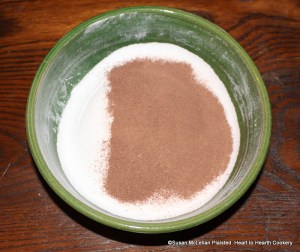
After sugar has been added to the cut pieces of rhubarb for the receipt (recipe)  a rhubarb tart, provided in a 1739 letter from Peter Collinson to John Bartram, a little cinnamon is added.  Note the Ceylon stick of cinnamon as this true cinnamon was used in the tart.

After sugar has been added to the cut pieces of rhubarb for the receipt (recipe)  a rhubarb tart, provided in a 1739 letter from Peter Collinson to John Bartram, a little cinnamon is added.  Note the Ceylon stick of cinnamon as this true cinnamon was used in the tart.

Visit my website at:   hearttohearthcookery.com
Posted by: hearttohearthcookery | June 17, 2025

In Dish with Sugar-A Taste of Hearth Cooking

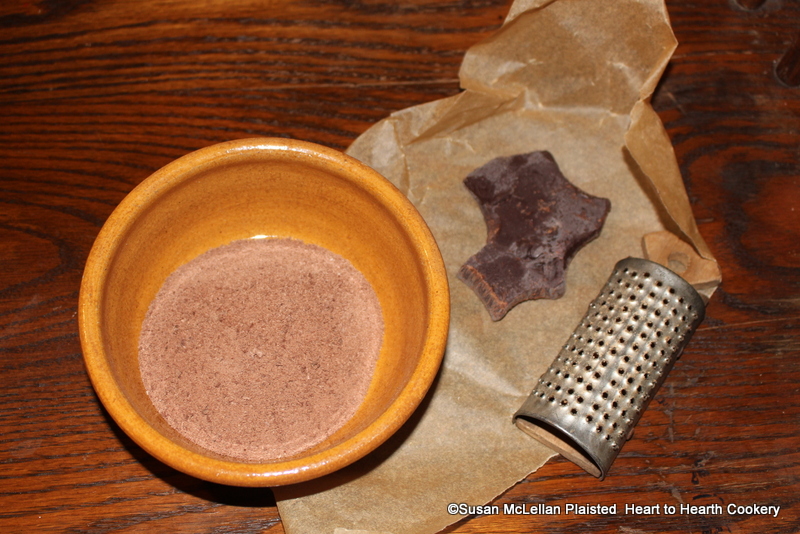
After the stalks of rhubarb have been cut and peeled for the receipt (recipe) that Peter Collinson, English Quaker, sent to John Bartram in 1739 for a rhubarb pie or tart, put them in a crust with sugar.  Since I am preparing the receipt as a tart and not a pie, the cut rhubarb was placed in a baking dish and will have a top crust only.

After the stalks of rhubarb have been cut and peeled for the receipt (recipe) that Peter Collinson, English Quaker, sent to John Bartram in 1739 for a rhubarb pie or tart, put them in a crust with sugar.  Since I am preparing the receipt as a tart and not a pie, the cut rhubarb was placed in a baking dish and will have a top crust only.

Visit my website at:   hearttohearthcookery.com

Posted by: hearttohearthcookery | June 15, 2025

Peel the Rind-A Taste of Hearth Cooking

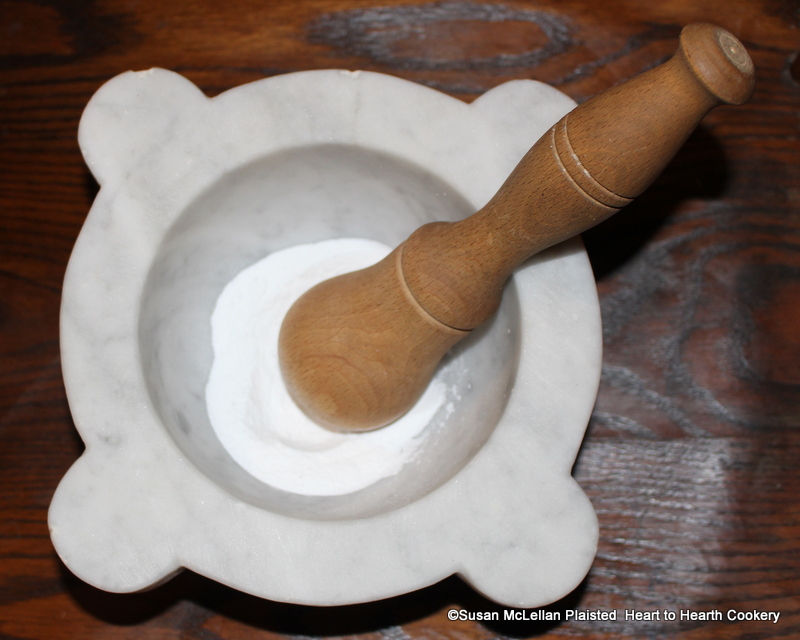
After the stalks of rhubarb have been cut in two or three pieces for the receipt (recipe) that Peter Collinson wrote to John Bartram in 1739, peel off the rind.  With peeling off the rind, most of the stalks lose their red color and the color is very similar to that of gooseberries.  The first printed receipt found for a rhubarb tart is in the 1760 The Compleat Confectioner and directs one to peel and cut it (rhubarb stalks) the size of gooseberries.

After the stalks of rhubarb have been cut in two or three pieces for the receipt (recipe) that Peter Collinson wrote to John Bartram in 1739, peel off the rind.  With peeling off the rind, most of the stalks lose their red color and the color is very similar to that of gooseberries.  The first printed receipt found for a rhubarb tart is in the 1760 The Compleat Confectioner and directs one to peel and cut it (rhubarb stalks) the size of gooseberries.

Visit my website at:   hearttohearthcookery.com
Posted by: hearttohearthcookery | June 13, 2025

Cut them in Two or Three – A Taste of Hearth Cooking

In the 1739 letter from Peter Collinson to John Bartram, Peter writes an actual receipt (recipe) for To make rhubarb tarts.  All you have to do, is to take the stalks from the root, and from the leaves, cut them in two or three pieces, and peel off the rind.  Pictured in my brass colander are stalks cut in three pieces with the rind still on.

In the 1739 letter from Peter Collinson to John Bartram, Peter writes an actual receipt (recipe) for To make rhubarb tarts.  All you have to do, is to take the stalks from the root, and from the leaves, cut them in two or three pieces, and peel off the rind.  Pictured in my brass colander are stalks cut in three pieces with the rind still on.

Visit my website at:   hearttohearthcookery.com

« Newer Posts - Older Posts »

Categories