Posted by: hearttohearthcookery | March 12, 2014

Lay a Lay

IMG_8755-001

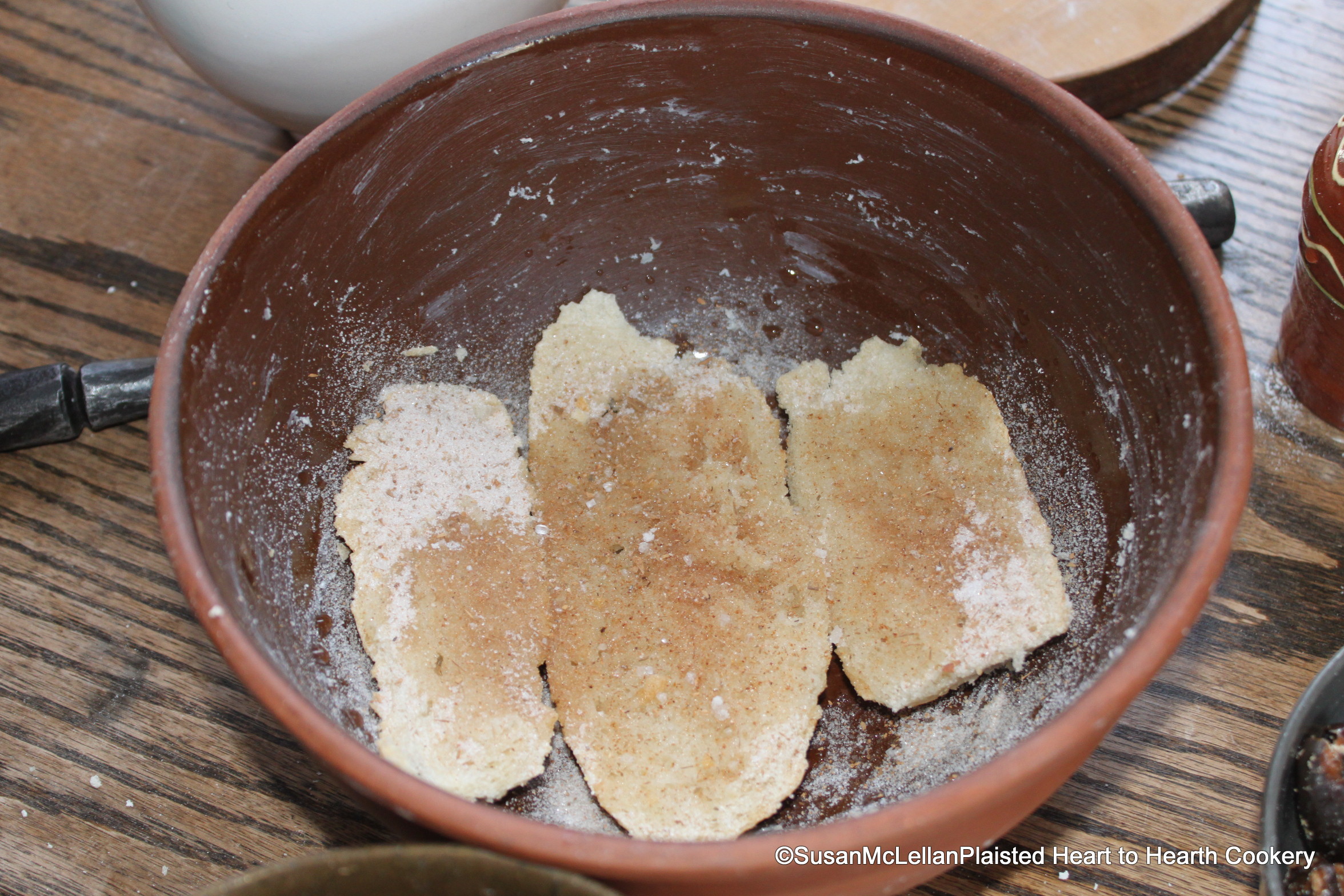
The instructions written by Robert May To make a most rare excellent Marrow Pudding in a dish baked… are the following:  Now have a fine deep large dish, then have a slice of French bread, and lay a lay of sliced bread in the dish, and strew it with sugar, cinnamon and nutmeg mingled together, and also sprinkle the slices of bread with sack and rose-water…    In the deep redware dish are three slices of bread.  The sprinkling of the bread with sack (very dry sherry) and rose-water infuse the spices and flavor into the bread.

Visit my website at:   www.hearttohearthcookery.com
Posted by: hearttohearthcookery | March 11, 2014

A Spoon for Marrow

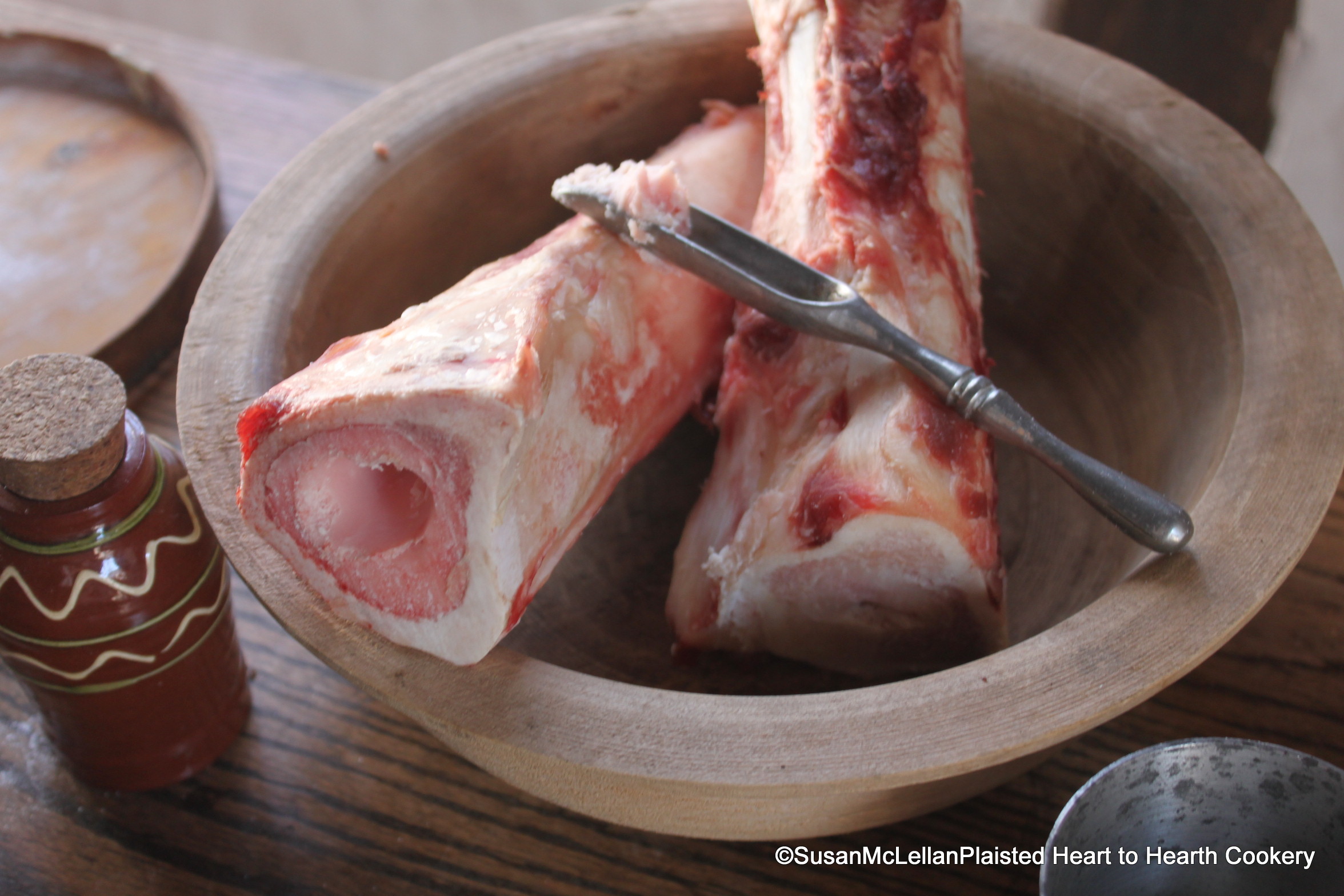
IMG_8757-001  The marrow spoon has a long, thin bowl for removing marrow-the sponge-like tissue that fills the cores of the largest animal bones.  This marrow that I have removed will be used To make a most rare excellent Marrow Pudding in a dish baked.

Visit my website at:   www.hearttohearthcookery.com
Posted by: hearttohearthcookery | March 9, 2014

Mulling Irons

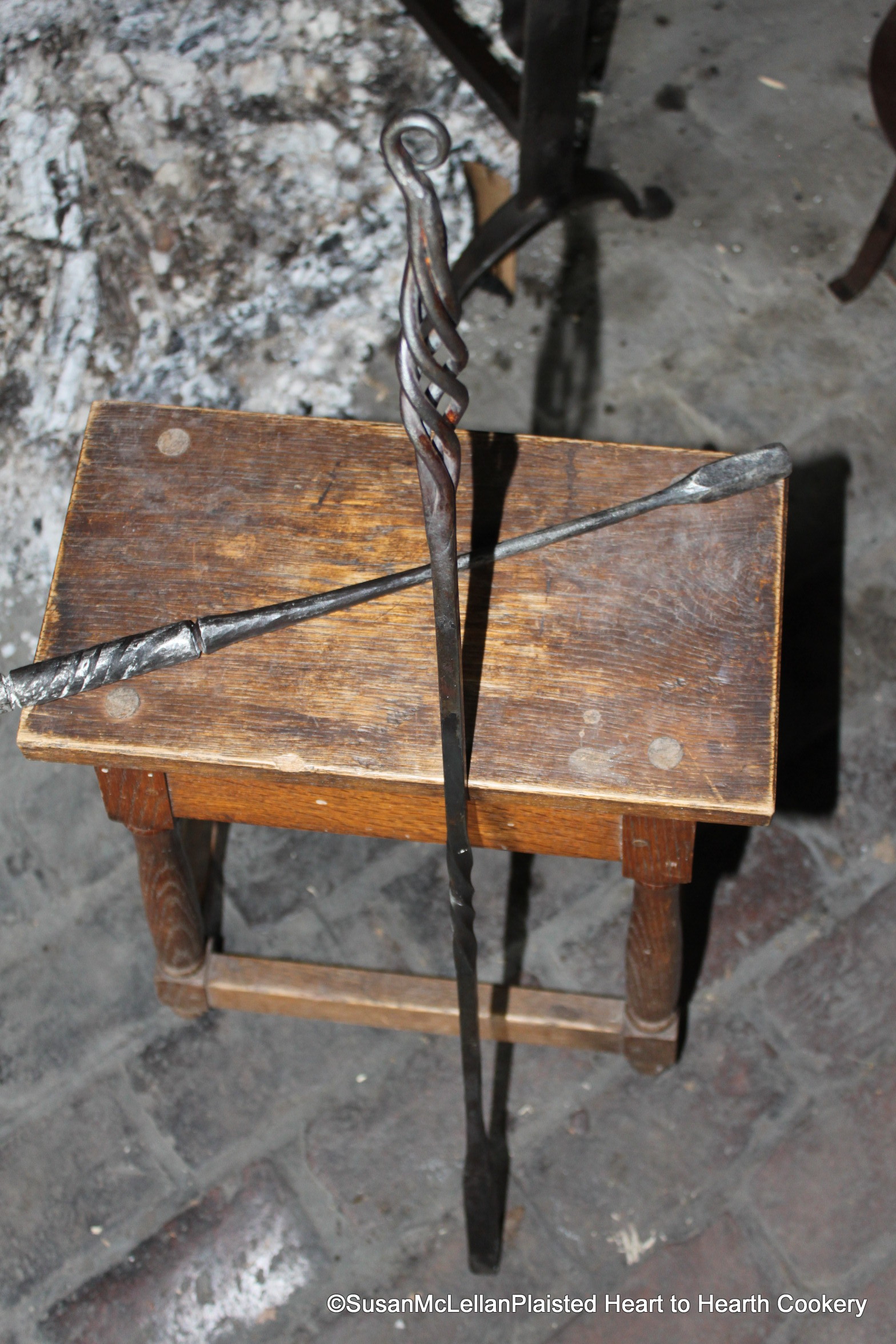
IMG_8751-001  Pictured are two of my reproduction mulling irons.  The ends that were heated in the hot embers and used to heat the ale or wine are to the right and on the floor.  The iron would be tapped to remove ash and then inserted in the beverage to heat.

Visit my website at:   www.hearttohearthcookery.com
Posted by: hearttohearthcookery | March 5, 2014

Red Abenaki Flour

IMG_8026-001

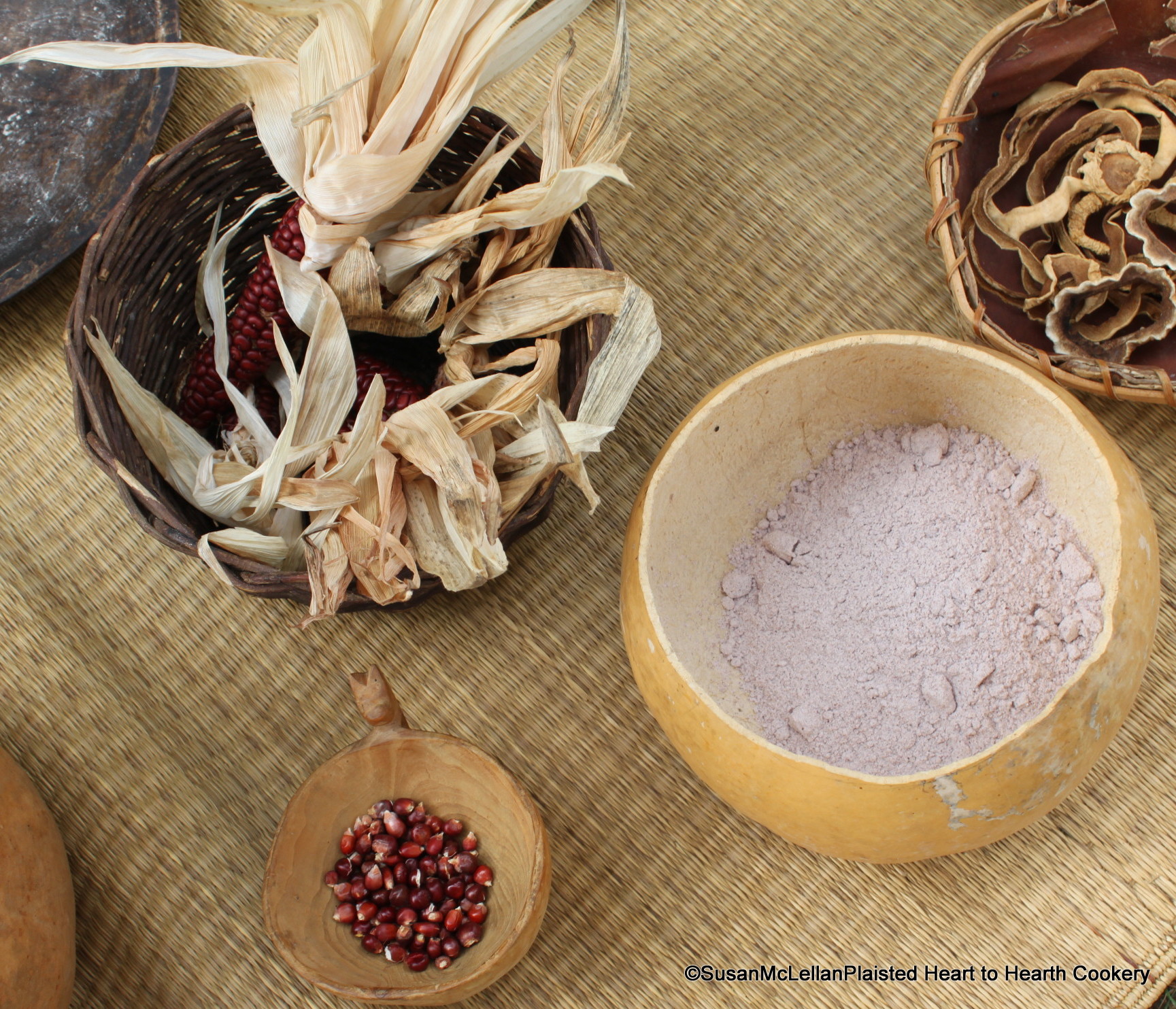
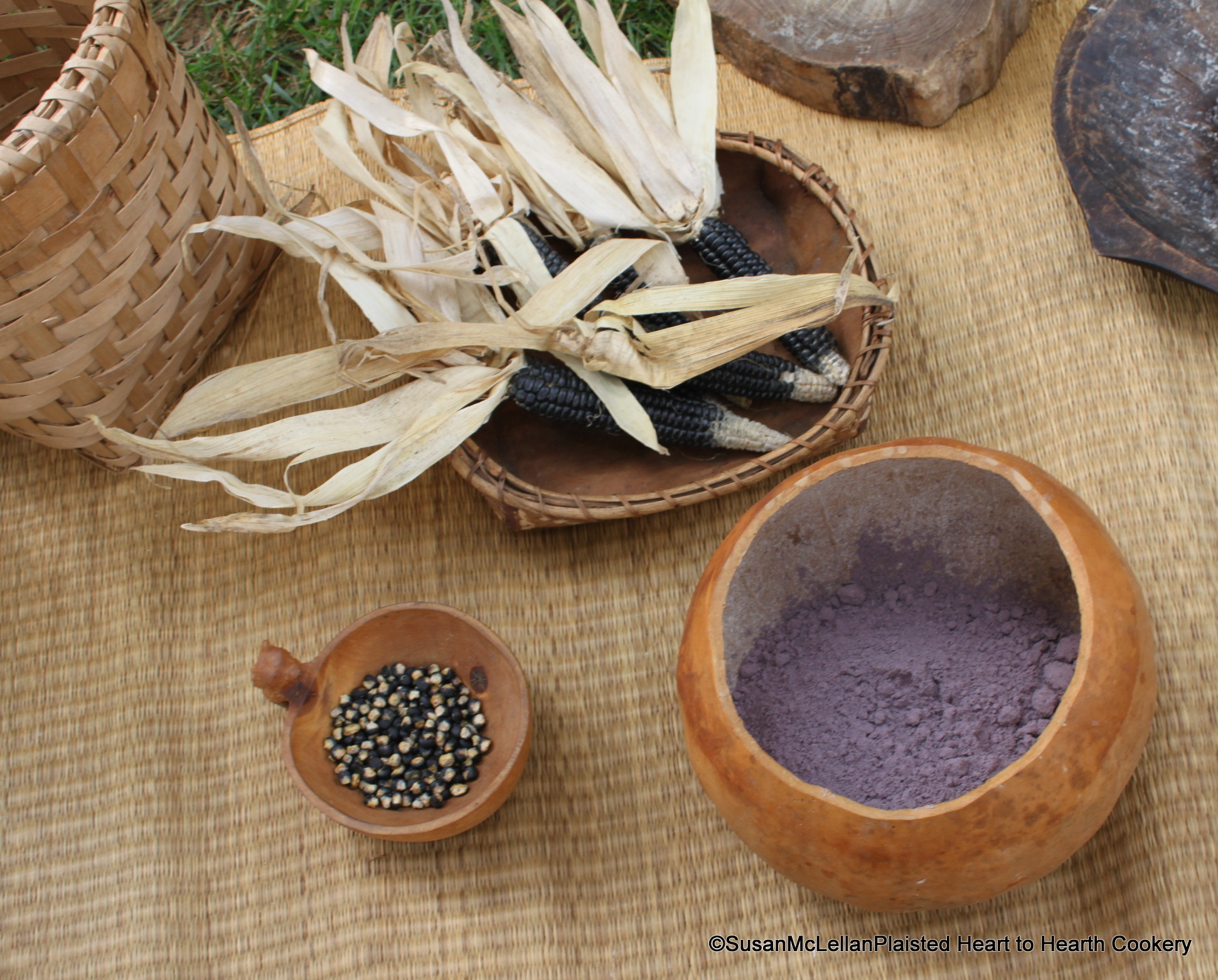
The kernels from the red Abenaki corn are removed and processed into hominy with wood ash and pounded into flour.  The red corn flour is in the large gourd bowl.

Visit my website at:   www.hearttohearthcookery.com
Posted by: hearttohearthcookery | March 4, 2014

Blue Bread

IMG_8024-001

Read More…

Posted by: hearttohearthcookery | March 3, 2014

To make White Flour

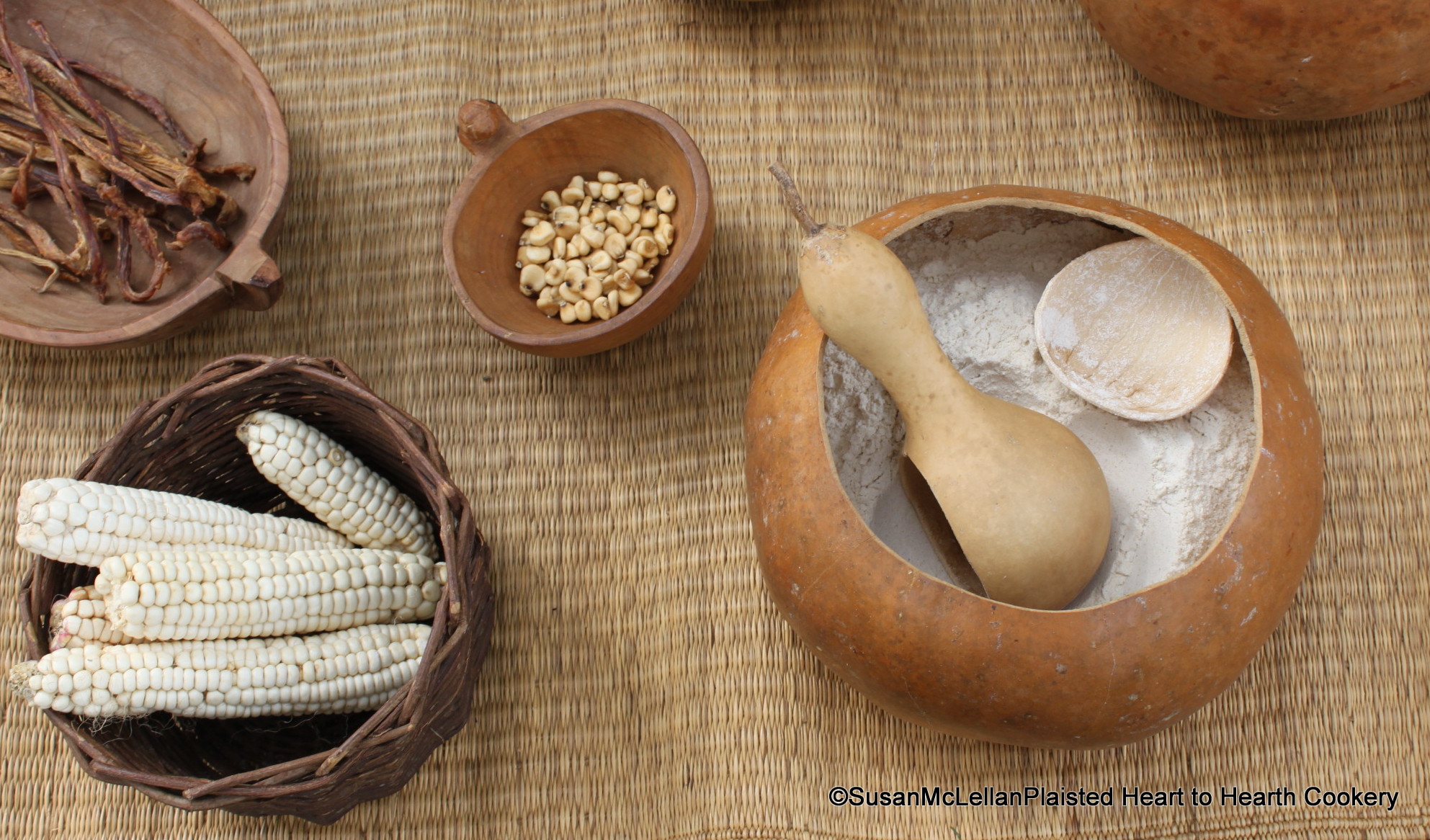
IMG_8025-001   To make Lenape white flour,  the kernels of white corn are removed from the eight-row Lenape white flour corn (in the grape vine basket), prepared into hominy (wood bowl) with ash, and ground with a corn pounder into flour (gourd bowl).

Visit my website at:   www.hearttohearthcookery.com
Posted by: hearttohearthcookery | February 28, 2014

Red, White and Blue Bread

IMG_8035-002

If you look very carefully at the picture, you can see Abenaki red flour bread on a rock near the fire, Lenape white flour bread on a rock near the clay pot and two Lenape blue flour breads that look almost black.

Visit my website at:   www.hearttohearthcookery.com

Posted by: hearttohearthcookery | February 27, 2014

Gingerbread Over Time

-c8d57eaf8f760480

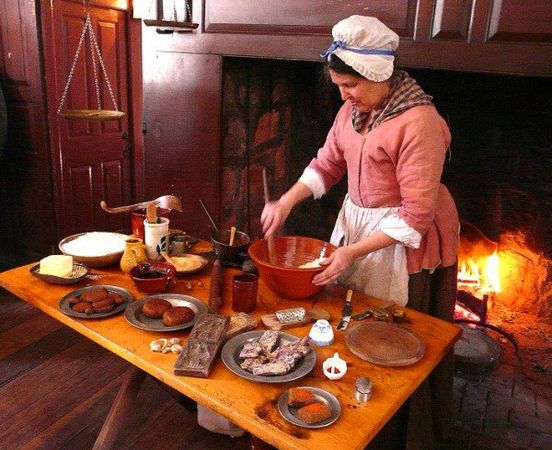
This photograph by Rick Epstein shows on the table from right to left re-creations of English gingerbread receipts (recipes) from 15th, 16th, 17th and 18th century and captures my program on the Evolution of Gingerbread at the hearth.


Visit my website at:   www.hearttohearthcookery.com
 

Posted by: hearttohearthcookery | February 26, 2014

The Fitzhugh Border

IMG_8711-003

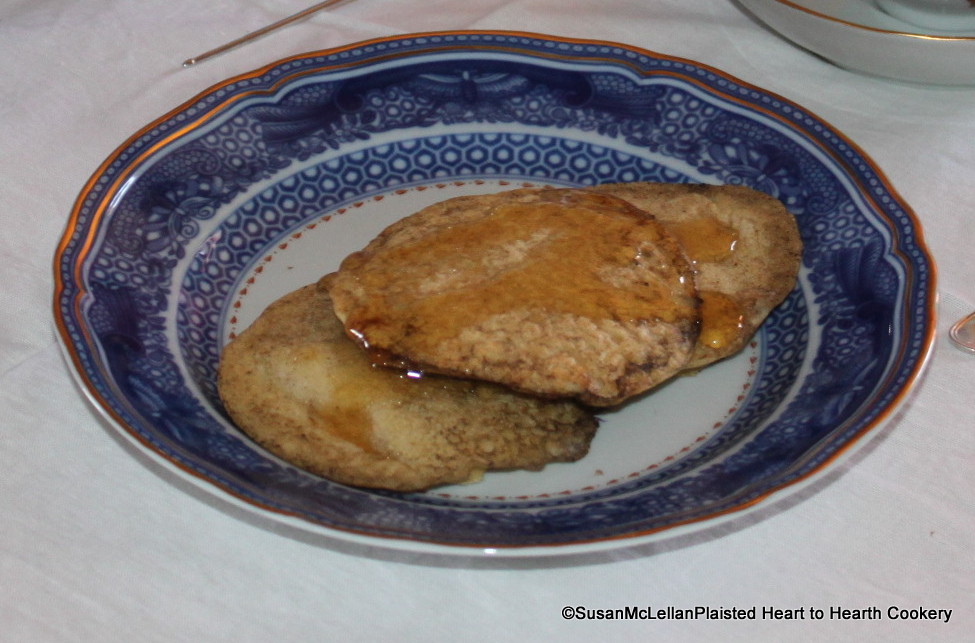
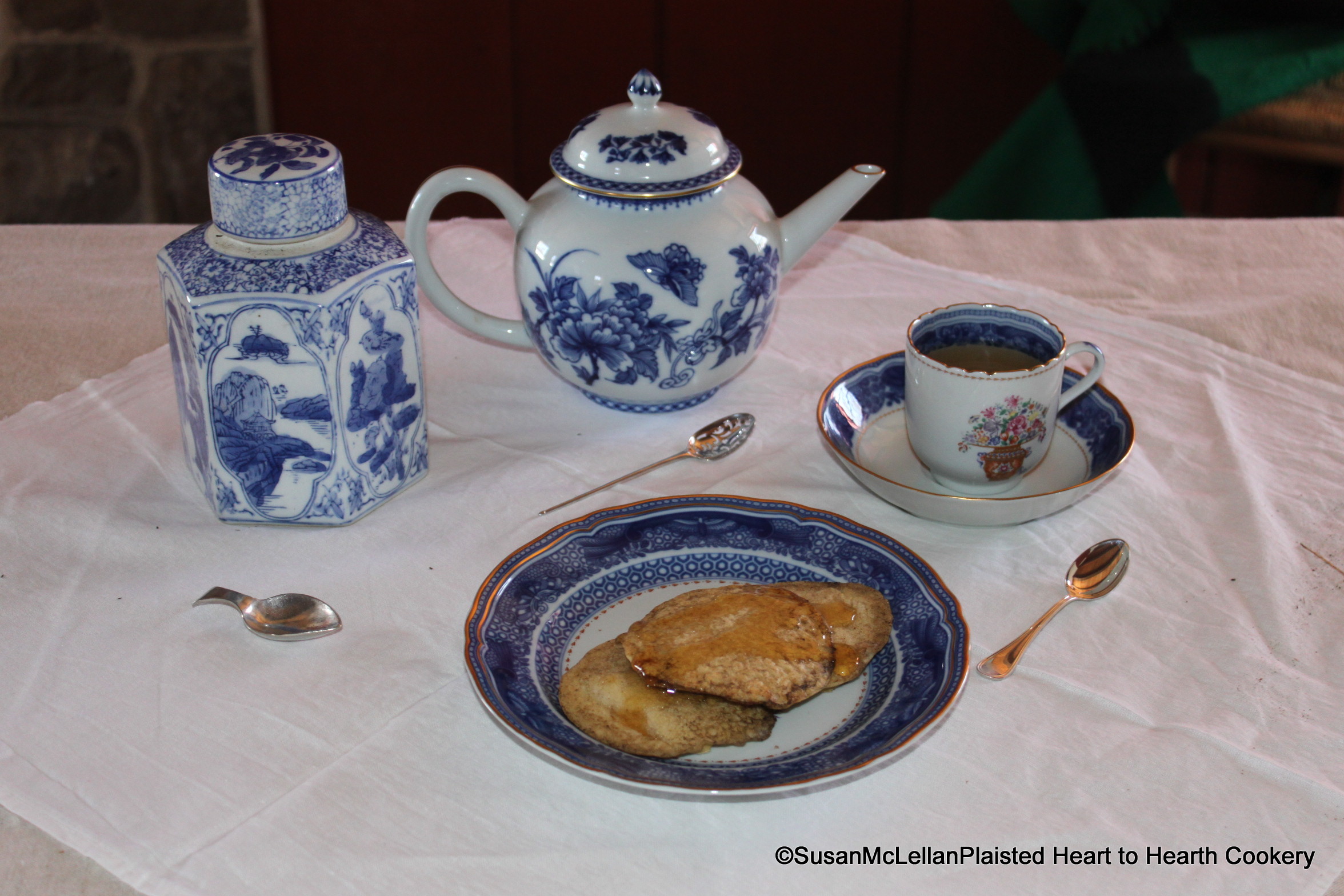
The border of this blue and white porcelain plate is a reproduction of what was known as the Fitzhugh border pattern, named for Thomas Fitzhugh, director of the East India Company, who ordered a porcelain service with a border pattern of similar design.  The 302 piece dinner and tea  service with the emblem of the order of Cincinnati, acquired by George Washington for his use, featured a blue Fitzhugh border.    The three mush cakes  look as they would on Mount Vernon’s porcelain as pictured even though the reproduction did not utilize the “winged figure of Fame and the Eagle insignia” of the Society of Cincinnati.

Visit my website at:   www.hearttohearthcookery.com
Posted by: hearttohearthcookery | February 25, 2014

Breakfast is Served

IMG_8711-001   George Washington’s breakfast of three small mush cakes swimming in butter and honey has been served on a  porcelain plate with a blue and white Fitzhugh border pattern.  And George drank three cups of tea without cream.   The finest green tea is in the blue and white porcelain tea caddy to be added to the pot with  the tea caddy spoon.  The mote spoon (in front of the tea pot) is ready to remove any floating tea leaves in the cup or unclog the tea spout.

Visit my website at:   www.hearttohearthcookery.com
« Newer Posts - Older Posts »

Categories