 I am using my corn pounder for pounding dried squash as fine as possible. Some of the finely ground squash is in the large carved wood bowl at my feet.
Visit my website at: www.hearttohearthcookery.com
I am using my corn pounder for pounding dried squash as fine as possible. Some of the finely ground squash is in the large carved wood bowl at my feet.
Visit my website at: www.hearttohearthcookery.com
Posted in corn pounder, culinary history, food, food history, Lenape, Native American, receipts, recipes, squash | Tags: culinary history, food, food history, foodways, Lenape, Native American
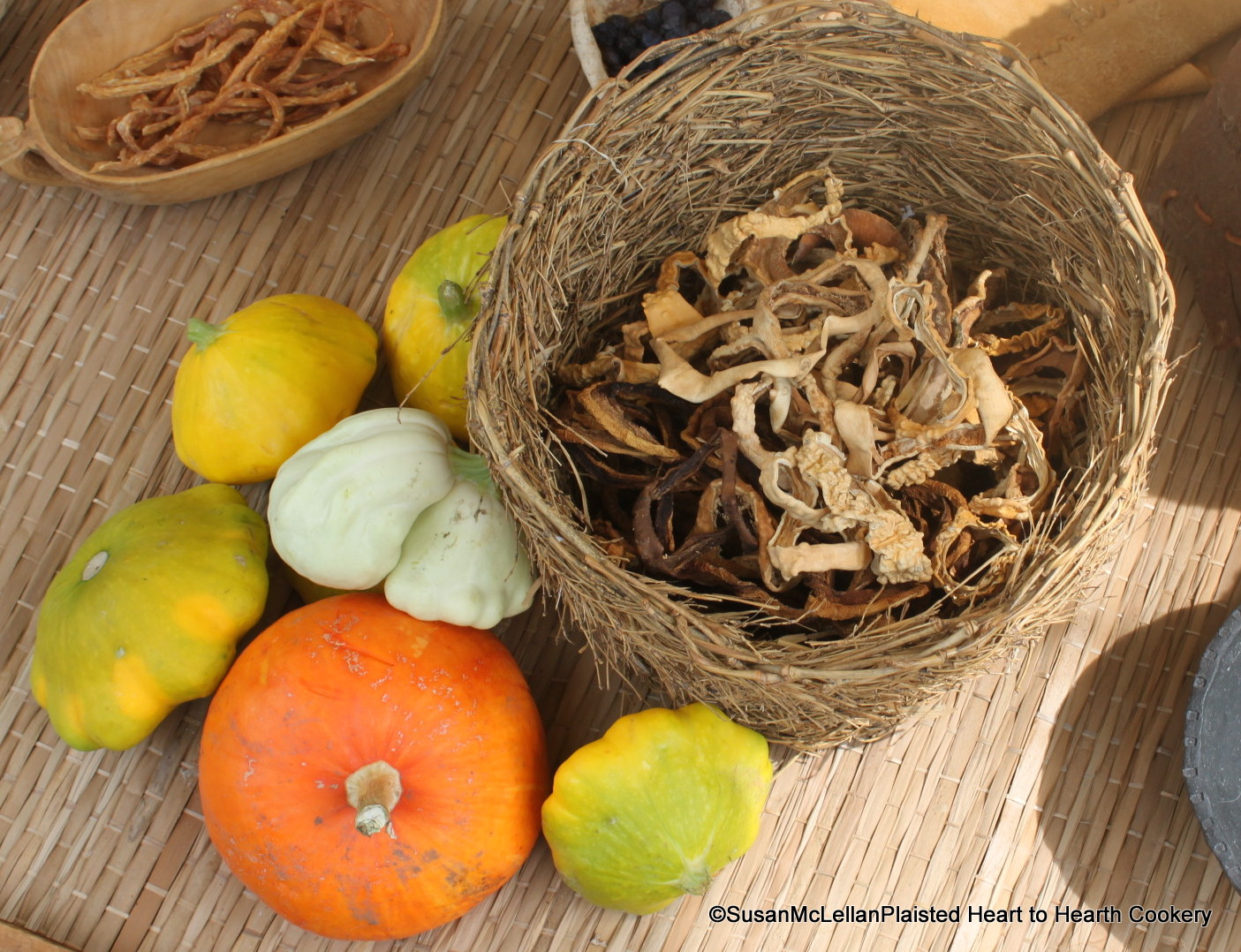 There were many varieties of Cucurbitaceae (squashes, pumpkin) that were grown by the Lenape. Late summer and fall, the small new squash were harvested. The grass basket contains the harvested squash preserved by drying. The European word for the scalloped squash in the 17th century was symnel.
Visit my website at: www.hearttohearthcookery.com
Posted in culinary history, food, food history, Lenape, Native American, squash | Tags: culinary history, food, food history, Food preservation, foodways, Lenape, Native American
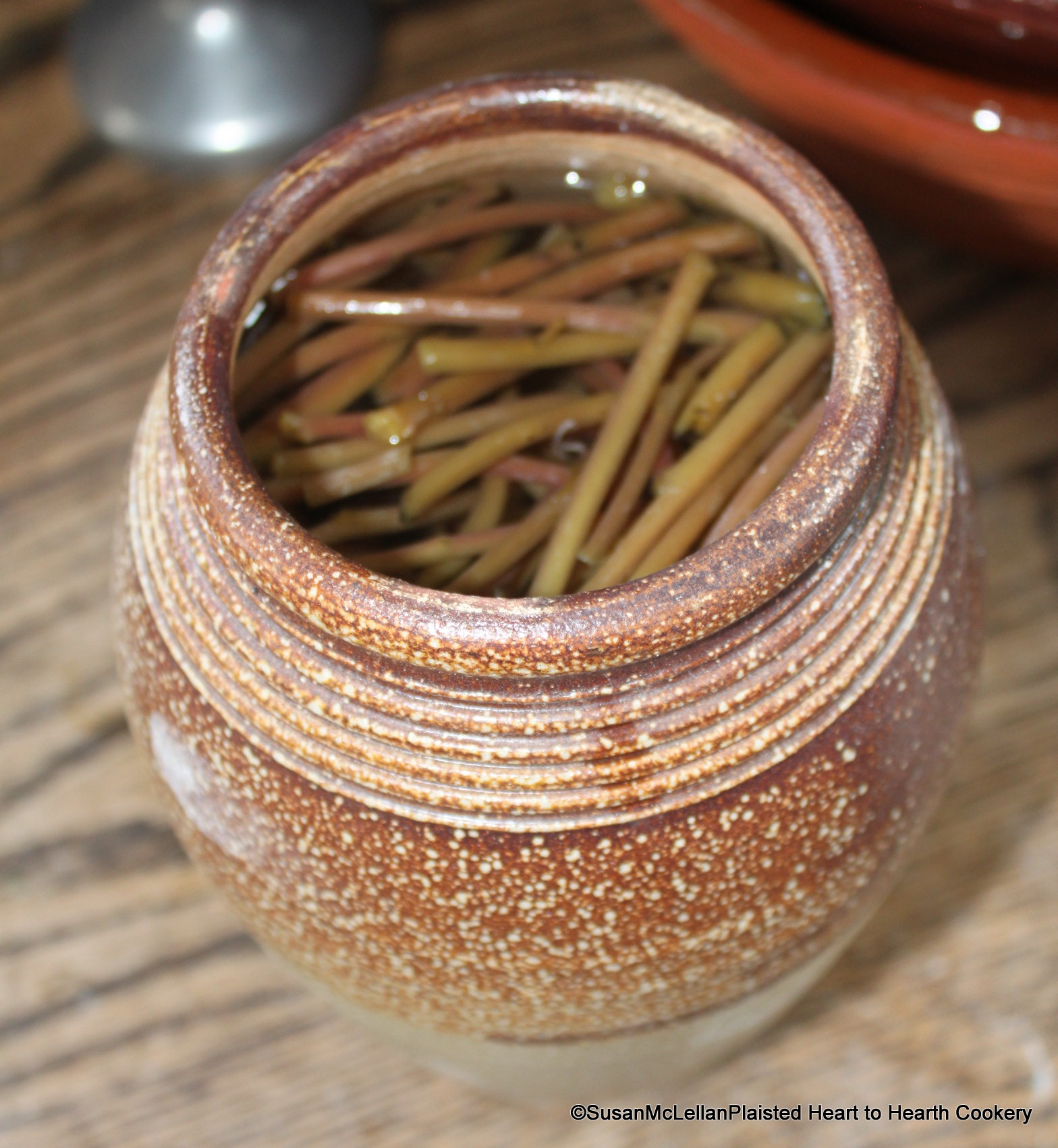 After the purslane has laid in the salt pickle for 24 hours for the receipt (recipe) To Pickle Pursland, then make another pickle, but not soe salt as ye former of white wine vinegar, put it in an earthern pot & put ye pursland to it. The salt glazed crock is now ready to be sealed with the bladder of a pig.
Visit my website at: www.hearttohearthcookery.com
Posted in culinary history, food, food history, Food preservation, Pickling, Purslane, receipts, recipes, Salt-glazed crock | Tags: culinary history, food, food history, foodways, pickling
 The first pickle for the receipt (recipe) To pickle pursland is made with salt & water as will bear an egge. I am using a small salt glazed crock, as my quantity is demonstration size. I filled the crock with water, added the egg which immediately sank to the bottom and then added salt slowly, stirring well after each addition, until the egg floated. The boiled, tender purslane lays in this pickle for 24 hours.
Visit my website at: www.hearttohearthcookery.com
Posted in culinary history, food, food history, Food preservation, Pickling, Purslane, receipts, recipes, Salt-glazed crock | Tags: culinary history, food, food history, Food preservation, foodways, pickling
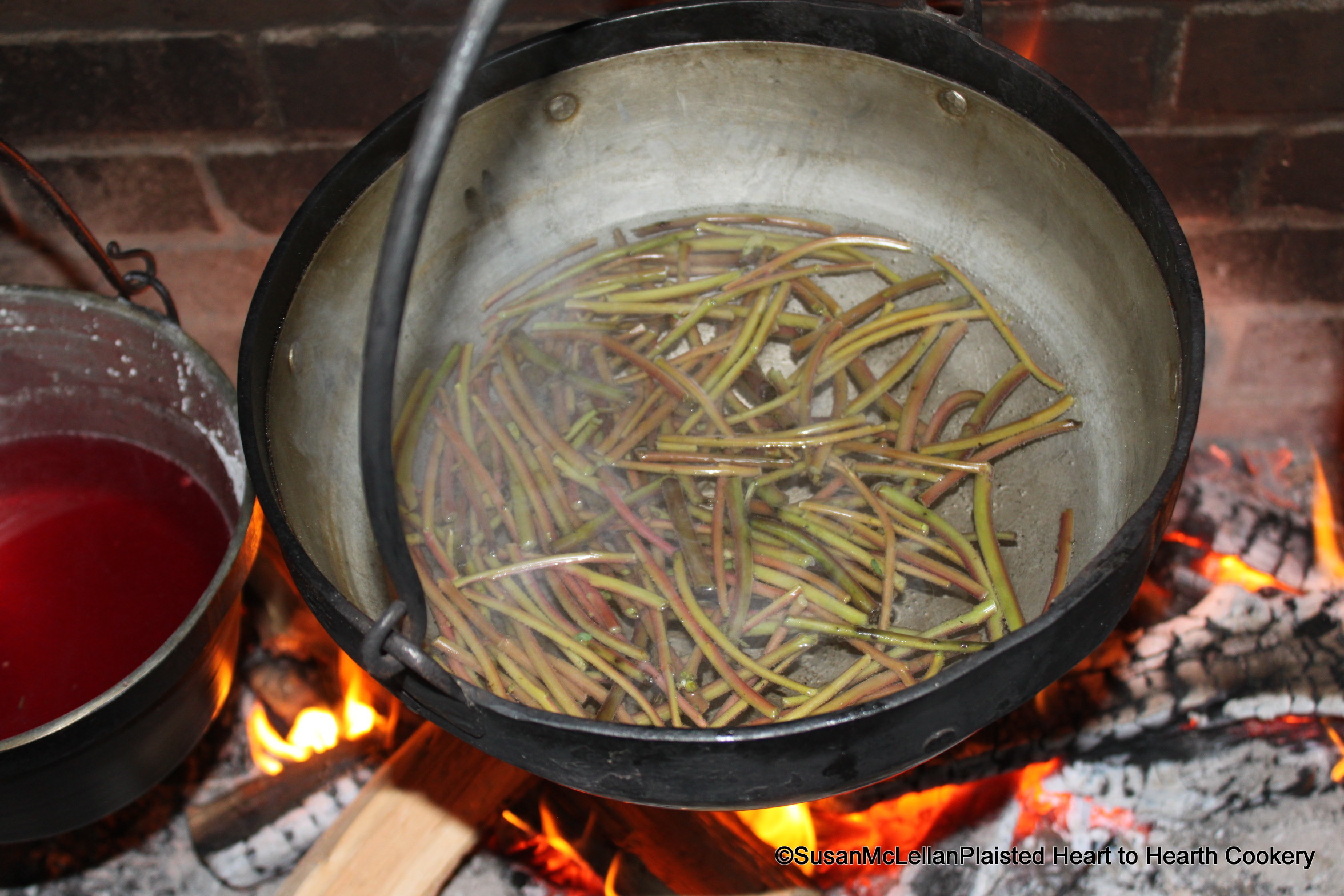 For the receipt (recipe), To pickle pursland, the prepared stalks of the purslane are boyled in a kettle of fayre water without any salt until tender. The purslane is being boiled in a hemispherical kettle.
Visit my website at: www.hearttohearthcookery.com
Posted in culinary history, food, food history, hemispherical kettle, Pickling, Purslane, receipts, recipes | Tags: culinary history, food, food history, Food preservation, foodways, pickling
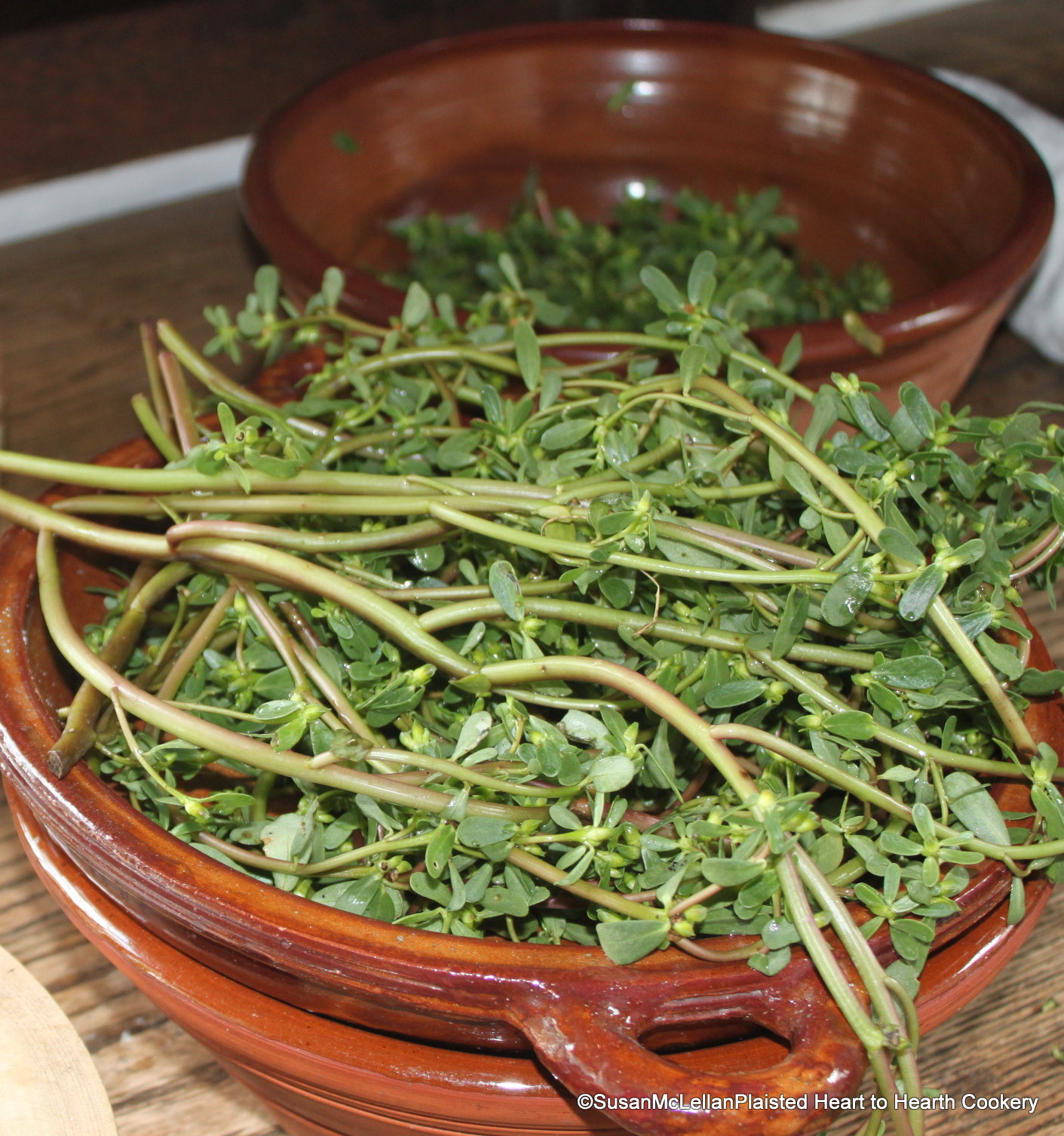 The receipt (recipe) found in the 17th century Custis family manuscript for To Pickle Pursland starts with Gather ye pursland when it stalkie & will snap whn you break it. The purslane that I gathered in the redware colander is “stalkie” and snaps.
Visit my website at: www.hearttohearthcookery.com
Posted in culinary history, food, food history, Pickling, Purslane, receipts, recipes | Tags: culinary history, food, food history, Food preservation, foodways
 Nicholas Culpepper, a 17th century physician, describes Garden Purslain (being used as a salad herb) as so well known that it needs no description. Some of the other names for this common weed that has inexplicably fallen from favor are: Common purslane, pigweed, duckweed and Portulaca oleracea. In the 17th and 18th century it was commonly eaten in salads and pickled. The fleshy, succulent leaves and stems lay flat to the ground, and the plant grows almost everywhere. Perhaps if I write as a dietitian, about the fact that it is a great source of Omega-3 fatty acids, alpha-linolenic acid, and Vitamin E, it will resurrect this highly nutritious, delicious green.
Visit my website at: www.hearttohearthcookery.com
Posted in culinary history, food, food history, Purslane | Tags: culinary history, food, food history, foodways
 Once the calendula are washed with rosewater with gum Arabic and dusted over with fine sugar, the receipt (recipe) for To candie all manner of flowers in their natural colours directs to set them a drying on the bottome of a Sieve, and they will glisten as if it were Sugar-candie.
Visit my website at: www.hearttohearthcookery.com
Posted in calendula, confectionery, culinary history, Edible flowers, food, food history, receipts, recipes, Sieve | Tags: confectionery, culinary history, food, food history, foodways
 Take the Flowers (calendula) with the stalks and wash them over with a little Rose-water, wherein Gum-arabecke is dissolved; then take fine searced Sugar, and dust over them. The rosewater and gum arabic solution is in the glass and the marble mortar and pestle was used to create the fine sugar.
Visit my website at: www.hearttohearthcookery.com
Posted in calendula, confectionery, culinary history, food, Marble mortar and pestle, receipts, recipes | Tags: confectionery, culinary history, food, food history, foodways
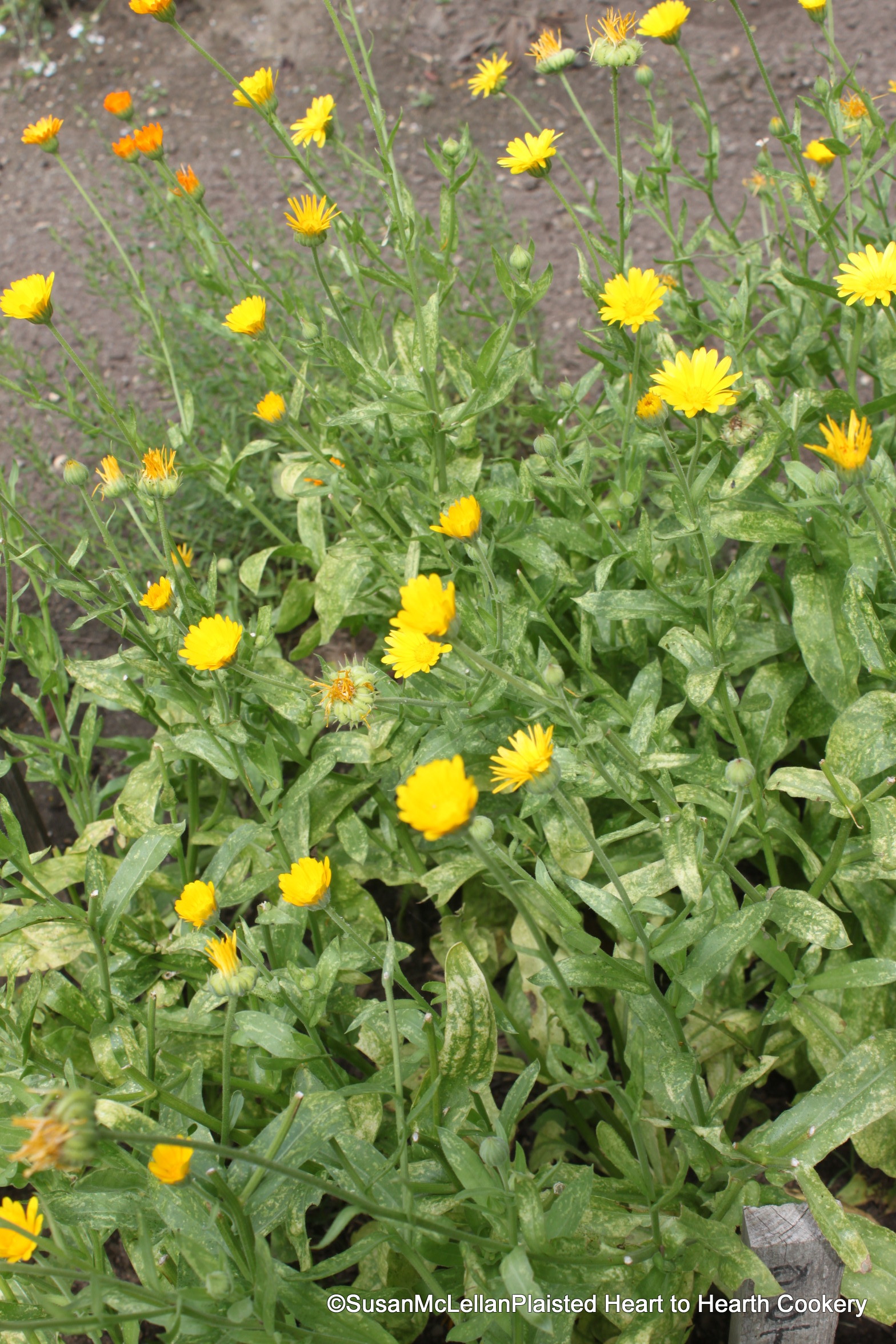
The flowers of Calendula officienalis (pot marigold) have both a history of culinary and medicinal uses. In A Niewe Herball, 1578, Dodoens-Lyte writes: It hathe pleasant, bright and shining yellow flowers, the which do close at the setting downe of the sunne, and do spread andopen againe at the sunne rising.
Visit my website at: www.hearttohearthcookery.com
Posted in calendula, culinary history, Flowers, food history | Tags: culinary history, food, food history, foodways
 Heart to Hearth Cookery