Posted by: hearttohearthcookery | January 2, 2015

And a Loot

IMG_0727-003  Added to the Wheat-flour for the receipt (recipe) for To fry Olie-koecken, from Peter Rose’s translation from the Dutch receipt book, De Verstandige Kock, is a loot Cinnamon, a quarter loot white Ginger, a few Cloves crushed together.  A loot is approximately fourteen grams.

Visit my website at:   www.hearttohearthcookery.com
Posted by: hearttohearthcookery | January 1, 2015

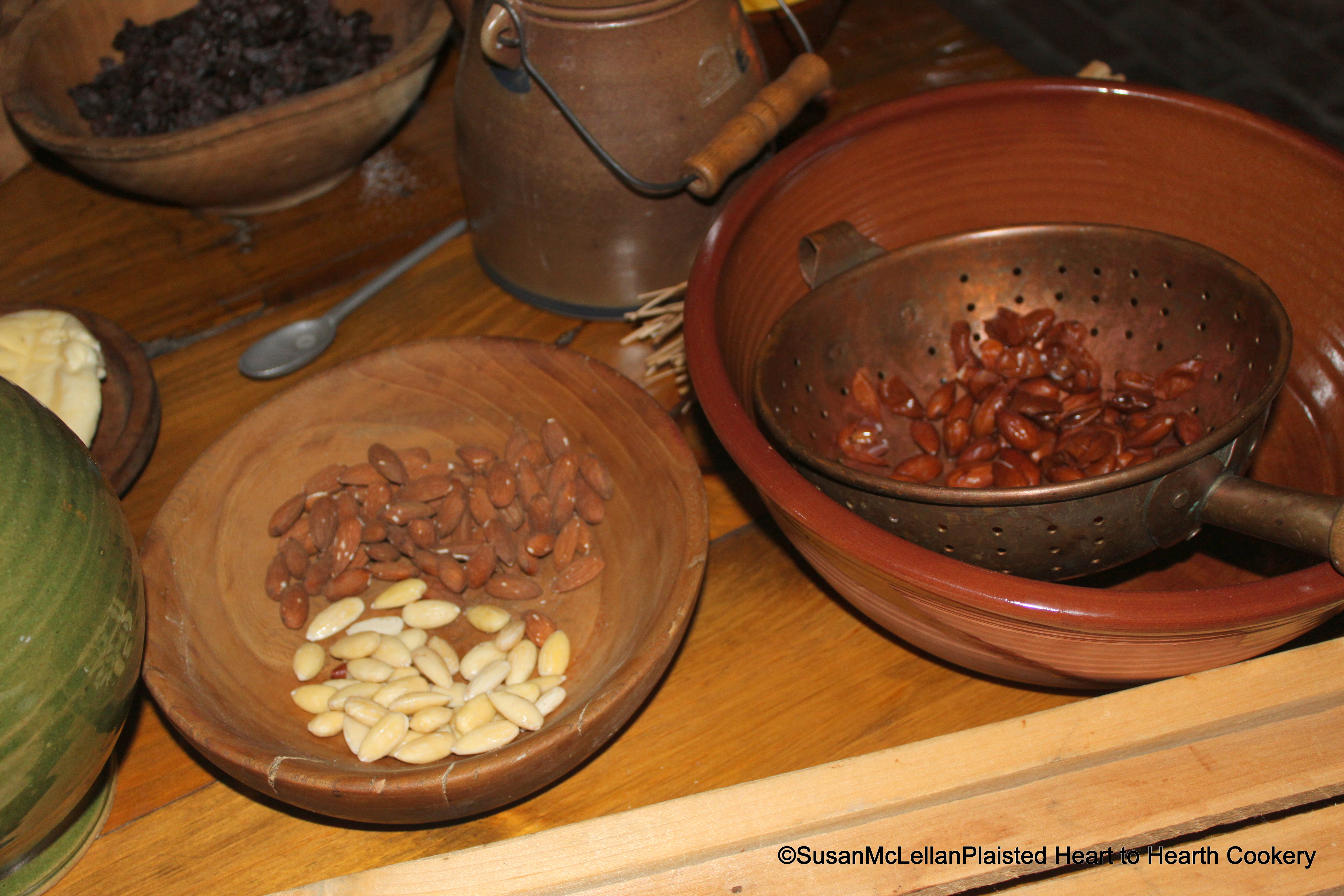
Peeled Almonds

IMG_0722-001  The next ingredient to prepare for the receipt (recipe) To fry Olie-koecken is the almonds.  Peter Rose’s translation of the Dutch reads:  a quarter pond or one and a half (quarter pond: 6 ounces) peeled Almonds.  After weighing the almonds, they were added to a kettle of heated water, now draining in my colander, and the skins slip off easily when the almonds are not allowed to completely cool.

Visit my website at:   www.hearttohearthcookery.com
Posted by: hearttohearthcookery | December 31, 2014

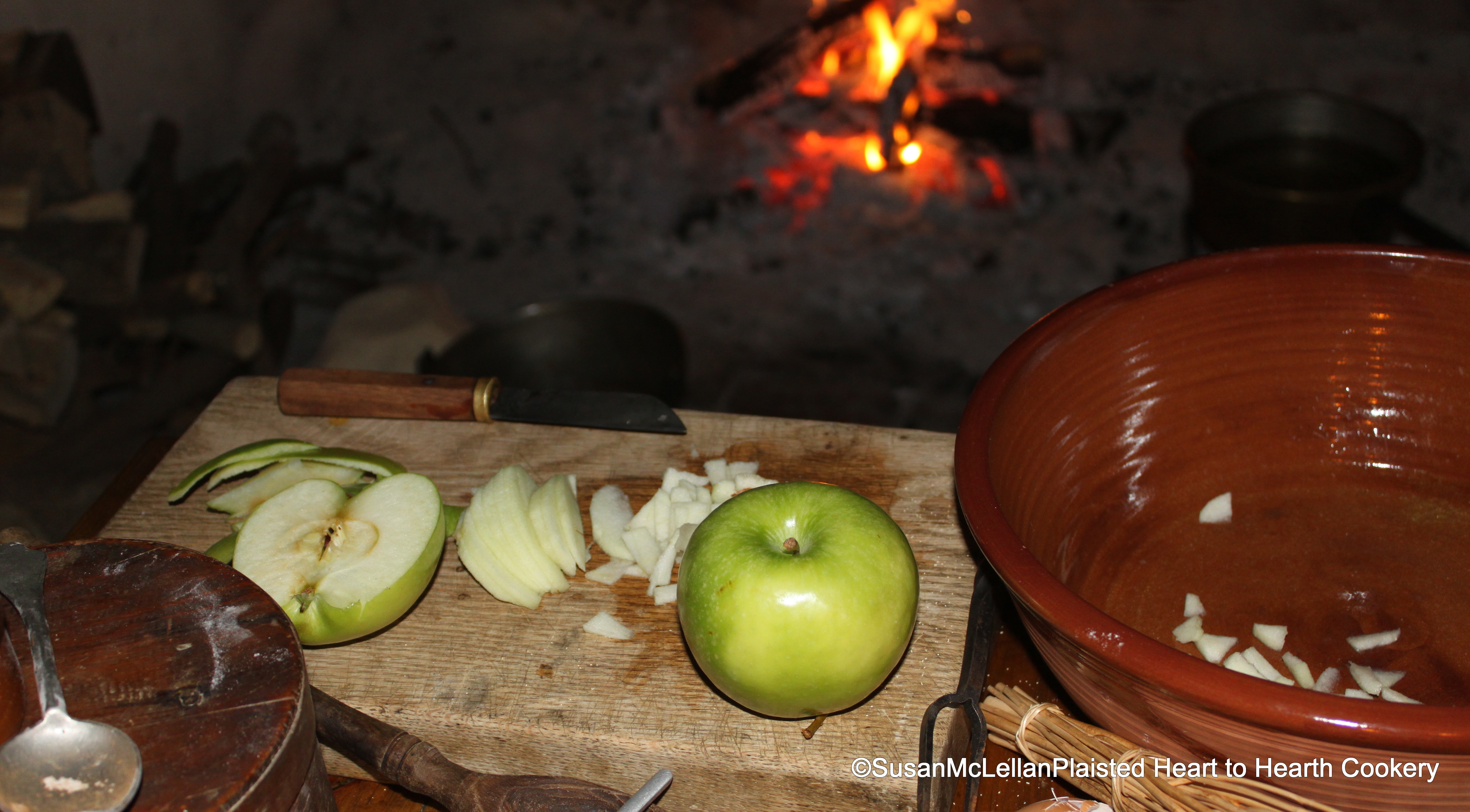
The Best Apples

IMG_0725-001  A cup of the best Apples, is the next ingredient in the receipt (recipe) for To fry Olie-koecken from Peter Rose’s translation of The Sensible Cook.  The directions for the apples are to peel them and cut them in very small pieces without the cores.  Since this receipt was typically prepared for serving as part of the New Year’s celebration, picking the “best” of the stored apples was important.

Visit my website at:   www.hearttohearthcookery.com

Posted by: hearttohearthcookery | December 30, 2014

2 Pond Raisins

IMG_0727-001  In the translation of De Verstandige Kock (The Sensible Cook) into English, Peter Rose translated the receipt (recipe) To Fry Olie-koecken and the first line:  For 2 pond of Wheat-flour take 2 pond long Raisins, when they have been washed clean soak them in lukewarm water.  The already soaked raisins are drying on the cloth so as not to add additional water to what should be a thick batter.

Visit my website at:   www.hearttohearthcookery.com
Posted by: hearttohearthcookery | December 29, 2014

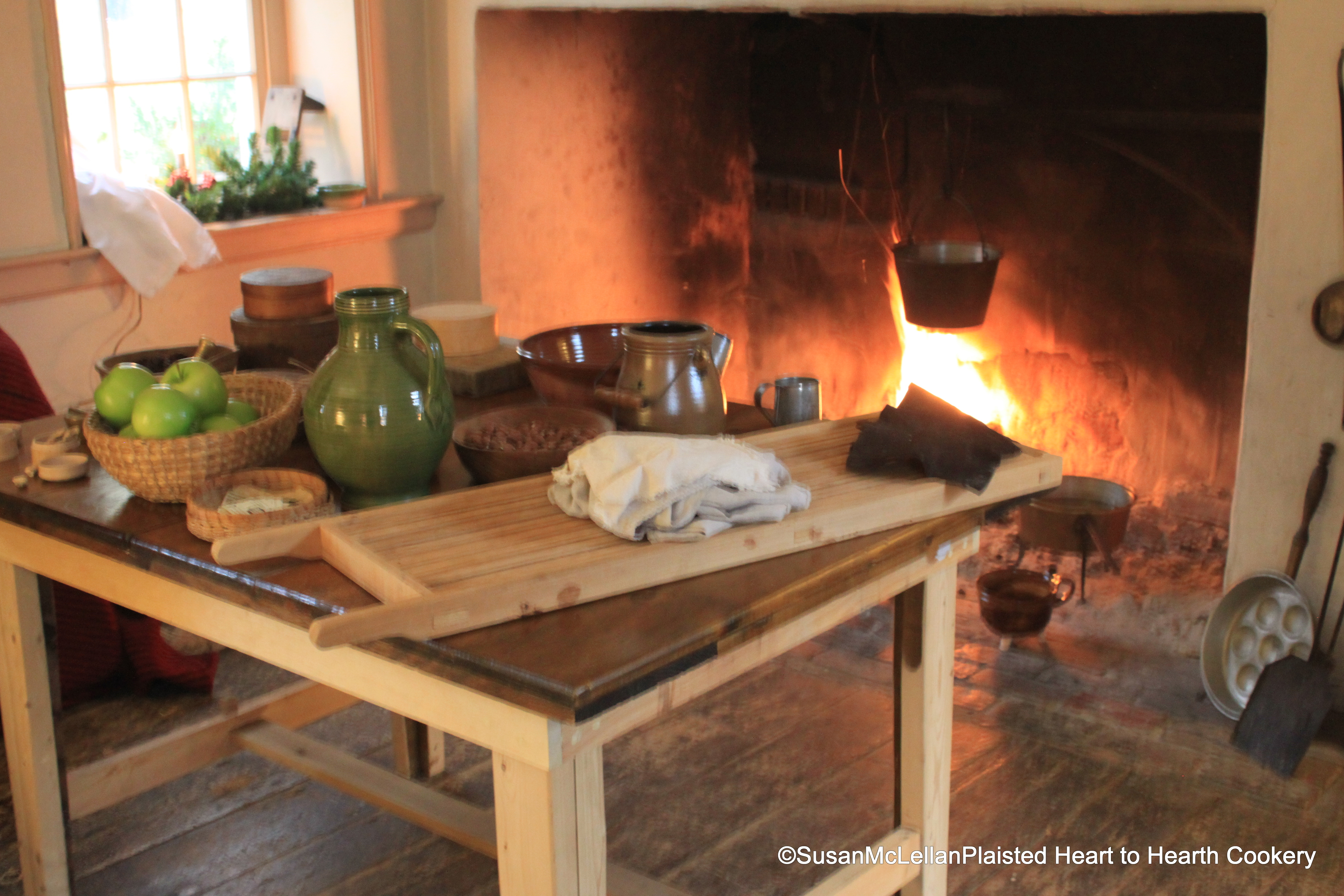
Equipment for Olie-koecken

IMG_0719-001  My table and hearth are filled with the equipment and ingredients needed for the preparation for the Dutch receipt (recipe) To fry Olie-koecken.   The wood bake oven drying rack will be used with the cloth for the draining of the fried batter.

Visit my website at:   www.hearttohearthcookery.com
Posted by: hearttohearthcookery | December 28, 2014

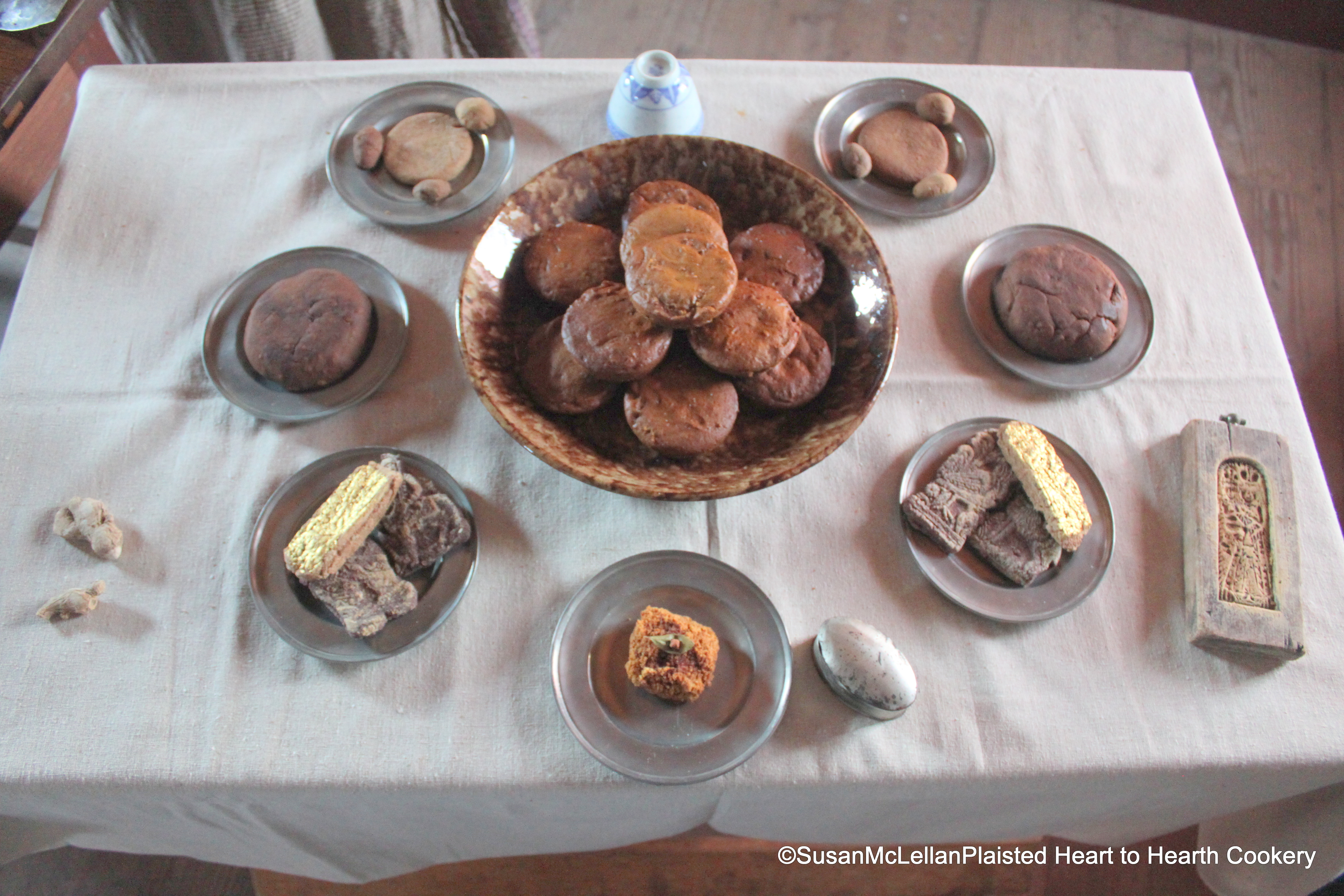
Through the Centuries

IMG_0690-001  With the addition of the 19th century receipt (recipe) for Thick Gingerbread in the center of the table, there are now gingerbreads from the 14th to the 19th century presented.  The earliest 14th century gingerbread is at the six o’clock position and moving your eyes up symmetrically on both sides are the gilded and non-gilded 16th century gingerbread, 17th century gingerbread and then 18th century.

Visit my website at:   www.hearttohearthcookery.com

Posted by: hearttohearthcookery | December 27, 2014

First Baked

IMG_0680-001  While baking in the tin baker ( see previous post: 3/4 to 1 Hour or Longer), the graniteware pan had to be turned several times to attempt an even baking of the receipt (recipe) for Thick Gingerbread.  On the wood plate, is the first baked gingerbread.

Visit my website at:   www.hearttohearthcookery.com
Posted by: hearttohearthcookery | December 26, 2014

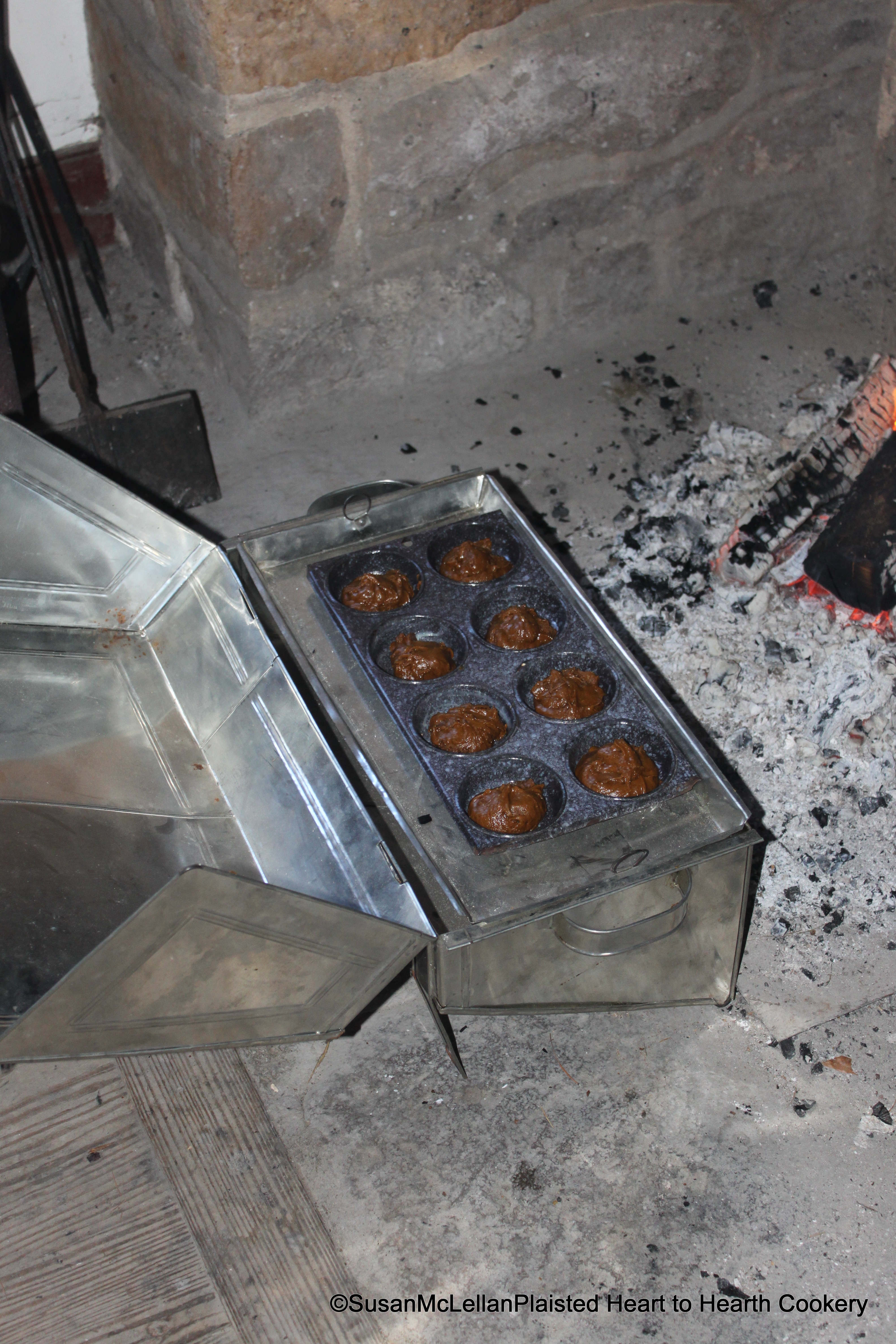
3/4 to 1 hour or Longer

IMG_0678-001  After the receipt (recipe) for Thick Gingerbread was poured into the buttered GraniteWare pan, the pan was placed in the tin baker.  The receipt states to bake it from 3/4 to 1 hour or longer.

Visit my website at:   www.hearttohearthcookery.com

Posted by: hearttohearthcookery | December 24, 2014

Improvement of Iron-Ware

IMG_0677-001  For baking this 19th century receipt (recipe), Thick Gingerbread, I chose a GraniteWare pan.  GraniteWare was first manufactured in the United States by two German immigrants, William and Fredrick Niedringhaus.  They were the founders of the St. Louis Stamping Co. for the mass production of stamped kitchen ware and brought the process of enameled kitchen ware from Germany to the United States.  The US Patent for the process is titled “Improvement in Manufacture of Iron-Ware” number 177,953.

Visit my website at:   www.hearttohearthcookery.com
Posted by: hearttohearthcookery | December 23, 2014

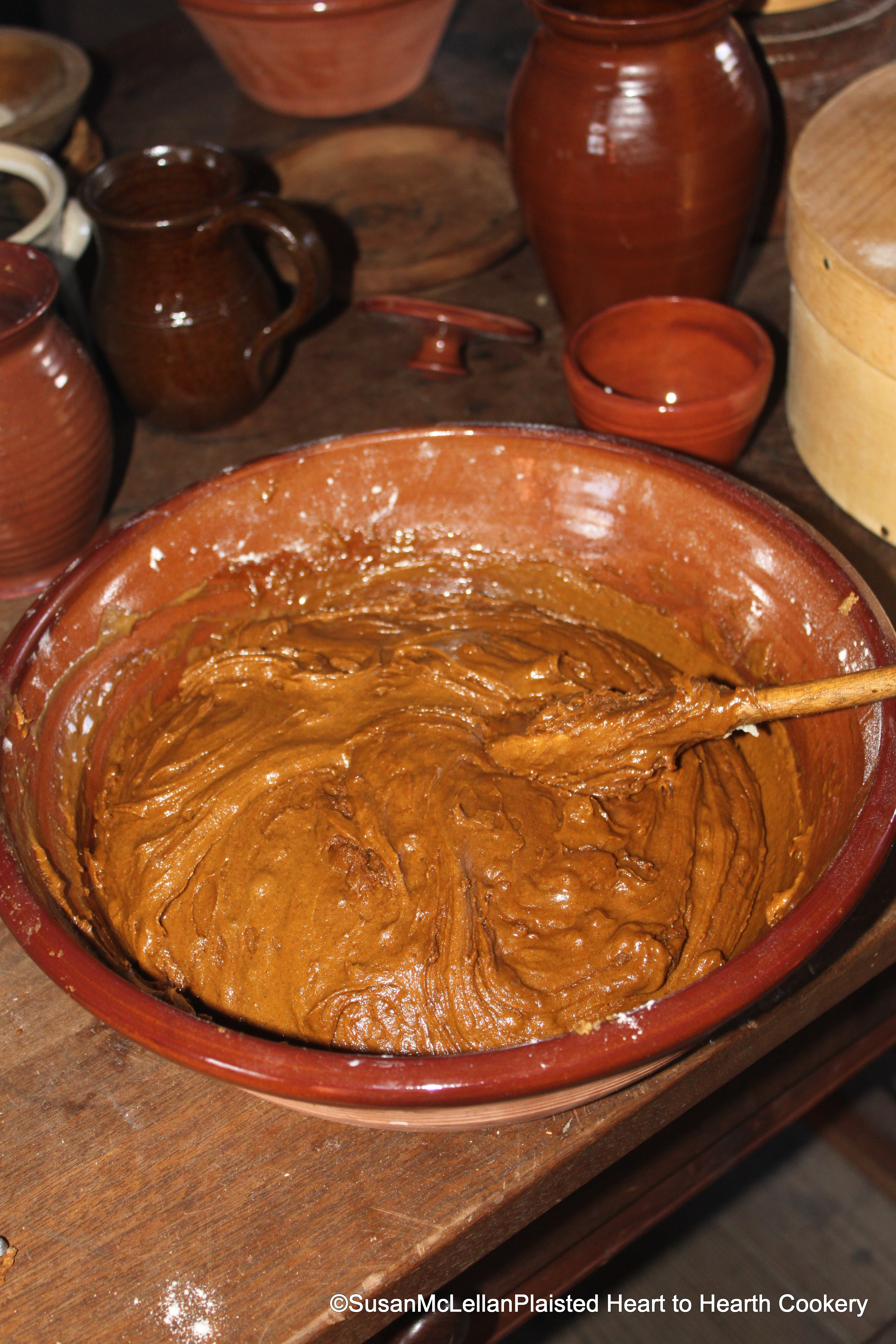
Bubbles!!

IMG_0676-001  The leavening for this 19th century receipt (recipe) for Thick Gingerbread comes from dissolving 1 teaspoonful of carbonate of soda into 1/4 pint of milk just warm and adding three well whisked eggs.  Just look at the bubbles on the surface of the batter!!

Visit my website at:   www.hearttohearthcookery.com

« Newer Posts - Older Posts »

Categories