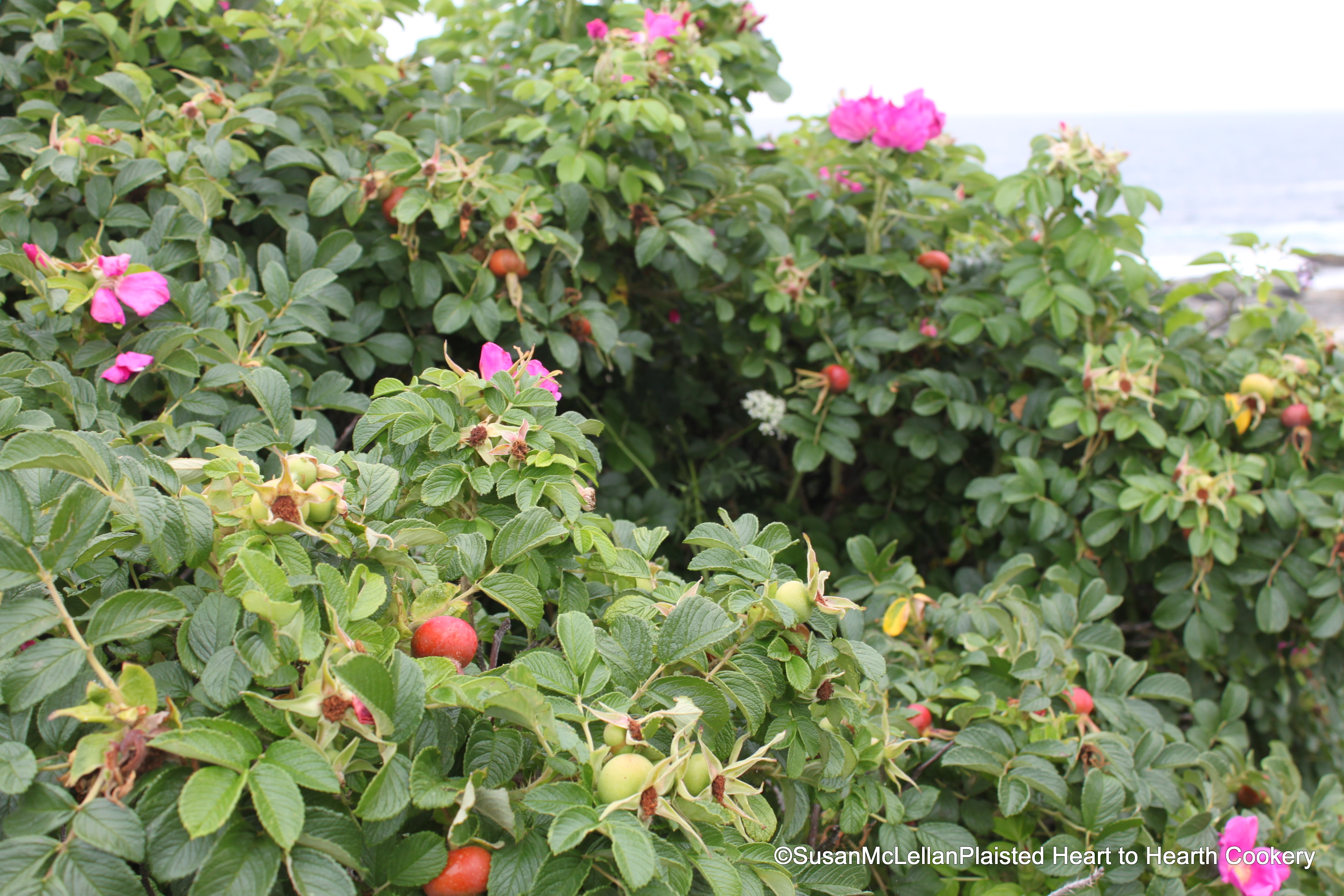
As I was eating some shrimp, clams, and scallops by the Atlantic Ocean in Maine, I looked at the familiar site of the roses that grow near the ocean with a different eye. I have seen these roses all my life. My Mother liked them so much that she tried to transplant some to our house. But while eating this time, my mind was full of questions. Were these roses indigenous to this country? The petals are single, five and color pink which are known typical native rose characteristics but European roses were introduced to this country very early. And look at the size of those rose hips! What a rich source of Vitamin C, A, B3, D and E, bioflavonoids, citric acid, and zinc! If anyone knows more about this rose pictured, please comment below or e-mail me at foodhxsmp@gmail.com
Posted by: hearttohearthcookery | August 11, 2011
Look at those Rose Hips!
Visit my website at www.hearttohearthcookery.com
Posted in culinary history, food, Native American, Rose hips | Tags: culinary history, food, food history, foodways, Native American, rose hips
Responses
Leave a comment
Categories
- 17th century foodways
- 18th century foodways
- 19th century foodways
- Abenaki
- Abraham Lincoln
- Ale yeast
- ALHFAM
- Ambergris
- Anise seed
- Bacon
- Bake oven
- Barm
- Bear
- Beef
- Beverages
- Birch twig whisks
- Bolton Mansion
- Boston Cream Pie
- Bread
- Cakes
- Calf brains
- Capers
- Capon
- Caraway
- Cast iron
- cattails
- Caul
- Ceramic reproductions
- cheese
- cheesemaking
- Chicken
- children's programs
- Chinese Porcelain
- chocolate
- Claret
- Cochineal
- Coffins
- Collaring
- confectionery
- culinary history
- dairying
- Duck
- Dutch foodways
- Edible flowers
- eel
- Eggs
- Firemaking
- Fish
- Flowers
- food
- food festivals
- food history
- food history equipment
- apothecary pot
- bake kettle
- Bake oven peel
- Baking pot
- bakstone
- Balance scales
- Bannock toaster
- Barred girdle
- Batter Jug
- Birch twig whisk
- Bottle Ticket
- Brass Dutch Baking Kettle
- Brass kettle
- brazier
- Brush (squirrel hair)
- Cake hoop
- Case bottles
- Cask
- chafing dish
- chocolate pot
- coffin former
- colander
- Comfit pan
- Copper bake oven ladle
- copper kettles
- copper saucepan
- Copper water kettle
- corn pounder
- Decanter
- drying racks for bake oven
- Dutch bronze bake kettle
- Dutch skillet
- Egg cheese mold
- Everted rim sauce pan
- fish plank
- Gally pot
- Gingerbread molds
- Gourd bowl
- GraniteWare
- grape vine basket
- Gridirons
- hemispherical kettle
- herb grinder
- Hominy basket
- horse hair sieve
- Larding needle
- Marble mortar and pestle
- Marrow spoon
- mirror plateau
- molinillo
- Mortar and pestle
- Mote spoon
- mulling cone
- Mulling iron
- Native mortar and pestle
- nesting weights
- patty pans
- Peach twigs
- Pewter basin
- pewter plate
- pewter water plate
- Poffertjes pan
- Porcelain
- Porringer
- Posnet
- posset pot
- Pretzel Hanger
- pudding bag
- Pudding basin
- Pudding bowl
- Pudding mould
- ratchet trammel
- redware baking dish
- redware moulds
- redware pipkin
- Redware platter
- Redware skillet
- redware stewpot
- Rocker knife
- rutcher
- Rye straw baskets
- sabotiere
- saffron cup
- salamander
- Salt box
- Salt-glazed crock
- scallop shells
- Sieve
- sillibub pot
- Skillet
- Spice chest
- spider
- Standing toaster or roaster
- Stone mortar and pestle
- stoneware
- Sugar nippers
- Tazza
- Tea caddy
- Tea caddy spoon
- tea chest
- Three-legged saucepan
- tin apple roastere
- Tin baker
- tin baking hoops
- tin baking sheet
- tin bowl
- Tin box
- tin grater
- Tin sausage funnel
- Toasater
- Toaster
- Toasting fork
- trade kettle
- trencher
- Trivets/stands
- Waffle iron
- Whit bottle
- wine bottles
- wood masher
- wood pounder
- Wood wine goblet mold
- Food history lectures
- Food preservation
- Fool
- French foodways
- Fritters
- Fruits
- American citron melon
- American persimmon
- apples
- Apricots
- Barberries
- Cherries
- China
- China orange
- Citron
- Cranberries
- Currants
- Dates
- gooseberries
- Greengage plums
- Lemons
- Mellacattons
- Melon
- Oranges
- Peaches
- Pears
- Plums
- prunes
- Quince
- Raisins
- raspberries
- Rhubarb
- Seville oranges
- Strawberries
- Summer Rambo
- Yellow pear tomato
- Gardening
- Ginger
- Gingerbread
- goose
- Grain
- Granddaughter
- Great cakes
- Green corn
- Ham
- Hartshorn
- Hearth cooking classes
- hearth cooking demonstrations
- Hedge Hog
- Herbs
- history camps
- Hominy
- Honey
- IACP
- ice cream
- Ice Screamers
- Isinglass
- Jamaica pepper
- kettles
- Lamb
- Lear
- lecture presentations
- Leeds Symposia on Food History
- Lenape
- Macaroni
- Manuscript receipts
- Maple Sugaring
- Marmalade
- Marrow
- Mincemeat
- Mustard
- Mutton
- Native American
- Native American gardening tools
- Native American Seeds
- Native plants
- Nixtamalization
- Nuts
- Oil
- Oysters
- Pancakes
- Pandemic foodways
- Pastes (pastry)
- Pennsylvania German foodways
- pewter
- Pewter bason
- Pheasant
- Plucking
- Pollinating
- Pork
- posset
- pottery
- Puddings
- Pyes (pies)
- Quail
- Rabbit
- receipts
- receipts recipes
- recipes
- recipes receipts
- Roasting
- Rooster
- Rose hips
- Rusk
- sabotiere
- Sago
- Sallet (salad)
- salmon
- Salt
- Sandalwood
- Sauces
- school programs
- Scottish Foodways
- Seed Cakes
- Sesame
- shad
- Shaker foodways
- Shipboard cooking
- sorghum
- Soups
- Speaker topics
- Spices
- Spring foods
- SS United States
- Stewing
- sturgeon
- suet
- Sugar
- Sugar plate
- Sunchokes
- Sunflower
- Swedish foodways
- tansy
- tarts
- Tavern food
- Tea
- Thanksgiving
- Thomas Jefferson
- tin baker
- Treacle
- Turkey
- Vanilla
- Veal
- Vegetables
- Venison
- Verjuice
- Vinegar
- wafers
- Waffles
- walnut catsup
- Welsh foodways
- White Pot

Those are Rosa Rugosa and can be found all over New England, particularly the beach areas. USDA bred these roses to be salt tolerant, poor soil tolerant, extreme cold tolerant, and thorny thorny thorny (to reduce ingestion by the local wildlife- deer love regular rose bushes). Their roots help with erosion and the hips are valuable food for birds and squirrels. Hope that helps!
By: Peter on August 3, 2012
at 3:00 pm